
Lyten is developing some of the most advanced energy storage, composites, and next-generation sensing technologies in the world. At the heart of our work is a simple but powerful idea: better materials make better products. Our innovations are enabling a new era of industrial transformation where economic growth and sustainability go hand in hand. Solving the world’s most complex scientific and technological challenges requires relentless innovation, diverse expertise, and industrial transformation.
Innovation That Enables Sustainability
While Lyten focuses on material performance and high-tech innovation, many of our breakthroughs also have profound sustainability benefits. We design materials that perform better, last longer, and reduce dependency on scarce and polluting resources.
Our core breakthrough is transforming methane gas into clean hydrogen and Lyten 3D Graphene™, a carbon-based supermaterial, through a non-combustion, non-polluting process. We then use 3D graphene materials to create products that are lighter, stronger, more efficient, and more sustainable. Our ultra-strong, ultra-lightweight composites make cars, planes, and spacecraft lighter weight and more fuel efficient. Our ultra-sensitive sensors detect methane emissions or other harmful chemicals, optimize mechanical performance, and even advance human health monitoring.
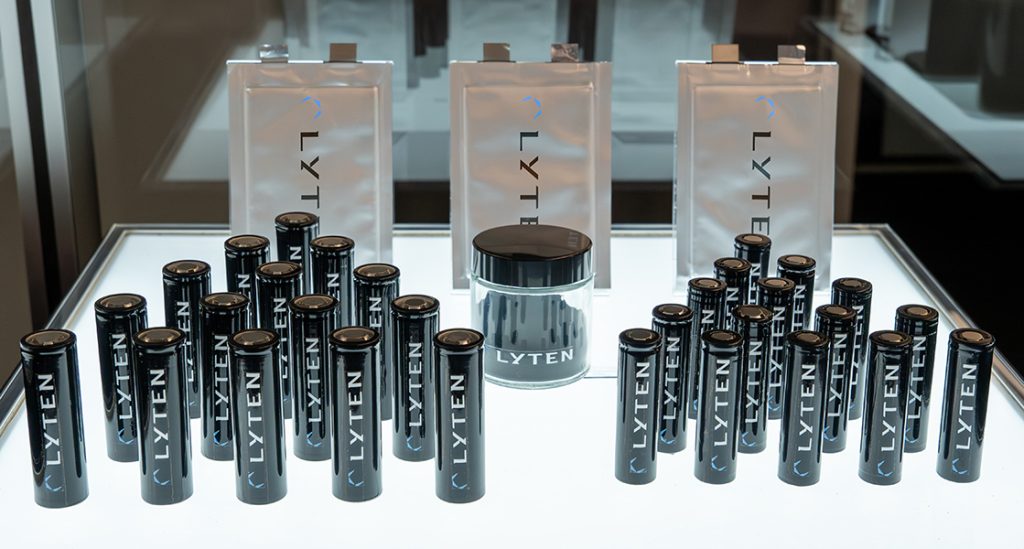
Our lithium-sulfur batteries provide another clear example of innovation at Lyten. Engineers today face a particularly pressing challenge: to develop better energy storage solutions for the world. Current battery performance is plateauing and relies on materials that are geographically concentrated, geopolitically sensitive, and environmentally intensive to extract.
Typical batteries use nickel, manganese, cobalt (NMC), and graphite (typically mined from the ground), elements that travel over 30,000 miles before reaching a production facility. Lyten’s strategic decision to use sulfur —an abundant industrial byproduct—as the main active cathode material has reduced the cost, complexity, and environmental impact of Lyten’s global supply chain. These new batteries also deliver high energy density, which combined with their lower carbon footprint and local supply chains, enable electrification at scale.
These advancements underscore a larger point: sustainability and performance do not represent opposing forces. The most sustainable solutions often prove the most innovative, and the most innovative solutions often prove the most sustainable. We have created a scalable and sustainable decarbonization pathway for industrial innovation. By applying fundamental material science breakthroughs to real-world applications, we can accelerate decarbonization while also enhancing industrial capabilities, national security, and US supply-chain resilience.
The People Behind the Innovation
However, the true impact of our work does not come from the materials alone. The real driver of progress is the people behind it. No material, no matter how advanced, makes it to market successfully without the minds that develop, test, refine, and manufacture it. Every groundbreaking technology we produce is a direct result of the diverse expertise, creativity, and collaborative spirit of the people at Lyten.
I’ve found that the best team members aren’t just diverse in background — they’re diverse in how they think, problem-solve, and approach challenges. That’s why we actively seek out people who tackle different kinds of problems in different industries. When you bring together a chemist, an aerospace engineer, and a data scientist, you get the kind of conversation that sparks innovation and one that simply wouldn’t happen in a siloed organization.
The biggest breakthroughs don’t come from a single person, or even from within a single discipline; they often emerge at the intersection of chemistry, physics, and engineering, driven by teams that bring a range of knowledge and perspectives. Tackling challenges such as energy storage, industrial supply-chain security, and emissions reduction requires a multidisciplinary approach, one that values diverse experiences and fosters collaboration. This level of interdisciplinary collaboration helps accelerate solutions that wouldn’t be possible within traditional industry boundaries.
At Lyten, we ingrain this mindset into everything we do. We foster an innovation-focused workplace where people are encouraged to challenge assumptions, test bold ideas, and contribute beyond their core areas of expertise. Our success is not just about hiring smart people—it is about creating a culture of curiosity, adaptability, and interdisciplinary problem-solving that could transform the world.
Innovation Requires Many Perspectives
Other companies and teams have attempted to develop and commercialize lithium-sulfur batteries for years with very limited success. What makes Lyten different? We embraced a holistic, collaborative approach to developing all the cell components, which resulted in a new pathway toward high-performance, less expensive, and locally sourced energy storage.
Celina Mikolajczak, Lyten’s Chief Battery Technology Officer, explains: “The breakthroughs we’ve achieved in lithium-sulfur battery chemistry didn’t come from a single person. They came from many people working together for years; bouncing ideas off each other, arguing with each other, getting into the lab or onto the production floor together, and building and testing each other’s ideas. Bringing together people of different nationalities, ethnicities, genders, ages, educational, and socio-economic backgrounds has ensured that we have been able to cast the widest net for great solutions to a series of very difficult problems.”
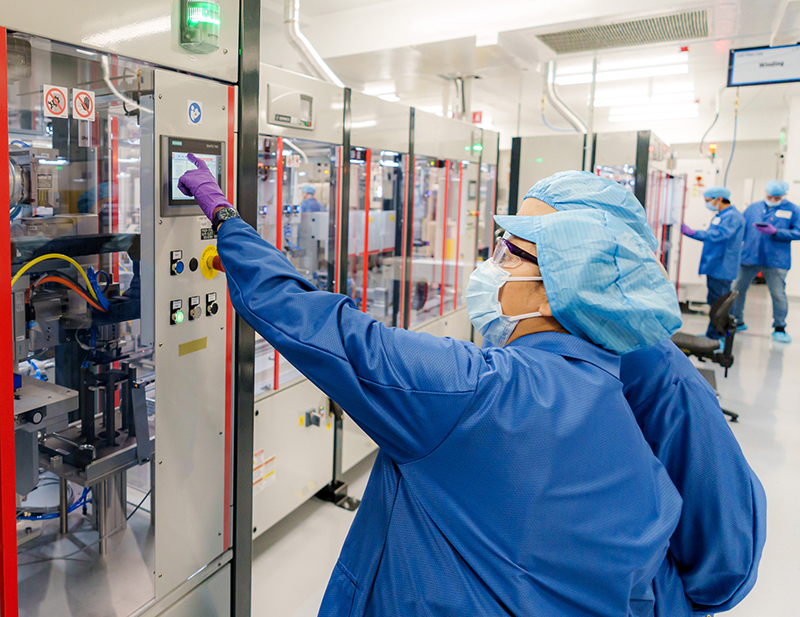
True innovation happens when different ways of thinking collide in productive ways. When hiring, Lyten looks beyond traditional career paths. A mechanical engineer with experience in Formula 1 racing might have unexpected insights into lightweight battery-pack design. A former semiconductor expert might see new ways to improve conductivity in an energy storage device. The convergence of these different experiences leads to solutions that wouldn’t emerge in a more traditional setting.
When you bring together people from different industries—defense, biotech, advanced manufacturing, transportation—you start to see problems in a whole new way. One person might spot a roadblock, another finds a way around it, and someone else completely redefines the challenge. That kind of cross-disciplinary thinking produces real innovation and explains why we prioritize hiring people with diverse experiences and perspectives.
The key to success is creating a supportive environment where varied opinions and perspectives receive active encouragement and are leveraged. That’s why Lyten prioritizes hiring people who bring curiosity, adaptability, and the ability to work across disciplines.
Transforming the Future with Science and Engineering
Tackling the world’s toughest problems requires a commitment to pushing scientific boundaries. It requires not just new discoveries but the ability to take those discoveries and apply them in ways that have tangible, real-world impact. Whether it’s focused on ultra-lightweight batteries, on stronger composites, or on next-generation sensors, material science shapes the future.
The people working on these challenges—scientists, engineers, and innovators—drive remarkable advancements. The next generation of STEM professionals, including the women in science and engineering who bring their diverse skills and perspectives, will play a critical role in shaping the next era of creative and powerful innovation. Investing in inclusive hiring practices and fostering a welcoming and supportive environment will not just encourage problem-solving but will also solve the biggest challenges of our time.
Today’s scientists already work to develop the solutions to tomorrow’s challenges. By applying advanced material science, embracing diversity and varied perspectives, and focusing on high-performance innovation, the next generation of breakthroughs will redefine possibilities across industries and geographies. The future of energy, mobility, and environmental sustainability depends on this kind of cross-collaborative scientific discovery—and on the people who dedicate their careers to solving these complex problems.
 Alana Alcini is Senior Vice President of People and Talent at Lyten. With 20 years in human resources and talent strategy, Alcini is a transformative HR leader shaping the future of work in science and technology. As part of the company’s Executive Leadership Team, she drives strategic workforce initiatives that fuel innovation, enhance leadership development, and foster an inclusive, high-performance culture. Passionate about the intersection of people and technology, Alcini ensures that talent remains at the heart of business success.
This article was originally published in AWIS Magazine. Join AWIS to access the full issue of AWIS Magazine and more member benefits.