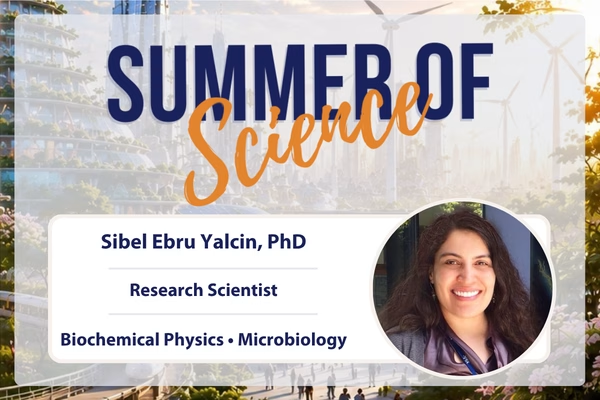
Sibel Ebru Yalcin is a research scientist at Yale University whose work explores the remarkable ways bacteria transport electrons through tiny protein filaments called nanowires. Drawing on physics, chemistry, biology, and microbiology, she develops advanced imaging methods to understand these natural electronic systems at the nanoscale. Her research is helping reveal how microbial electron transfer works while opening new possibilities for bioelectronics and technologies inspired by nature.
A Day in the Life of a Biochemical Physicist
What does a typical day in your role look like?
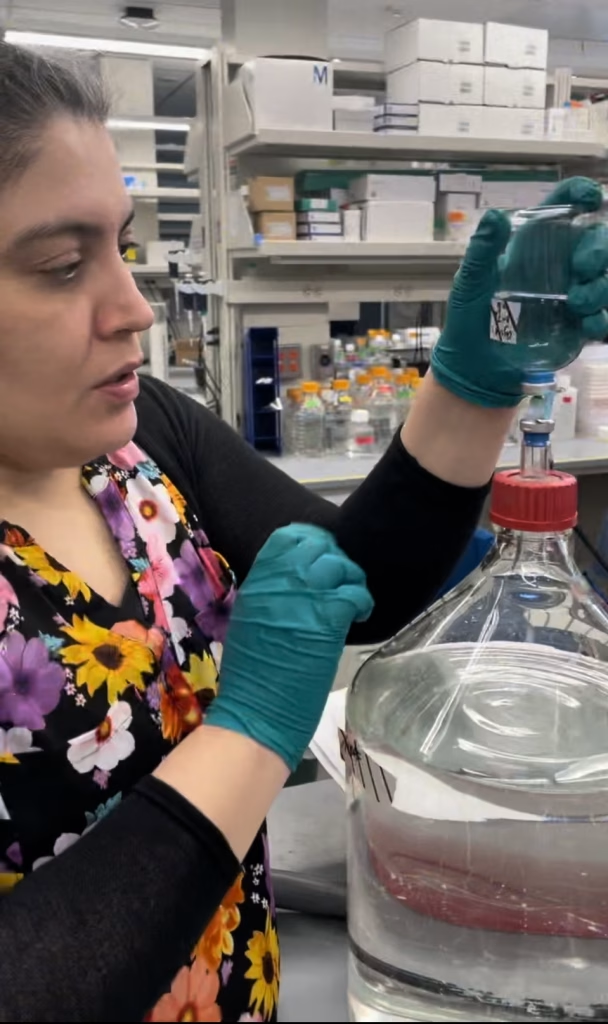
I am a biochemical physicist in Nikhil Malvankar’s Protein Nanowires Lab located Yale’s Molecular Biophysics and Biochemistry Department and Microbial Sciences Institute, where I explore the surprising electronic conductivity of the soil bacterium Geobacter. These bacteria produce tiny filaments called “nanowires” that conduct electric currents. In environments without oxygen, nanowires enable bacteria to “breathe” by transporting electrons across bacterial biofilms to where electron acceptors are available. However, until recently, it was a mystery how these bacteria could send electrons over distances greater than 100-times their size. Traditional structural methods were insufficient for probing individual protein nanowire structure and function, so I developed a new imaging tool to study the structure and function of these microbial nanowires. I am the most senior person in the lab after the PI. A typical day in the lab for me involves spending time with students and post-docs, designing new experiments, teaching to new rotation students how to think and perform their research independently. I also attend many meetings throughout the day regarding my research. Most of these meetings involve science discussions with scientists from diverse backgrounds such as physics, chemistry and biology. I specifically use interdisciplinary language in my communications so that any scientist from any research background can understand what I say. I really enjoy our group meetings, because such meetings bring together the broad mindset of a diverse group of members in a discussion that makes discoveries possible.

How would you explain your field of work to a kindergarten class?
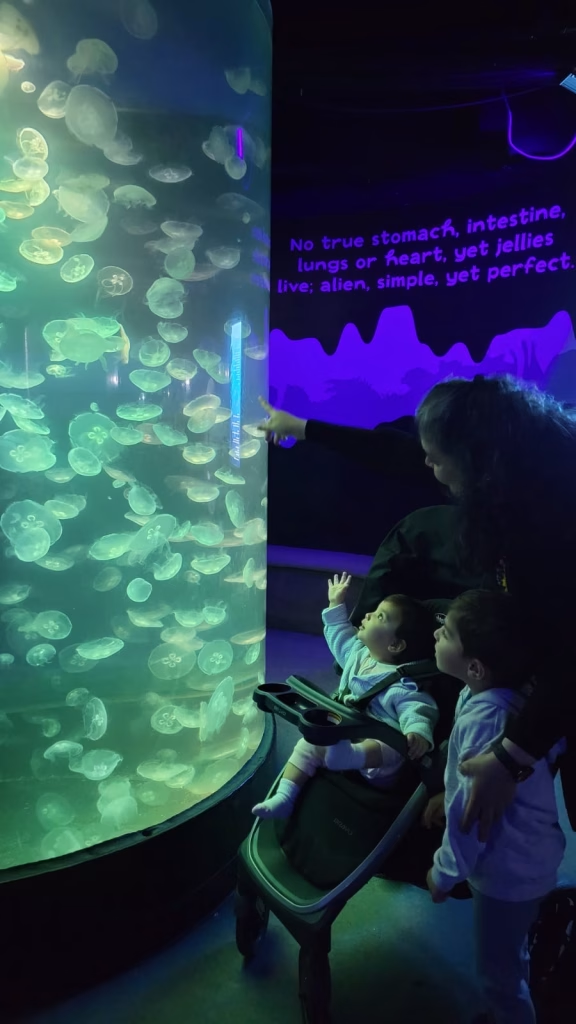
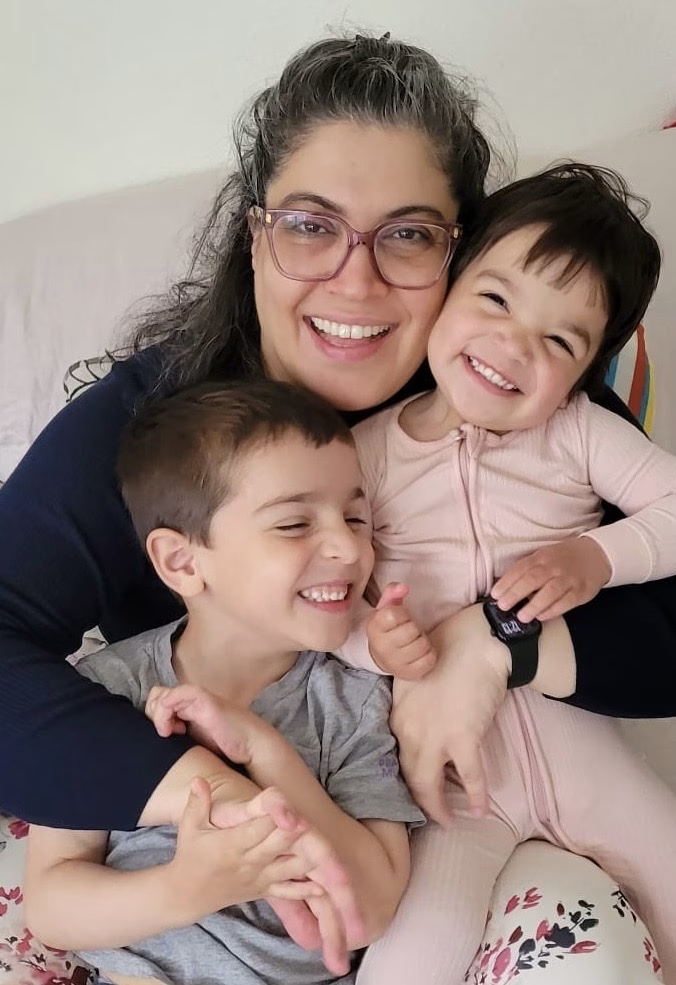
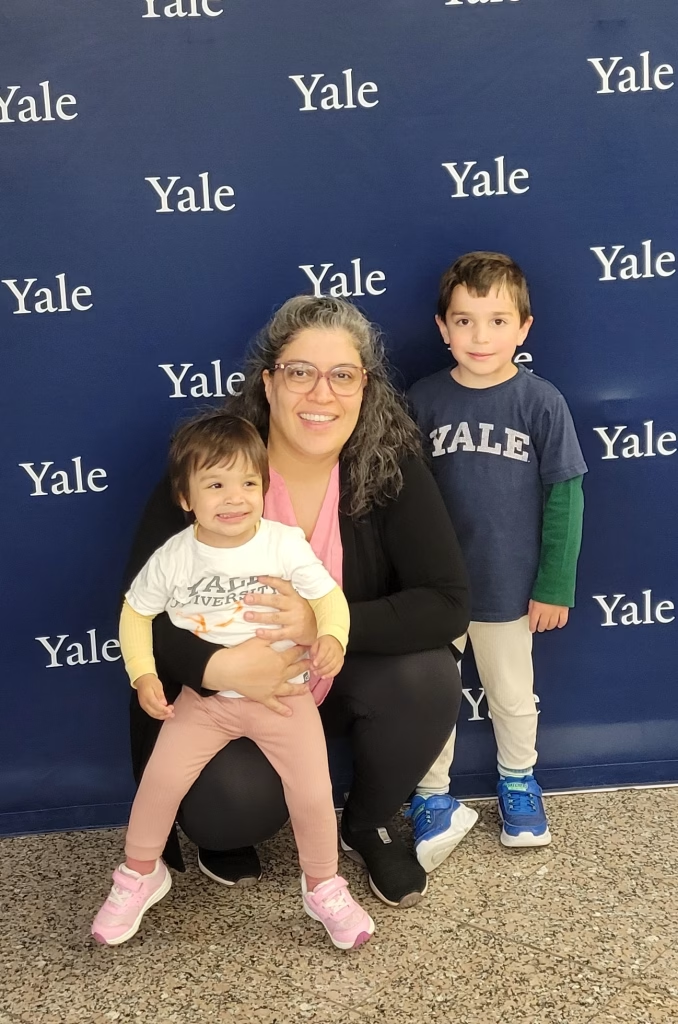
In fact, I am the mother of a 5-year–old boy and this September he is starting kindergarten. At home, we regularly talk about my work. My son knows that his mommy is a scientist working on bacteria that make electricity through tentacles called “nanowires” coming out of their body similar to the tentacles that Electro uses in Spider–Man to generate and manipulate electricity.
The Path to Biochemical Physics
My interdisciplinary background plays a significant role in my research achievements. I have a PhD in Physics and pursue science at the intersection of Physics, Chemistry and Biology. I believe that interdisciplinary research is both exciting and fulfilling, with the potential to yield to major breakthroughs. With necessary inputs from physics, biology, microbiology, and biochemistry, we can solve many complicated problems such as the one on which I have been working: “nature’s electronic systems.”
Science has always excited me since my childhood and has been the subject I performed the best during my primary and secondary education. I have a twin brother, and we were in the same classroom until college and there was strongcompetition between us to get the best grades for science classes. I feel thiscompetition played a role in shaping my science journey and preparing me for real–world science obstacles, because science is a very competitive field to be in. Many scientists work hard to get the best science done and to publish their results to gain credit for their work. There is even more competition out there when it comes to winning research grants to support the scientists who do the work and/or to purchase the necessary science equipment, critical to perform the work.
Discovering new things, understanding the unknown and using those new findings to even discover more new phenomena relevant to every day’s global problems excites me the most. In science there is no limit to learning and discovering. Sometimes I feel like a child, just like my little kids who are so curious and so willing to learn new things, just to figure out how the world works.
One interesting and lesser-known fact about me that I developed after I had my kids is that I can handle many work and personal issues by efficient multi-taskingduring the day. For example, I find lunch times the best for me to efficiently communicate with my husband about our family issues because this is the only time our kids are at daycare and we can talk face to face, discuss and plan thingsregarding our family. In this way, I try to manage my work-life balance.
I was born and raised in Istanbul, Turkey and lived there until I was 26 years old. Imoved to the US to pursue my PhD at UMass Amherst’s Physics Department and,since then, my life has been a big journey. I didn’t know anybody in the US when I came here. I only believed in myself and trusted my instincts in my decisions, and I always remembered my parents’ advice. When I look back on my life, I see myself being fearless and ambitious just to pursue a science career, having left my family and moving thousands of kilometers away to the United States of America, which I believed to be the best place to pursue my dream science journey. I find that this whole life–changing decision and the challenges I have taken are my proudest achievements in my career. All the rest just followed.

The Science That Moves Us Forward
How has AWIS helped you professionally/or personally?
The AWIS Caregiver Advancement Scholarship represents recognition for my research and my scientific career. Especially, this award appreciates the fact that doing cutting-edge research and being a mother are not mutually exclusive. I am also very thankful to become part of the AWIS community of exceptional women.
I am immensely grateful to AWIS and would like to take this opportunity to thank everyone at AWIS for giving me this distinguished opportunity.
How has your work/research helped drive discovery, innovation, or impact?
I am a researcher who designs, develops and apply new nanoscale functional imaging tools called “Multimodal Imaging” to understand structural, physical and biochemical components and pathways involved in biological electron transfer via respiring microbes. I call myself “Today’s Leeuwenhoek” because Antonie van Leeuwenhoek, the “father of microbiology” is best known for combining microscopy and microbiology to explore microbial life.
Through the Multimodal Nanoscope (it is called nanoscope because it can gather information with nanometer scale spatial sensitivity), I discover answers to global processes such as:
1) Soil bacteria interact with soil minerals to perform extracellular electron transfer for their respiration through microbial nanowires.
2) Infectious bacteria use charge interaction to attach host surfaces to initiate infections through bacterial appendages called pili.
3) Climate involved diverse bacteria and archaea carry nanowire genes suggesting that they could benefit electron transfer through nanowires to control global carbon and nitrogen cycling, critical to mitigate climate change.
My imaging tools bring innovation to my science, because most of these microscopes that I developed are state-of-art and the outcome of my research discoveries bring the high impact and benefit to the entire society to shape our understanding of global problems and to generate better solutions.
Where do you see your work heading next?
Discovery of common soil bacteria forming a power grid in the ground beneath our feet via nanowires is a remarkable example of nature’s electronics. In the past, The New York Times highlighted our research by saying that “electroactive bacteria run the Nature’s power grid through protein wires millions of years before humans learned the trick. It is a strong reminder of how ready we are to ignore things we cannot imagine”.
We have not seen any such protein nanowire structure that can transport electrons efficiently over micrometers. Therefore, I believe that my research will bring one of the most transformational ideas that stand to revolutionize a broad range of fields, such as Physics, Chemistry and Biology. I further demonstrated in my Nature Chemical Biology paper that exposing nanowires to low pH leads to structural changes that result in enhanced conductivity (400 S/cm), the highest reported protein conductivity. I also tuned the mechanical properties of the nanowires by making them highly resilient. Based on all these findings, I plan to develop nature-made and human-made resilient electronic materials. I will be combining my multimodal nanoscope with machine learning tools to inverse design the protein structure to engineer different functionalities allowing development of biocircuits and bioelectronic devices. I am building on an original and exciting concept using my unusual training in physics, biochemistry and microbiology as well as newer skills in advanced imaging, spectroscopy and computational methods.
How do you see your work helping shape the future of STEM?
As a women scientist with a PhD degree in physics, I should admit that we start our academic career and participate in PhD programs very strongly, but, at the end of the PhD, we see that only a few of the women finish their degree or pursue further academic career. I believe that STEM education and bringing successful female scientists to connect with the young girls will inspire them to better pursue academic and scientific careers with great ambition. Persistence is a strong trait to be able to survive in academia and young girls need to be trained to stay persistent and not give up quickly when challenges appear. If I can serve as a role model through my research to mentor young girls so that they can have an impactful future career, I would feel successful in my mission. I work on this mission each day with great enthusiasm. In the past, I was invited to speak to Microbiology Girl Club by Miami–Dade College to inspire future young scientists in 6-12th grades. I did interviews with Scientific American and Live Science and wrote a “Behind the Paper” article for Nature Portfolio Bioengineering Community about the difficulties and challenges involved in the process of discovery. Very recently, I did an interview with a high school sophomore and host of a podcast called “High school Pathfinder: For the Future You” to help high school students learn about science career paths.
To a Future Scientist Just Starting Out
What advice would you give to your younger self / someone just starting out in your field?
Build your confidence, stay strong and tell yourself that it is ok if science makes you feel intimidated because science is a very competitive field. You should tell yourself that you will conquer every obstacle and at the end you will feel much stronger and more mature. This process is called “experience building” and every scientist goes through it.
What are some strategies you use to maintain resilience and persistence in the face of obstacles?
I talk to myself by saying that:
“Do not every give up! Be persistent and stay persistent. Every day, you are doing what you love to do, be grateful for this opportunity and always be proud of yourself!”
What message would you share with future scientists about the power they hold to make a difference?
You are the creator of your bright future. Curiosity, ambition and resilience should be your best guides to reach any destination you dream of. Each of you matters to build this bright future.