

During the recent pandemic, scientists used messenger Ribonucleic Acid (mRNA) to create vaccines that effectively targeted Covid-19. These days, they have turned their attention to mRNA’s many other potential applications. Kyle Holen, MD, Moderna’s head of development, therapeutics and oncology, says, “When the pandemic hit, it slowed us down a little bit because we had other things on our minds, but now we’ve been able to have a renewed focus on rare diseases.”
Researchers first discovered mRNA in the 1960s and began to seriously explore how to deliver it into cells in the 1970s. Many years passed before they learned how to translate mRNA’s message into proteins, like the spike protein of SARS-CoV-2, to provoke an immune response. They eventually relied on nanotechnology, essentially wrapping mRNA in fatty droplets— protective bubbles called Lipid Nanoparticles—which allowed the molecule to move into cells and teach the immune system to recognize the encapsulated foreign protein. Scientists first worked with mRNA to develop Ebola vaccines between 2014 and 2016 before quickly creating COVID vaccines in the first year and a half of the pandemic.

Many obstacles impeded investigations into the therapeutic utility of mRNA. The delicate molecule degrades easily in the cell and requires Lipid Nanoparticle protection. mRNA is temperature sensitive, must be directed to the location in the body where it is intended to be active, and is short-lived. However, its short life serves as both an advantage and a disadvantage. Our immune system can mistake the injected molecule for a virus, provoking a response to it as an invader. However, the fact that mRNA presents little danger of hanging around long enough to integrate into a patient’s DNA—a downside of DNA-based drugs—offers a major advantage.
Working in the Cell, Working as a Vaccine
This remarkable molecule gets produced when enzymes using the four nucleic-acid bases in double-stranded DNA transcribe RNA, a single-stranded nucleic acid, into mRNA. After transcription, the molecule gets processed and transported out of the cell’s nucleus and then further processed and translated by a smaller molecule, tRNA (transfer RNA) and by enzymes that transfer information to the cell’s protein-making machinery, telling it which proteins to build, for example, muscle actin and myosin, oxygen-carrying hemoglobin, the blood sugar-regulating hormone insulin, and keratin, the constituent of hair and nails.
A coronavirus, like the one that causes Covid-19, bears little crowns or spikes on its surface, which can function as protein targets for vaccines. A vaccine made from the mRNA sequence of the virus gets wrapped in a lipid coating (a lipid nanoparticle or LNP) to enable delivery, avoid degradation, and prevent the immune system from inactivating it. The vaccine then “teaches” the body to make many copies of the spike protein by using the body’s own translation and protein-building machinery for converting the mRNA (transcribing and translating it) into the spike protein. At a later exposure to the spike-bearing virus, the body’s immune system recognizes it, launches anti-spike antibodies to fight off the virus, break it down, and gets rid of it. Since the vaccine doesn’t contain the actual virus, it doesn’t change your own DNA and isn’t infectious.
The LNP basically serves as a delivery vehicle for the mRNA, allowing it to safely enter into cells. An LNP can also encase multiple mRNA molecules and usually directs its cargo to the liver. Scientists, however, are working on more efficient and effective vehicles (including CARTS, which comprise both protein and fat) that target other organs, such as the spleen, lymph nodes, or lungs. CARTS also release the mRNA more easily to better deliver medicines or vaccines. Researchers have not yet tested them in humans.
mRNA Vaccines Against Infectious Diseases
Companies across the drug-discovery and development industry have launched an exploration of other potential uses for mRNA in preventing and curing infectious and chronic diseases, rare genetic diseases, cancers, autoimmune diseases, and conditions related to aging and senescence. With the establishment of personalized medicine, these companies expect mRNA to become a key player. Among other uses, they hope to develop an array of vaccines.
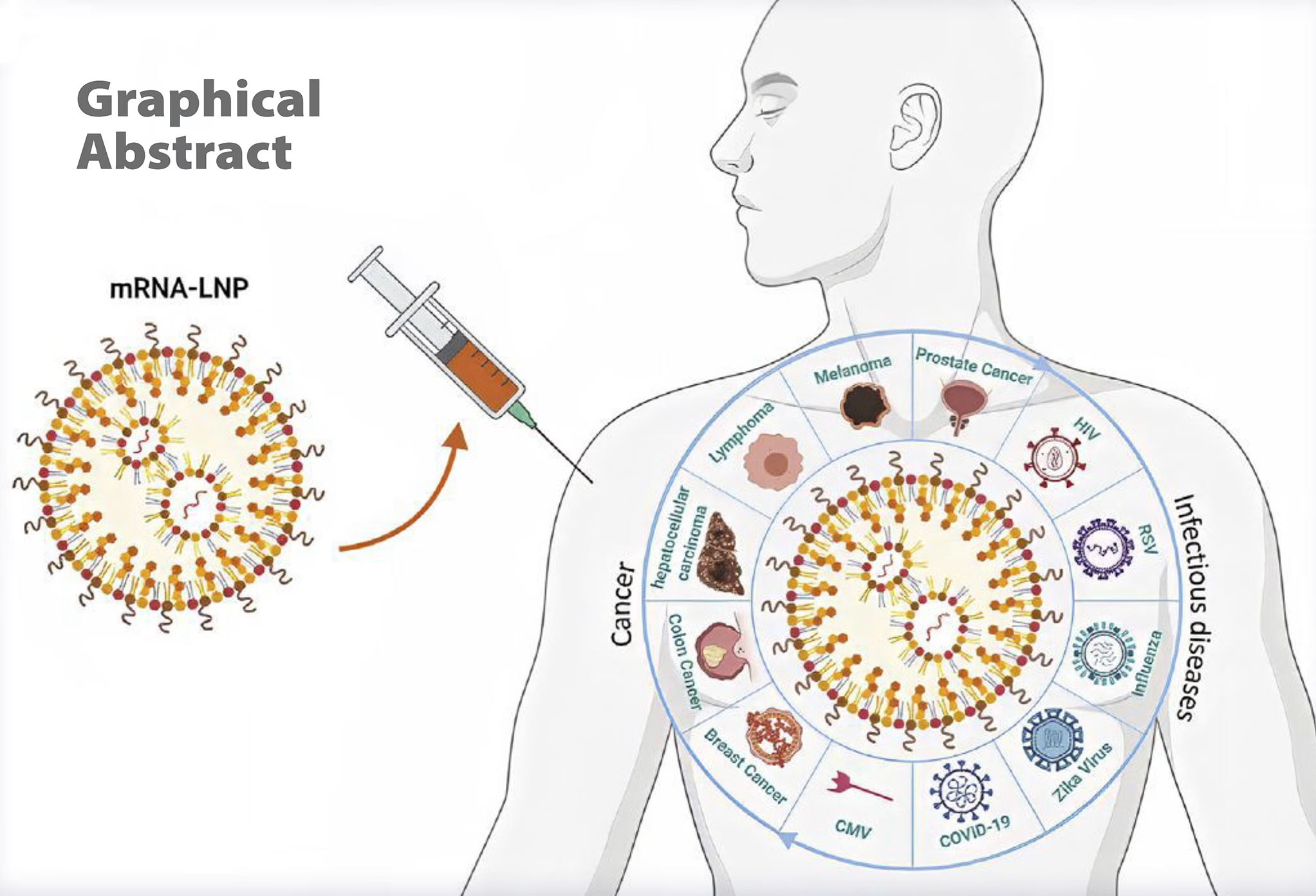
One such vaccine targets HIV, the virus that causes AIDS, affects 38 million people, and thus far has no cure, due to its ability to infect helper-T cells, a subset of immune cells that our immune response relies on to launch properly. A current clinical trial investigates modified LNP-mRNA encoding antigens found on the HIV virus’s surface.
Influenza types A and B cause most flu outbreaks, leading to 300,000 to 600,000 deaths annually. Flu remains a global issue due to its ability to mutate rapidly. Research has shown that LNP-mRNAs that encode the full-length Hemagglutinin sequence (the sequence of a protein on the virus’s surface that helps the virus enter host cells) from three different strains of influenza can stimulate an immune response in non-human primates. The mRNA technology helps to create encoding antigens from various influenza subtypes, which offers the possibility of producing multivalent vaccines and, perhaps, a universal flu vaccine. In fact, a quadrivalent (protects against four types of flu) vaccine has already proved effective in Phase II trials in adults.
Other researchers have used mRNA vaccine technology to encode tumor antigens with the hope of stimulating the body’s anti-cancer immune response. The first clinical trial, a Biontech vaccine, recently received approval from the USDA as an investigational treatment for advanced melanoma. The vaccine encodes mRNAs from four melanoma tumor-associated antigens. Trial investigators administered it to patients along with an anti-cancer drug. Another vaccine candidate under development contains mRNA coding for 34 antigens found in such tumors as melanoma, bladder carcinoma and non-small cell lung cancer. Researchers plan to administer it along with conventional chemotherapy.
Other recent modifications of mRNA aim to reduce its ability to overstimulate the immune response (immunogenicity) and to increase its stability and expression. These include changing the nucleoside bases and the “tail” of the mRNA to increase its half-life, prevent degradation, and improve its ability to circumvent the immune system to prevent tissue damage.
Gene Therapy Benefits from mRNA
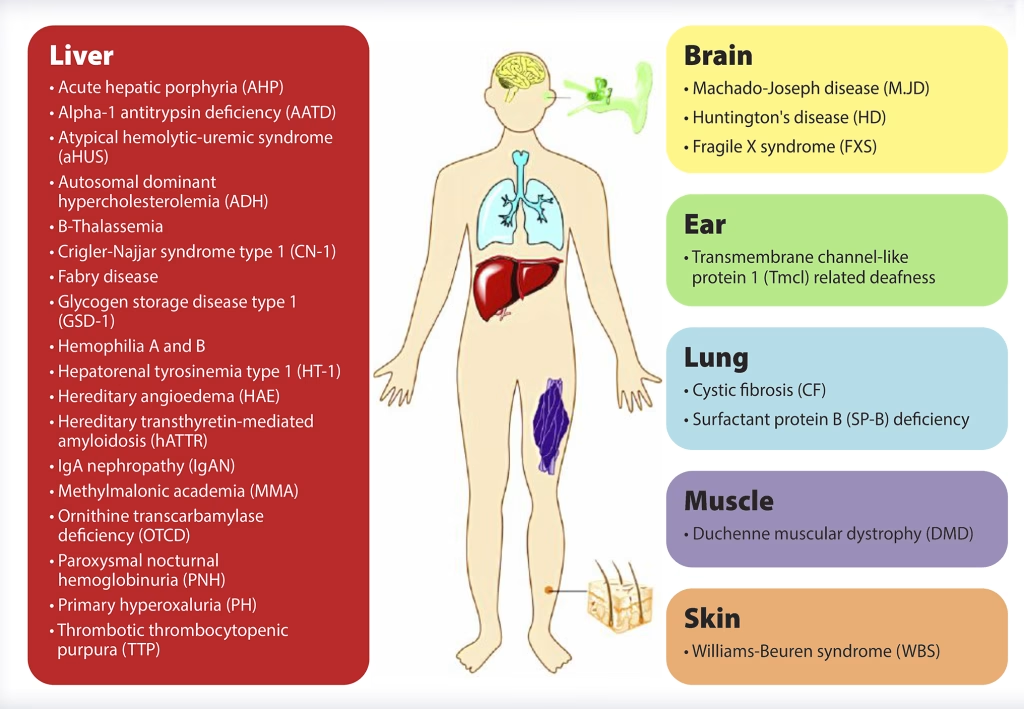
Scientists have also set their sights set on mRNA-based approaches to treating the genetic causes of rare diseases. They have already created mRNA tools that minimize the possibility of a negative immune response to this therapy, with high gene-editing efficiency and lower off-target effects that make it a safer and better alternative form of gene therapy.
Currently, a well-established gene replacement technology called CRISPR-Cas9, uses a guide RNA (gRNA) to put in place a correct, healthy version of the impaired gene by using nucleic acid sequence homology (a type of matching) to correct an inborn genetic defect. A mutant version of the gene coding for transthyretin protein causes TTR amyloidosis, a disease that results from the accumulation of the transthyretin protein in the body’s tissues. The LNP-mRNA delivery of the correct transthyretin gene, which produces the correct version of the protein, has shown the potential of mRNA-based CRISPR-Cas9 medicine to cure genetic diseases.
Scientists stress that the administration of these non-vaccine-based genetic therapies requires higher doses of LNP-mRNA by IV (intravenous) in order to make the therapy less immunogenic and to reduce other off-target effects or toxicity.
Personalized Cancer Treatments, Maternal Health, and More
Other researchers have launched investigations into using mRNA in personalized cancer treatments. As part of this work, Dr. Vrundi Trivedi and her team at the University of Florida established an immunogenetics pipeline called the Open Reading Frame Antigen Network to identify immunogenic antigens in cancer with the likelihood of their becoming therapeutic targets. Because the tumor microenvironment alters and suppresses the body’s immune reactions, potential treatment approaches will combine mRNA vaccines with other immunotherapies. At this time, however, very few vaccines using personalized medicine have advanced to Phase III or IV clinical trials.
On another medical front, recent reports describe mRNA research to prevent preeclampsia, a cause of placental damage and hypertension that affects 3%–5% of pregnancies. No cure currently exists for eclampsia, the convulsive state that preeclampsia can lead to, except for delivering the placenta and fetus. Working with a mouse model of preeclampsia, researchers injected LNPs encoded with VEGF (vascular endothelial growth factor) mRNA to target the placenta. This treatment reversed hypertension in mice. The next step involves transferring this potential therapy to humans during pregnancy.
Future Opportunities
Scientists view the rapid development and deployment of the Covid-19 mRNA vaccine as the touchstone of a quickly changing and productive industry working at light speed. Investigators have already started to explore new administration methods for mRNA vaccines, such as inhalation therapy for respiratory disease.
In addition, they hope to repurpose another molecule in the genetic repository that could treat thousands of rare diseases, tRNA, described in Drug Discovery World as “mRNA’s tiny cousin.” Alltrna, which calls itself the world’s first tRNA platform company, focuses on exploring tRNA as a therapy to treat mutation-based diseases that occur when translation of the mRNA prematurely terminates before a fully functional protein gets produced. Researchers lump 6,000 such diseases into a category they call Stop Codon Disease (a stop codon refers to a three-nucleotide sequence in mRNA that indicates termination of protein synthesis in the cell). As a result of this premature termination of protein synthesis, the complete protein is not made. Delivering a synthetic tRNA carrying the untranslated amino acids (parts of proteins), perhaps also inside a LNP, could remedy this. Unfortunately, tRNA does not chemically synthesize as efficiently as mRNA, so more work needs to be done to optimize this molecule as a therapy.
Dr. Holen acknowledges that few doctors and members of the public know about this broad array of therapeutic possibilities or about the research underway around the world, but he’s ready to spread the word. “It’s been a while since [even clinical investigators] thought much about mRNA and [they] certainly aren’t familiar with LNP and the technology … We have a lot of education to do and we’re happy to do it.”
 Roberta Batorsky, MS, is a university Biology teacher and a freelance science journalist.
This article was originally published in AWIS Magazine. Join AWIS to access the full issue of AWIS Magazine and more member benefits.