
The CASE Workshop was my first opportunity to learn from those who have successfully facilitated the translation of science into policy. I particularly enjoyed the discussions on communicating with policymakers, the research and development (R&D) budget process, networking, and diversity in science.
The American Association for the Advancement of Science (AAAS) Director of Federal Relations Erin Heath shared the three Cs of communicating with policymakers: context, communication, and courtesy. Begin the conversation by providing context: What is the big picture of the problem? Why is it relevant to the constituents of the policymaker you are meeting with? What can they do about it (what is the ask)? Next, the communication: What is the current state of the problem? What are other organizations doing about it? Finally, throughout the discussion, remember to be courteous. Science is not an entitlement.
Alessandra Zimmermann, a writer for the R&D Budget and Policy Program at AAAS, facilitated a powerful exercise to help attendees grasp the complexities of the federal budget process. Prior to this activity, I had minimal knowledge of this process. Breakout groups of 6-8 people were created. The groups were split into people advocating for the interests of democratic, republican, and independent parties and were given a sample federal budget to facilitate. The goal was for the groups to work together to agree on a budget while each person stayed true to the interests of their assigned party. I could not believe how fiercely people were debating for their parties, especially since they may not have aligned with their actual political views! Not only could our group not agree on a budget, but we also couldn’t agree on a timeframe for extension. We shut down our fictional government.
This activity was eye opening. Most research is funded through discretionary funds which must be renewed every year. A bill must first receive funding authorization from Congress. Even if a bill receives authorization, it may never receive appropriation, which is the disbursement of funds for the intended purpose. When congress can’t agree on the budget for the new fiscal year and extends the timeline (this happens most years), it impacts research funding. It means that new budget dollars can’t be spent until the budget is passed, then they must be spent in a short timeframe before the next fiscal year starts.
Outside of communicating with policymakers and the federal budget process, other topics also spoke to me as a scientist. Victor McCrary, Vice President for Research at the University of the District of Columbia and Vice Chair of the National Science Board, discussed networking and “the theory of clubs.” The theory of clubs indicates that memberships in multiple organizations, which may overlap but are not identical, increase your capacity for building new relationships. Additionally, Dr. McCrary discussed building relational rather than transactional relationships. In other words, meet people for the sake of meeting people and for what you can do for them, not on what they can do for you. He recommended a powerful tool for building networking skills, a book titled Dig Your Well Before You’re Thirsty by Harvey Mackay.
Dr. Holden Thorp, Editor-in-Chief of the Science Family of Journals, made an impact on me professionally and personally by sharing his story of working as a neurodivergent person in the scientific community. He discussed the importance of respecting and advocating for the advancement of every field of science. Dr. Thorp also proposed a compelling argument against the phrase “the science speaks for itself,” and discussed how as a human endeavor, science will always be inherently biased and impacted for those who interact with it. He encouraged curiosity on how findings are obtained, particularly in the medical community. Dr. Thorp included suggestions on how to make science more neurodivergent friendly. He encouraged people to be transparent about their neurodivergent status and to educate people about neurodiversity. He emphasized the importance of rejecting the stereotype that good leaders are older white guys who are extroverted, and working toward a future where neurodiversity is viewed as a difference rather than a disability. Dr. Thorp’s research and advocacy on inclusivity in science is one that I aspire to.
If you are an AWIS member interested in joining the advocacy committee, please contact awis@awis.org by September 15. The kickoff meeting for this season will be September 18 at 2:30 p.m.
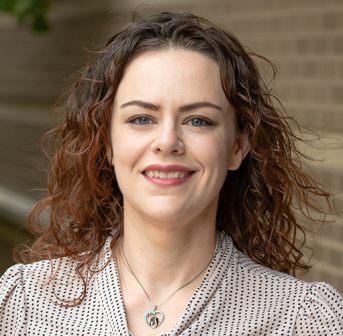
Lindsay Tessmer, RN, BSN, (she/her) is a second-year doctoral student in the PhD in Nursing Science program at Goldfarb School of Nursing at Washington University School of Medicine. Her areas of interest include workplace violence, psychological trauma, substance use disorder, and retention in the field of nursing. Currently, Lindsay is working on research projects regarding nurse well-being, restraint use, disabilities in nursing and peer mentorship. Lindsay has been a practicing nurse since 2011 in a variety of specialties including medical-surgical, corrections, wound care, and clinical research. Lindsay is a member of Sigma (Tau Iota Chapter), Midwest Nursing Research Society, American Nurses’ Association, Missouri Nurses’ Association and the Institute of Clinical and Translational Sciences. Lindsay’s personal interests include reading, painting, and playing video games. She enjoys outdoor activities including kayaking, swimming, hiking, and camping with her husband, children, and dogs.