
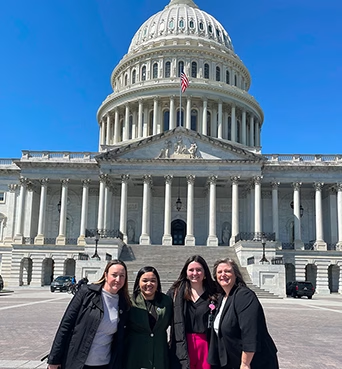
In April 2025, members of AWIS came to Capitol Hill to share their testimonies and advocate for congressional support of women in STEM and the RESEARCHER Act. This year, we’re bringing AWIS Advocacy Days to you, with coordinated home district meetings with legislators between March 30th to April 10th. Your local representatives care about the needs of their constituents, and sharing your story can be a great way to create conversation surrounding key STEM issues. Our goal is to coordinate these home district meetings across the country and advocate for support of the research community and women in STEM. We encourage you to go with a group, such as your local AWIS chapter or fellow STEM colleagues!

To join AWIS members in advocacy, start by filling out this form to receive more information on scheduling appointments with legislators, key topics you can bring to the table, and helpful tricks for a successful meeting. Please direct any questions you may have to Abby Swett at swett@awis.org, we are happy to support you!
Contacting your representatives- Federal Level
Finding and contacting your federal representatives is as easy as 1-2-3!
- Simply visit the Congressional Find Your Member page and provide your full address.
- This will provide you with a list of your state’s two senators and your district’s House representative.
- Find the “Contact” link under each representative and navigate to their website, which should list phone numbers, email portals or addresses, and other useful information.
Contacting your representatives- State Level
Contacting your state representatives is just as important and follows a similar process.
- Using your preferred browser, start a search for “_______ State Representatives”. One of the top results should be your state’s congressional website.
- For example, searching “Indiana State Representatives” will prompt a link to the Indiana General Assembly’s website, and the first hit is “Find Your Legislator”.
- After locating the “Find Your Legislator” option, you can again enter your full address to receive a list of members of your General Assembly and ways to contact them.
Scheduling your meeting
When you are ready to schedule a meeting, find their email form or contact info for their scheduler. Please feel free to use our AWIS Email Template (shared via RSVP) or create your own, but make sure to be specific in the details, such as your address (for constituency), the number of people attending, needs for disability accommodations, etc. Please feel free to include any other information you find pertinent in your request, and don’t be afraid to send a follow-up email if you don’t hear back. When you do set a meeting, let us know at AWIS so we can keep track of where all our members have gone!
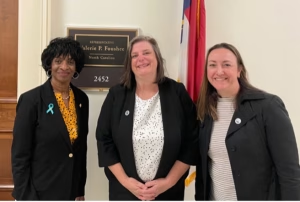
Pro tip: It’s okay to schedule multiple meetings in a day but make sure to leave yourself time to move between offices. Wear business casual and some comfortable shoes!
Sharing your story
Now that you’ve scheduled your meeting, it’s time to tell your story! As scientists, we tend to follow a specific pattern: start with the background, provide all the supporting details, and then end with our results and conclusions. For policymakers, you’ll want to practice the opposite. Think about the bottom line or main points to get across, why they matter, and save the nitty gritty details for their follow-up questions. These meetings can be quick, so be flexible and ready to dive into your “ask”!
Before the meeting
We strongly encourage you to do some light research on the office you’re planning to meet with. Find out what committees they sit on, such as healthcare or science and technology. Many representatives have key policy issues listed on their websites which can tell you their platform and what bills they’ve sponsored or co-sponsored. Does your district have major research institutions that receive federal grants for science and technology? Use this knowledge to help tell your story!
For example: “I know that affordable healthcare is a key priority for [Your Representative], which is why I’m here today to talk about [key issue/bill that is related].
During the meeting
- Start with a quick introduction and most importantly, say thank you to the staffer or representative for their time! It’s a simple gesture that starts the meeting on a positive note.
- Share your personal story about why you’re there and how it relates to the “ask” you’re going to make. This humanizes the policy you’d like them to support and makes your story more memorable.
- Make your request. This could be signing onto a letter, co-sponsoring a bill you care about, or voting yes/no on legislation. Not sure what your “ask” should be? Feel free to reach out to AWIS for possible “asks” at swett@awis.org. You can also try searching “Science” on 5 Calls, which will provide background info and even an email template!
Following the Meeting
At the end of the meeting, say your goodbye’s and thank the office for their time. As you are leaving, present them with the leave-behind information or folder so they have something to refer to after you leave! Ask the elected official or staff if they will pose for a photo with your group, and their permission to be photographed. Images and quotes can be shared on social media and be sure to tag their official accounts with a thank you! We also encourage you to share them and any other photos from your visit with AWIS at swett@awis.org.
Finally, send a follow-up email to their email thanking them for their time and support, and offer to provide more information should they ever need it. Congratulations- you’ve just completed a successful advocacy meeting!
Thank you to our partners at Research!America for providing tips on meeting with your legislators. Download the full AWIS Advocacy Toolkit. Please register to gain access to more resources using this form.
Sydney Woods is a member of the AWIS Advocacy Committee. The AWIS Advocacy Committee works to ensure that all women in science and STEM related fields can achieve their full potential. Our advocacy work focuses on achieving positive system transformation, equitable workplaces, and recognition of women’s scientific and leadership achievements.