
Many instances in life will challenge your identity and worth. Strangely enough, the same challenges will define who you are and what you can offer to the world.

My mission to improve the health of underserved communities and those historically impacted by their environment emerged out of my own life experiences. I grew up in the Lower Valley neighborhood of El Paso, Texas, in a community along the US-Mexico border wall, rich in Mexican-American/Chicano culture and family traditions. As a child, I noticed that our neighborhood provided only limited health, education, and economic opportunities, lacked basic infrastructure—including drinking water and sanitation in some areas—and experienced more chronic conditions, such as diabetes and heart and kidney diseases, than people seemed to in more-affluent communities. Based on these observations, I suspected that our health concerns connected to the place where we lived.
Therefore, I dedicated my life to understanding such factors and to coming up with community-wide solutions to improving our health. Today, I am an interdisciplinary health scientist, and I conduct community-engaged research to understand the interactions among environmental exposures (chemical and non-chemical,) so that we can push for interventions on multiple levels.
Paving My Path
Being the first in my family to pursue higher education and to earn a terminal degree, I had to figure things out as I went through them. When I was a teenager, I could not envision academia beyond high school because graduating from high school, regardless of grades, was a huge achievement in my family. My mother only achieved a third-grade education because she lived in extreme poverty and left school to work, while my two older siblings left high school after becoming teenage parents. Therefore, the idea of pursuing higher education and a research career was never in my plans, not because I did not want to explore this path but because I did not know of its existence. I graduated in the top 10% of my high school class but did not apply for financial aid or scholarships or to universities beyond my local one. Fortunately, the University of Texas at El Paso (UTEP) enrolled me, and I continued to explore my career path there.

As an undergraduate, I pursued a career in medicine because that was my immediate connection to health. I earned a bachelor’s degree in biomedical sciences and minored in chemistry, psychology, and Spanish because I wanted to understand the different factors that determine our health. However, after I graduated, I realized that I wanted to focus on preventing diseases before they manifested in communities like mine. This decision prompted me to explore a career in public health. During my master’s program at UTEP, I learned that we call the factors that I was yearning to understand social determinants of health and that out of all these factors, the environment (whether natural, human-built, or social) has the greatest impact on human health. Since then, I have become passionate about environmental health and, more specifically, about children’s environmental health and environmental justice issues
While I eventually found my path and my role as a researcher, I often faced challenges due to my initial lack of knowledge, network, and the financial support needed to navigate a STEM career. During my academic journey, I worked at multiple part-time jobs and in full-time professional positions while I was a full-time student. At first, I also did not feel as secure as I do now about pursuing prestigious training programs or awards, or about reaching out to others in my field for mentorship and guidance. While these challenges may have set me back, there were pivotal moments, people, and resources that kept me going.
One pivotal moment in my life involved joining the Association for Women in Science. AWIS started providing mentorship to me when I was 21 and introduced me to a network of women I can reach out to. My involvement with AWIS included developing a mentorship program for high school girls and leading as the El Paso Chapter president. This work led me to speak at the White House with other AWIS leaders, representatives from the National Science Foundation, and then First Lady Michelle Obama at an event where we discussed work-family policies in STEM careers.

Along the way, I have met incredible mentors who have shared knowledge and resources and have guided me to my current role as a faculty member in the environmental and occupational health department at the Indiana University School of Public Health Bloomington. I got my introduction to the field of public health when I met my former director at Texas Tech Health Sciences Center of El Paso, Dr. Daniel A Terreros. A scholarship led me to meet Dr. William Hargrove at UTEP, and working with him introduced me to community-engaged and water-insecurity research and provided me with the opportunity to address water and sanitation issues along the US-Mexico border. Dr. Christina Sobin, my advisor during both my master’s and doctoral work in public health at UTEP, took me under her wing, taught me how to be a good public health scientist, and provided me with the opportunity to work on preventing low-level Pb exposure in children. I met Dr. Jaqueline MacDonald Gibson after sending a cold email to a postdoctoral program that graciously shared my CV with her, and I landed my postdoc position at Indiana University Bloomington, where I eventually transitioned into the faculty.
Future Work and Aspirations
As a research faculty, I am able to fulfill my mission of generating community wide opportunities to achieve optimal health. Currently, I work with interdisciplinary research teams to develop improved risk models for the primary prevention of childhood lead exposure, community wide solutions to mitigate storm and flooding impacts on water quality for the Midwest, and mapping tools that could inform decisions on public health interventions and resource allocations, especially for high risk populations and children. I also work with the Indiana Latino Institute to improve the livelihoods of Latinos and Hispanics, and with the American Public Health Association and National Environmental Health Association to build capacity in children’s environmental health. I train the next generation of scientists by offering directed learning experiences to students and teaching environmental justice and children’s environmental health courses.
While I found my passion and contribution in environmental health, the future of my field and type of work is currently threatened by federal funding cuts, and censoring of terms which disregard the lived experiences of historically impacted and underserved communities, and the advancements in environmental justice. Despite these challenges, like in my life, I will be resilient in my career, and leverage from the communities I belong (scientific, professional, and the ones I serve) to achieve health for all.
I hope my story inspires you to continue your mission in a STEM career and remind you that even the challenges are part of who you become, and you have the power to turn them into positive and valuable attributes.
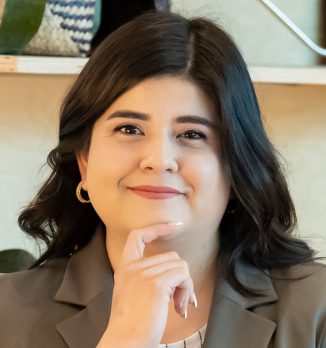
 Michelle Del Rio, MPH, PhD, is an interdisciplinary health scientist who conducts community-engaged research on environmental exposures and health determinants. She aims to prevent childhood lead (Pb) exposure from all sources and to improve water security in rural, underserved, and historically impacted communities. Her goal is to develop a holistic approach to preventing Pb and other environmental exposures in US children. Connect with her at LinkedIn.
This article was originally published in AWIS Magazine. Join AWIS to access the full issue of AWIS Magazine and more member benefits.