July is

Disability Pride Month

Celebrating Women with Disabilities in STEM

Scientists with disabilities bring valuable perspectives, creativity, and problem-solving approaches that strengthen research and drive discovery. This Disability Pride Month, AWIS celebrates the women scientists who have advanced their fields while navigating systems that were not always built for them, and highlights resources that can help all of us create a more inclusive future for STEM.

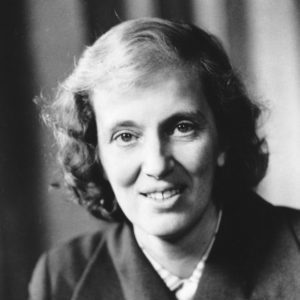
Dorothy Hodgkin, PhD, was awarded a Nobel Prize in Chemistry in 1964, despite living with rheumatoid arthritis, which significantly affected her mobility and hands later in life.

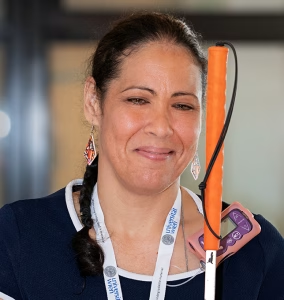
Wanda Díaz-Merced, PhD

Wanda Díaz-Merced, PhD, lost her eyesight in her early twenties. She uses sonification techniques to study astronomical data.

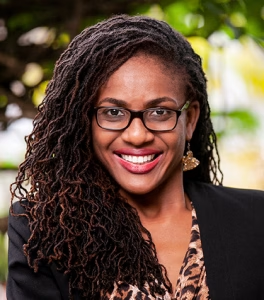
Farida Nana Bedwei

Diagnosed with cerebral palsy at age one, Farida Nana Bedwei is a software engineer and co-founder of Logiciel, a fin-tech company in Ghana.

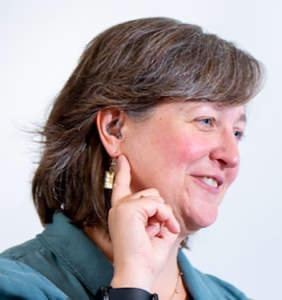
Michele Cooke, PhD

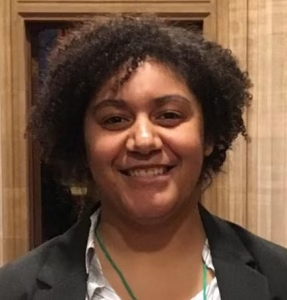
Michele Cooke, PhD, is a geoscientist and professor at the University of Massachusetts Amherst. Born partially deaf, she is an advocate for the deaf and hard-of-hearing in academics.

A woman with dark hair pulled back, wearing a blue and green patterned sari and a light blouse, smiles slightly while looking off to the side in an outdoor setting during Disability Pride Month.

Dr. Mary Verghese, popularly known as the ‘Wheelchair Surgeon,’ became paralysed after a car accident yet went on to found a major spinal injury rehabilitation institute and work as a surgeon.

Jazmin Scarlett

Despite being diagnosed with Systemic Onset Juvenile Idiopathic Arthritis at age two, Jazmin Scarlett completed a Masters in Volcanology and Geological Hazards at Lancaster University.

Why Accessibility Matters in STEM

At AWIS, we believe that scientific excellence and inclusion go hand in hand. Scientific innovation is strongest when everyone has the opportunity to contribute. Creating environments where scientists with disabilities can thrive strengthens research, expands talent pipelines, and helps ensure that the STEM workforce reflects the diversity of the communities it serves.

Yet for far too long, many STEM workplaces, classrooms, laboratories, and field sites have been designed without people with disabilities in mind. Creating more accessible and inclusive STEM environments will ensure that talented scientists can fully participate, collaborate, and lead.

Did you know?

Disability remains one of the least visible dimensions of diversity in STEM.
According to the National Science Foundation, people with disabilities represented just 3% of the U.S. STEM workforce in 2021, despite making up a much larger share of the overall population.

Building Accessible Labs and Workplaces

Simple ways organizations can improve accessibility in STEM environments:

  • Design laboratories and workspaces with adjustable-height benches and equipment.
  • Ensure aisles, entrances, and emergency exits accommodate mobility devices.
  • Provide accessible scientific software, websites, and digital documents.
  • Offer captioning and transcripts for meetings, webinars, and training sessions.
  • Make fieldwork and conference participation accessible through accommodations and flexible options.
  • Normalize accommodation requests and clearly communicate available resources.
  • Create inclusive hiring, onboarding, and promotion practices that consider disability from the outset.
  • Recognize neurodiversity by offering multiple communication, collaboration, and project-management styles.

If you have a suggestion or resource that you would like to add to this page, please let us know at awis@awis.org

Featured Resources

Relevant AWIS Content

AWIS Webinar – Hidden Strengths: Disabilities Make Better Scientists – September 23, 2021

Jesse Shanahan led this panel as they shared why disabilities are actually hidden strengths, how to check your own biases, ways you can support those around you, and how science can be more inclusive. Read More

The Missing Variable: How Inclusion Can Reenergize Universities and Communities – February 6, 2026
Higher education institutions that embrace programs for students with intellectual disabilities can build a more resilient, innovative, and fulfilling academic environment. Read More

Valeria CamorlingaAspirational, Disabled Latina: A Bioinformatician in the Making – July 11, 2025

Valeria Camorlinga does not let her neuromuscular disability limit her success. She is currently pursuing a MS in Translational Biomedical Informatics at USC Keck School of Medicine. Read More

On the Path to Disability-Inclusive Workplaces – July 28, 2023

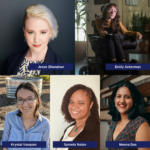
Four women scientists at the heart of the disability movement share their stories in an effort to promote awareness. Read More

Crystal R. Emery is smiling, surrounded by film equipment

Energy in Motion: Filmmaker Crystal R. Emery is a Force for Change in STEM – April 22, 2021

An interview with Crystal R. Emery on broadening participation in science and medicine through innovative media and programs. Read More