
What led you to pursue a career in STEM?
I was a very curious child, and from an early age I was fascinated by DNA, maturation, and the idea of genetic engineering. That early curiosity gradually grew into a deep love for research, which led me to complete my undergraduate studies in Sri Lanka. Later, I moved to the United States to gain exposure to new technologies, expand my research experience, and continue growing as a scientist.
What is your chosen field, and how does your work benefit society?
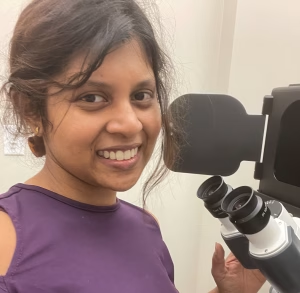
My field is cell biology, and my research focuses on understanding how intracellular ciliary patterns are formed. Cilia are important cellular structures, and defects in their formation or organization are linked to a group of disorders known as ciliopathies. Although my work is not directly clinical, it aims to uncover the basic cell biological mechanisms that control pattern formation and ciliary organization. By studying these fundamental processes, my research can help build a better foundation for understanding how developmental defects and cilia-related diseases arise.
What challenges do you face as a caregiver, and how do they impact your career?
As a caregiver, I am the primary caregiver for my family, and without close family nearby, balancing research, academic responsibilities, and family life can be especially challenging. Caregiving requires time, emotional energy, and flexibility, which can sometimes make it harder to maintain focus and pursue professional growth as quickly as I would like, including attending conferences, networking events, and other development opportunities. At the same time, these responsibilities have strengthened my resilience, time management, adaptability, and determination.
How will this award help you advance your career or follow your passion?
This award will help ease some of the financial burden associated with childcare and allow me to focus more fully on my experiments, spend additional time in the lab completing crucial work for my thesis, and invest in professional development opportunities that support my growth as a scientist and student. It will also help me build a stronger foundation for the future roles I hope to take on, including becoming a scientist who supports and inspires the next generation. This award encourages me to continue pursuing my goals while balancing caregiving responsibilities, and it means a great deal to feel supported in both parts of my journey.