

As demand for solar power continues to climb, an array of talented women scientists and technicians find themselves lighting the way.
According to the International Energy Agency (IEA), global solar photovoltaic (PV) capacity tripled from 2018 to 2023, the largest absolute generation of all renewable technologies for this period. The intergovernmental organization expects solar energy to continue its rapid expansion in the coming years, playing a central role in the global transition to clean energy. Five US states—California, Hawaii, Nevada, Massachusetts, and Vermont—generated more than 15% of their electricity from solar power between Q4 2022 and Q3 2023. Scientists predict that emerging technology will support further adoption of solar energy by addressing such challenges as improving the efficiency of solar panels in converting sunlight into electricity and increasing the sustainability of extracting and processing the materials needed for the 10 association for women in science technology.
Walking Multiple Career Paths in Solar Energy
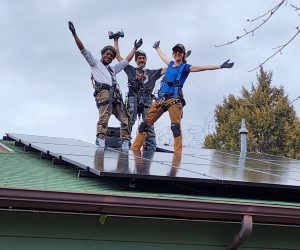
Women currently take on a broad range of professional opportunities in the solar energy industry. For example, solar electrician Riley Neugebauer currently finds herself transitioning from employment at Namaste Solar to a key role at the Colorado Energy Office. Previously, she worked for the nonprofit Solar Barn Raising and the solar installation and electrical contracting company Brilliant Solar and Electric, both based in Durango, Colorado. She has also launched a community-building initiative called Solar for Women.
Neugebauer decided to pursue a career in solar energy because she cares deeply about the environment, wants to mitigate climate change, and sees solar power as a technology that can positively impact the planet. Initially, she became interested in the distributed nature of solar power and in the ability of individuals to generate their own electricity. She also felt the influence of her family’s background in the trades and became drawn to the hands-on, technical aspects of solar installation and design. “I have a family that’s in the trades…my brother is in the trades, my dad is in the trades,” she says. “And so, I think there’s something in my genetics that makes me like to build and create things.”
Another solar professional, Dan Mueller, serves as Development and Strategic Partnerships Manager at GRID Alternatives, a nonprofit working to bring solar energy to communities as part of a broader effort to push for economic and environmental justice. She also conducts workforce training at GRID. Mueller has pursued a career in solar energy by following a circuitous route. Her background in grassroots community organizing, sustainability, and human rights advocacy led her to GRID Alternatives, which works to bring solar power, battery storage, and electric vehicles to underserved communities.
“GRID Alternatives was known for a very long time as the nation’s largest nonprofit solar installer, and I found my way to GRID through grassroots community organizing and sustainability,” Mueller notes. Her experience in the Peace Corps and in working with farmers on organic permaculture also contributed to her interest in the renewable energy field.
Another trailblazer, Evelyn Butler, works as Vice President of Technical Services at the Solar Energy Industries Association (SEIA), the national trade association for the solar power and storage industries. Her team’s work includes developing codes and standards, certification programs, and permitting for distributed generation (small-scale electricity generation sources located near the point of consumption). She started her career at the organization formerly known as the Underwriters Laboratories (now called UL Solutions), where she tested, inspected, and certified products. As the solar energy industry grew, solar manufacturers started going to UL to get their products tested. Butler eventually transitioned into establishing and leading the UL global solar portfolio, international market development, and services development and management.
Overcoming Challenges
All these solar professionals have contended with obstacles during their careers. Neugebauer faced several key challenges in pursuing a career in the solar industry, but the first huge one for her was finding a job as a woman in the male-dominated trade, especially without prior experience. She found her search particularly difficult because she wanted to work in a rural area. She had to deal with a lack of mentorship and with little support from others in the industry, as well as with some discouraging comments and attitudes toward her as a woman. Ultimately, she relied on both personal support systems and on industry-specific resources to help her persist and succeed in the male-dominated solar field.
Neugebauer found encouragement by building a supportive network of friends, family, and a therapist. She also attended training programs and workshops, like those offered by Solar Energy International, which specifically designs events to help women in the industry. Neugebauer worked at places like Namaste Solar in part because of its more-inclusive and supportive culture. Through her mission to create the Solar for Women community, she now provides a new resource for training and connecting women interested in solar installation and technical skills.
Mueller, as the first person in her family to go to college, lacked relatives who could provide mentorship and advice on navigating the job market. Growing up in a conservative, predominantly white community, she didn’t have role models and mentors who were women and people of color until she reached college. As a person of color in the predominantly white and male renewable energy sector, Mueller often now finds herself challenged to use her voice in elevating the perspectives of the communities she serves.
Higher education helped Mueller overcome these roadblocks. She earned a master’s degree at the University of San Diego, an educational experience that provided her with more grounding and better opportunities. She also found mentors and role models among her college professors. In addition, she gained skills in grassroots community organizing and in nonprofit work, and they have helped her find her way to GRID Alternatives.
Butler faced her most significant challenge when she decided to transition from UL, an organization with over 10,000 employees globally and where she served as one of about 200 directors, to SEIA, which had around 40 employees when she joined in 2016. This new career required a significant mindset shift from a technical, approval-driven approach to a more agile, self-reliant leadership style that incorporates an understanding not only of technical data but also of consumer needs, politics, and legislative access.
Butler credits the supportive environment at SEIA and her willingness to adapt as key to successfully navigating this career challenge: “Our CEO, Abby Hopper, is really approachable and shapes the company with a healthy respect for people’s expertise, encouraging people to collaborate,” Butler says. “In times when I was directly interfacing with her, learning…how to make strong decisions and to trust myself was very impactful.” She highlights the value of networking and building relationships with professionals in such different fields as economics and health care to gain diverse perspectives and insights.
Benefiting from a Solar Energy Career and Finding the Right Employer
Women in this industry appreciate knowing that their work has a positive environmental impact by advancing renewable energy and a positive impact on communities, particularly those impacted by climate change and high energy burden, the percentage of a household’s income that is spent on energy costs. Neugebauer, Mueller, and Butler also highlight the potential for career growth in the solar industry, even if the path may not be as clear-cut as in some other fields.
Butler predicts continued expansion in solar energy, based on its significant contributions to the grid and on ongoing commitments to domestic manufacturing. She notes that this growth will entail a challenge for workforce development because of the need for skilled workers. One solution? She asserts, “We need women in STEM in this industry…There are so many opportunities…whether in batteries and battery chemistry; engineering the technology; designing the products or designing the systems that go on rooftops; or working at the grid level and modernizing that and helping more energy come online.” In addition to highlighting opportunities in R&D, manufacturing, and development, she points to leadership roles: “We see many CEOs who were CTOs, or they were directors of engineering, or they worked in a lot of the STEM fields before they became business leaders.”
Many employers now operate in the solar energy sector, including nonprofit solar installation organizations like Solar Barn Raising and GRID Alternatives, small solar contractors, and larger companies like Namaste Solar. Numerous government organizations, such as the Colorado Energy Office and the California Energy Commission, promote and support solar energy development. The solar industry constantly evolves, however, so women must carefully choose an employer that provides opportunities for ongoing learning and professional growth—through conferences and mentorship opportunities—as well as entrée to various aspects of the renewable energy revolution: technical skills, hands-on installation training, project work, and design work.
Entering the Field
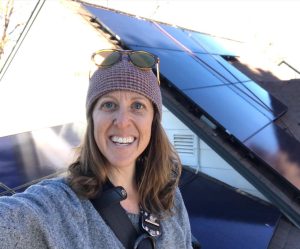
Neugebauer recommends that young people interested in the solar trades consider getting a job as an installer or technician first. This work allows them to get a hands-on experience and to see if the field is the right fit. She also highlights the value of programs like those offered by the Solar Energy International Women in Solar Power Program that provide training and lab experiences, especially for women. GRID Alternatives has workforce development programs that can serve as good entry points: the Installation Basics Training (IBT) Program and the SolarCorps Fellowship Program. Networking through organizations like Solar for Women can help anyone interested in the industry make connections and identify the best matches for them in training and job opportunities. The Interstate Renewable Energy Council (IREC) Solar Career Map, an interactive tool for exploring solar energy career paths, illuminates pathways to roles in four broad categories—manufacturing, system design, project development, and installation and operations.
Butler suggests that anyone interested in starting or transitioning to a career in solar energy engage with organizations including Solar Sister and Rise Renewable Energy for connections and resources. She encourages women to keep an open mind: “Continually educate yourself, surround yourself with good mentors who can help you grow into other roles like business leadership or global leadership,” she says. Butler also notes that her own organization, SEIA, interfaces with international associations including the Global Solar Council and has a global market influence through participating in meetings such as COP30, the 30th United Nations Climate Change Conference.
Acquiring Skills, Transitioning from Academia, and Considering Entrepreneurship
Neugebauer, Mueller, and Butler explain that a STEM background, particularly with math and technical skills, proves very helpful for roles in solar design, engineering, and installation. Hands-on, problem-solving abilities benefit employees on the trades side of the industry. For technical sales and outreach roles, strong communication and customer service skills rank high in overall importance, as does the ability to translate the technical aspects of renewable energy for the public. Anyone interested in project development needs strong strategic planning, partnership development, fundraising, and advocacy skills.
Due to the value of practical experience in the solar power industry, those transitioning from academia may benefit from seeking out internships, apprenticeships, or entry-level technical roles. Leveraging STEM expertise can open up opportunities in solar design, research, or policy roles. The importance of translating technical information for community engagement can make STEM academic experience valuable, when coupled with practical experience and skills.
Challenges around predatory practices and the need for community education and long-term sustainability suggest that would-be solar entrepreneurs need to prioritize ethical practices and community-focused solutions. For those interested in entrepreneurship, getting experience first as an installer or technician has great benefits. Anyone interested in entrepreneurship also needs to access the right financing and to navigate regulations and permitting.
Getting Involved
Neugebauer shares the following information for anyone interested in learning more before taking the dive into a solar power profession: “If people are interested in the vision or mission around Solar for Women, which connects more solar tradeswomen and empowers them, they can go to the website, and I have a newsletter that is going to be started in the next year or so; people can sign up for that. We have a Facebook page they can follow. And soon it will be a 501c3, and people can make donations as well, probably by this summer.”
Mueller explains opportunities at GRID Alternatives: “There is something for everyone, whether you want to volunteer or whether you work at a company and want to get some team-building and corporate-engagement help. Check out the various ways to get involved on the GRID Alternatives website. At the very least, start having conversations more regularly about solar power and energy. Energy powers up our lives, yet it’s often an unspoken conversation; many people don’t often talk about it, even though it’s so central to everything that we do.”
Finally, Butler highlights the importance of federal policy advocacy. SEIA works to make sure that the federal government preserves clean-energy tax credits and structures them in a way that incentivizes solar companies to pay prevailing wages and to invest in underserved communities.
The solar revolution is well underway—and there’s never been a better time for women to shine with a supportive professional network in this rapidly growing field. Your skills and passion can make a difference in building a brighter, more sustainable future for your communities and the world.
First steps to learn more and get involved:
- Visit the Solar Energy Industries Association (SEIA) website to explore resources and take action to protect solar and storage tax credits.
- Check out GRID Alternatives for volunteer and career opportunities in underserved communities.
- Connect with Solar for Women to network and empower women in the solar trades.
 Georgina To’a Salazar, PhD, works to create innovative solutions in science communication, research, and policy. With a BS in chemical engineering from Stanford University and a PhD in biomedical engineering from the University of California, Irvine, Dr. Salazar has fulfilled her dream of exploring the world, having taken research positions in Singapore and Japan before returning to the United States to focus on science communication. She currently works as a freelance scientific writer through her small business, Redwood Scientific Communications, LLC.
This article was originally published in AWIS Magazine. Join AWIS to access the full issue of AWIS Magazine and more member benefits.