
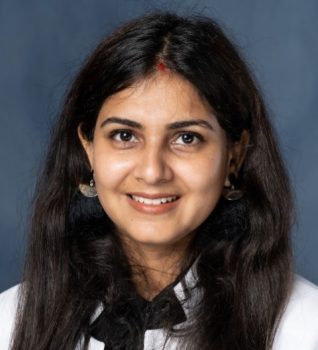
As a research scientist from India, I know all too well the impact that the US dependent-visa system has on the scientific careers and mental health of women in STEM. We come to this country eager to work but then run into regulatory roadblocks that prevent us from contributing our skills and knowledge.
As researchers who come from abroad, our dilemma goes much further than the attempt to “have it all”: We face systemic barriers related to immigration regulations that stall our careers and prevent us from contributing robustly to the US scientific enterprise.
Spouse Dependency and Work Restrictions
Over the last several years, I have encountered thousands of South Asian women—many from India, Pakistan, Nepal, and Bangladesh—who came to the United States with their husbands on dependent visas. Often very highly qualified, with PhDs and prior lab experience, they come with the hope that they will soon contribute to science again. However, they quickly discover that the visa system presents an unexpected and exhausting waiting game.
The most common visas for research couples include F1s (for PhD students) and J1s (for postdocs and visiting researchers). The F2 visa, the dependent visa for spouses of F1 holders, allows the spouse to study but not to work. The J2 visa does allow them to work but only through an Employment Authorization Document (EAD). Getting this EAD approved can take months, and its validity lasts just for the duration of the J1 holder’s contract—usually one year in most labs. This means the dependent spouse must reapply for a new EAD every year, and with a three-month-or-more processing time, the spouse’s actual permitted work period each year comprises just eight to nine months. Most labs do not want to go through paperwork every year or to wait for someone who won’t have long-term stability, so even if the dependent spouse has superb capabilities and qualifications, she often has to leave the lab.
Effects on Mental Health, Finances, Relationships, and Motherhood
Most of my friends and I have doctorates, have worked in labs before we moved to the United States, and have all followed this same uncertain route. People rarely acknowledge the effect this has on our mental health, relationships, and career credibility. I’ve seen my friends—almost all of them highly qualified scientists—wait at home for months or years, working for short periods between long gaps, only to start the work permit process all over again each time. For some, it has led to depression, panic attacks, and complete withdrawal from family and social life. These women face financial instability, loss of confidence, and the pressure of ticking biological clocks. The repetitive questions from back home—“When will you start working again?”—become unbearable. Some have gone through unplanned motherhood during these breaks, simply because their careers go on hold indefinitely.
My journey: Six Years, Four Labs, Endless Restarting
I have strong credentials myself: a PhD in infectious diseases from Europe and solid training in molecular biology. However, when I came to the United States on a dependent J2 visa in April 2019, I waited for months for my work permit. I finally joined a stem cell lab in November 2019, an exciting opportunity in a new area. But it lasted only a few months—my husband’s DS-2019 (visa document) lasted for just one year, and my work permit was tied to his. The permit took four months to arrive, and soon after, I had to reapply. Then COVID hit, and everything was further delayed. I joined a new lab in late 2020, where I worked on ex vivo lung models and COVID-19. The breakthrough project led to a strong publication, but I had to leave the lab again after ten months due to the same visa issues. I felt heartbroken. I had finally found work I loved, and I couldn’t continue.
When my husband got an offer from Harvard, we asked for at least a two-year contract so my work permit would last longer. But the labs were understandably hesitant to invest in someone without visa stability. It takes at least six months to really settle into a lab and begin meaningful work. I moved to Tufts Medical Center, where I shifted my focus to pulmonary arterial hypertension. I worked there for 18 months until funding ran out, and then I was home again—for what would turn into nearly six years of instability. Finally, in August 2024, I received my independent H1B. I have remained in the pulmonary and critical care field, publishing in good journals and participating in wide-ranging collaborations, but the journey to get here has been filled with repeated restarts, uncertainty, and self-doubt.
Despite all this, I never stopped trying. Each lab change taught me something new. I built expertise across stem cells, virology, tissue models, and pulmonary research
What You Can Do to Tackle This Problem
If you’re planning to come to the United States with your partner, I urge you to research the location, the opportunities available for both of you, and whether the PI is open to supporting your career as well. Ask your spouse to negotiate a longer initial contract—at least two years—so that you have time to find meaningful work and don’t face yearly visa disruptions. Once you arrive here, try to stay connected. Attend scientific conferences, join associations like the American Thoracic Society or American Heart Association, write personalized emails to labs that interest you, and don’t be afraid to ask for meetings. Sometimes, a direct conversation can open doors.
What helped me the most was believing that things would eventually work out. When you put your energy and focus into something, the opportunities do come—sometimes more slowly than you expect, but they do come.
Most importantly, try not to compare yourself to others. Your journey is unique. If you have to pause your career, use the time for personal growth: Read, take care of yourself, and use this break as a chance to learn something new. It’s okay to change your area of research or to try something different. Learn to view science as a marathon.
This US STEM community must understand that these problems far exceed issues with visa paperwork: Most importantly, they include the struggle to preserve the contributions of women scientists who are left behind by immigration systems not built for dual-career families. We must recognize that this system causes our science to suffer because some of our brightest minds remain stuck on the sidelines. Hopefully in the future, the government will amend dependent-immigration rules to facilitate the contributions of brilliant women scientists from abroad.
To every woman in this position: Hang in there. Your work matters. You are not alone.
 Yamini Sharma, PhD, is a biologist specializing in microbial infections and lung tissue scarring. Her research focuses on the antifungal properties of natural products, the identification of novel drug targets, and the study of drug resistance in infectious diseases. During her postdoctoral studies, she played a key role in establishing an immunoactive ex vivo lung cryopreserved bank for studying SARS-CoV-2 pathogenesis, with potential applications in various infectious lung diseases. She earned her BS, MS, and PhD in biotechnology in India, and she has done research in esteemed labs in Germany and the United States. Her long-term goal is to address the high mortality rates in fibrosis and lung infections and to make a meaningful impact in this critical research.