
When I was in high school and began thinking about college applications and interviews, one question that surfaced in each conversation was “tell me about yourself.” This question persisted through college interviews, grad school interviews, and even into professional internship interviews. Although this question never changed, the one thing that did change over the years, has been my answer. Sixteen-year-old me would have said “student, athlete, aspiring doctor,” but twenty-four-year-old me would say “woman, Hispanic, queer, student, scientist.”
It was not until I began graduate school when I truly started to think about my identity and what made me, me. Something about starting fresh in a new place, in a new phase of life, really allowed me to be introspective about who I was. This was also when being a queer woman started to be a big part of my identity, and one that I was proud of. All my life up until this point, I felt the need to or was forced to hide this part of myself for various reasons. I came out during college and struggled with being accepted by my family for almost three years. Those years came with lots of hardship and points where I did not know if I wanted to fight anymore. I am proud to say that I was able to overcome this point of my life, and I now find being queer to be one of my favorite qualities about my identity.

I do want to make it known that this journey of mine was not a solo one. Once I got to graduate school, I began a leadership program within the PhD program called Leadership in PhD (LeaP). This was a space where a small group of diverse first year students (at the time) met twice a month to take part in a program learning about leadership in science, but more importantly how to be a leader in science as a diverse individual. It was with this group of individuals where I learned that everyone’s journey to be where we are right now was full of hardships, overcoming bias, and similar struggles with graduate school. Finding community within the LeaP program helped show me that I really could be my authentic self in this new phase of my life.
Despite being a part of the LeaP program, I still had to navigate how much of myself I wanted to reveal as I was going through the process of finding my thesis lab. Being queer in a state where you “can’t say gay,” can pose a possible hostile work environment, which was something I was very afraid of. I can say that I am thankful for the people in my lab who have not only accepted me, but celebrated this part of my identity, and for that I am truly blessed. It also inspired me to bring Pride and the queer community to light within the Neuroscience department on my campus. I joined the Neuroscience Equity Diversity and Inclusion committee with the one demand of leading the effort to celebrate Pride alongside the other cultural celebrations that have been done in the past. Having this opportunity really gave me the confidence to be out and proud on my campus and within my own department, by organizing events around celebrating LGBTQI+ and Pride each year. My greatest hope is that this has inspired other students both at my institution and beyond to not be afraid to be their full authentic self.
Being a woman in science comes with its own hardships, but we are not just women. There is so much more to our identity other than just being a woman. For me, it was hard to navigate all these different parts of my identity. I worked to figure out which parts of me were strengths, because like most women I was taught to only showcase certain aspects of my identity and hide others. What I have learned so far is that having all parts of my identity come together and embracing them as strengths has made me a better scientist. By being confident in the person I am and what makes up my identity, has allowed me to not be afraid when stepping into new spaces. Of course, I am still afraid when standing in front of a group of scientists about to give a presentation, but that fear no longer stems from me being queer and how the audience might judge me. This self-acceptance has also positively contributed to my science, allowing me to focus more on my project because I am in a safe space and supportive community where I know I am celebrated because of my identity.
Now being a third year in my PhD program, I can confidently say that I know who I am. I think this is such a simple concept with such a deeper meaning. I encourage anyone reading this to seek out communities (like AWIS!) and surround yourself with others that build you up and allow you to be your full authentic self. Not only for yourself, but so that the next time you are asked that dreaded “tell me about yourself” question, you too can be proud of the answer you give. Happy Pride Month!
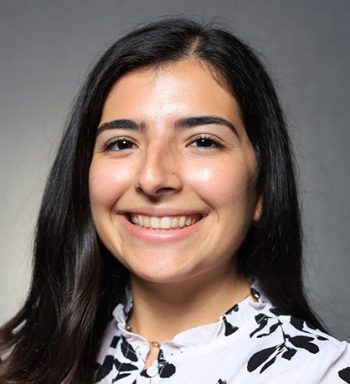
 Marissa Russo (she/her) obtained her BS in Brain & Cognitive Sciences with minors in computational biology, Spanish, and psychology from the University of Rochester in 2021. At the University of Rochester, she was on the varsity softball team all 4 years and was involved in the Medallion Society, a leadership program. She is now a PhD candidate at the Mayo Clinic Graduate School of Biomedical Sciences on the Florida campus studying glioblastoma extracellular vesicles and the tumor microenvironment. She is involved in the Leadership in PhD (LeaP) program, the Neuroscience Equity Diversity and Inclusion (NEDI) committee, and has a deep passion for patient advocacy and increasing health literacy and trust in science in underrepresented populations.