
My childhood home’s proximity to a small airport was a gateway to a world that fascinated me from a young age. The abundance of planes crossing the sky piqued my curiosity, sparking questions about how each aircraft worked and where they were headed. With each aircraft that soared above, my curiosity grew, setting me on a path toward a future career in the field of aerospace. However, as a first-generation, Muslim, Arab American, my aspirations in that field were not straightforward.
While I was growing up, I rarely saw individuals in the aerospace sector who shared my background or who looked like me. This lack of representation, despite my parents’ emphasis on the importance of education and hard work, unconsciously influenced my perceptions, making a future in aerospace—and in STEM overall— seem distant and unattainable. My experience is unfortunately a common one for many young girls, who lose interest in STEM fields, due to societal and cultural norms that inadvertently guide them away from these careers.
Everything changed, though, after I came across a video of Sunita “Suni” Williams, an American astronaut and Navy officer, giving a tour of the International Space Station. Seeing a woman who resembled me, who was achieving such great heights, and who was having a blast doing so, shattered my preconceived notions and reignited my passion for aerospace. This was a pivotal moment: realizing that there was indeed a place for someone like me in this field.
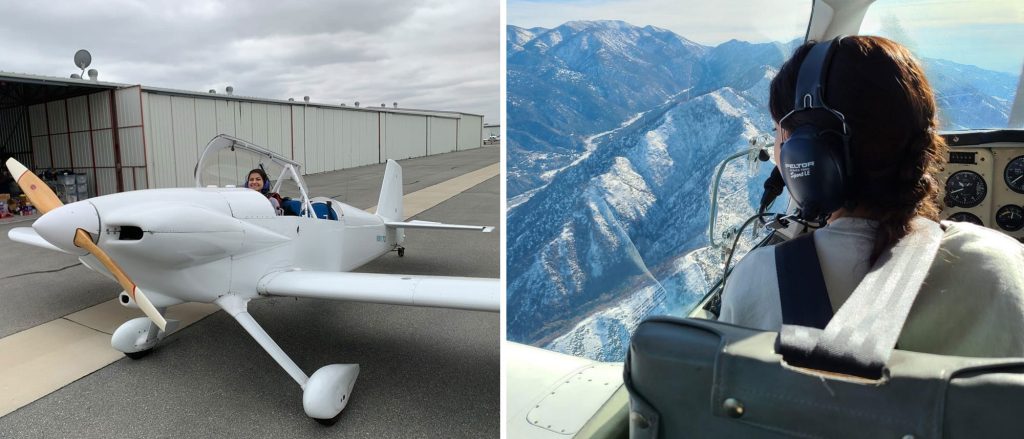
With renewed enthusiasm, I started flight lessons at French Valley Airport in Temecula, California, while I was attending the University of California, Los Angeles. As I started flight training, I felt a mix of excitement and self-doubt. My initial reaction was to back out and stay within my comfort zone, but I gradually understood that the uneasiness I initially felt had nothing to do with my capabilities and had more to do with the environment I was being exposed to for the first time. With this understanding, I immersed myself in the aviation community and dedicated the spare hours between college and my job to flying. I was eventually able to earn my commercial pilot license, along with Instrument, High Performance, and Complex aircraft ratings.
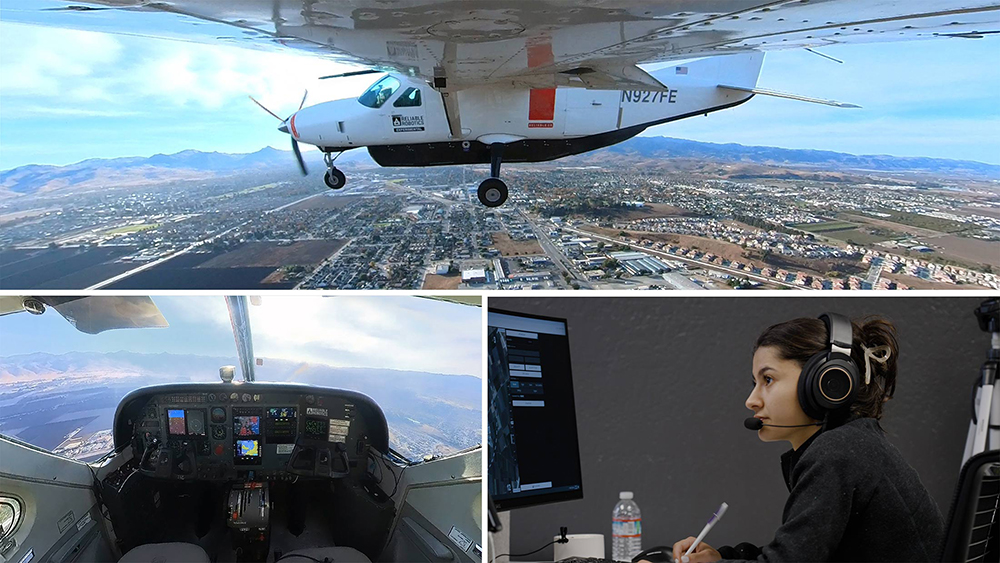
Simultaneously, I learned more about the aviation industry as a whole through different engineering and business internships. As I learned more about the field, I came to clearly realize that advances in automation would have a huge impact on the industry and would make this one of the most exciting times in history to be a part of it. This prospect was an opportunity I knew I couldn’t miss. I soon came across Reliable Robotics, an aerospace company that is developing and certifying a highly advanced autopilot designed to improve aviation safety and to bring remote piloting to commercial aviation. In 2022, I accepted a role as a Human Systems Integration Engineer, which has allowed me to use my background and passion for aviation as I work to integrate human-centered design principles into remotely piloted systems.
My time working in this space has been filled with excitement and has helped me learn important lessons. On November 21, 2023, I was privileged to be part of a significant milestone and historic breakthrough: a successful, uncrewed Cessna 208B Caravan flight demonstration, operated without any humans on board. Collaborating with a remarkable team of engineers, I was involved in the development of the remote-pilot station and played a role in designing the remote-pilot user interface.
This mission was also an important milestone in my personal career, as I had the opportunity to serve as the first Remote Pilot in Command for the Cessna 208B, orchestrating aircraft operations from a control center over 50 miles away from the actual flight. Our success was not only a testament to our team’s ingenuity and skill but also represented a momentous step forward for aviation safety. Reflecting on this experience, I recognize the vital roles that allyship and support from my team members played in my success. In male-dominated environments, it’s essential to realize that hard work, while fundamental, may not be sufficient without a supportive and inclusive atmosphere.

My path—from starting out as a child mesmerized by planes to becoming an aviation expert committed to aviation’s future—exemplifies the importance of perseverance, of passion, and of being unafraid to challenge traditional norms. As I progress in my career, I am determined to pave the way for future generations of women in STEM. When facing new challenges, I draw inspiration from the women who redefined what I believed was possible for myself, as well as from the impact I can have on those following in my footsteps. My biggest advice for women aspiring to join aerospace or any STEM field is to seek out and accept help when you need it. Many of us have navigated difficult beginnings and understand the loneliness of being a minority in these spaces. Fortunately, in today’s connected world, reaching out for support is easier than ever. Whether guidance comes from organizations like AWIS, from employee resource groups, or from social media forums, help and community are out there!
As I continue to learn and grow in my career, I look forward to the wealth of experiences still to come. My achievements underscore the importance of representation, resilience, and the collective effort to foster a more inclusive and diverse STEM community. In doing so, we not only advance our fields, but we also inspire the next generation to reach for the stars, just as I did, gazing up at the planes flying above my childhood home.
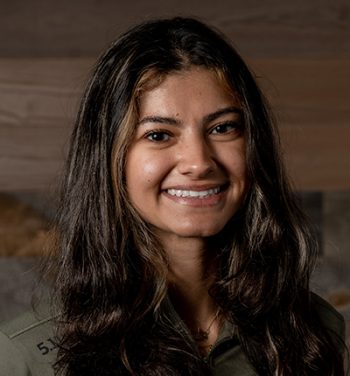
 Danah Tommalieh is a Human Systems Integration Engineer at Reliable Robotics, an aerospace company based out of Mountain View, California. Tommalieh works to find solutions to a wide range of human integration challenges associated with the development, testing, certification, and operation of automated aircraft systems. In her free time, she enjoys trying new coffee places in her city of San Francisco, hiking with friends, and flying.
This article was originally published in AWIS Magazine. Join AWIS to access the full issue of AWIS Magazine and more member benefits.