
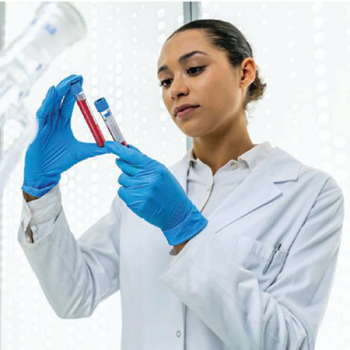
A rapidly growing STEM job market in the United States requires more qualified professionals than the country can provide. If we want science to progress, we must pay far more attention to the long-term career prospects of graduate students and postdoctoral researchers, whose work is essential to meeting this gap, and, crucially, we must provide better pathways for young international scientists. The academic community should prioritize the professional and career development of these researchers and students more and put less emphasis on judging them solely by how many papers they publish and how many grants they secure. Ensuring the future of the STEM workforce demands an evolution in how we support all these young scientists.
Clearly, a key aspect of this evolution involves recognizing the crucial role of international candidates in the STEM landscape. In the 2022–2023 academic year, 5.6% of nearly 19 million college students in the United States consisted of international students, including F-1 students in Optional Practical Training programs. Of these, approximately 46% were enrolled in STEM programs. Although international students in STEM fields represent a relatively small percentage of the overall student population, they make remarkably significant contributions. Their research has led to over 30% of U.S. patents, and they have won an impressive 33% of American Nobel Prizes. These accomplishments underscore the substantial impact international researchers have on innovation and scientific excellence, despite their smaller numbers.
Unfortunately, many of these talented scientists come from regions around the world where they still face obstacles that impede their research and educational progress, often due to economic hardships and other challenging conditions. Partnering with well-resourced and advanced research facilities can greatly enhance the effectiveness of scientific training endeavors for international students and early career researchers from these developing regions. Thus, providing them with the opportunity to execute research projects in well-supported environments can unlock their full potential and lead to improved results.
The Impact on Women In STEM
One additional factor impacting our country’s ability to fill the STEM workforce relates to a persistent gender gap. In particular, women international students and scholars with parental and caregiving responsibilities face compounded challenges as minorities with more limited access to essential opportunities for career advancement. While some institutions, private companies, and professional organizations have initiated commendable efforts to address these issues, they need to put more effort into closing the gender gap and ensuring that the STEM workforce and leadership benefit from a pool of diverse talents.
The Role of Science Societies in Advocacy and Support
Professional societies can play a crucial leadership role in advocating for policies that support international students and scholars by providing career development opportunities that help them thrive. By championing inclusive policies and special training, these societies can ensure that they help preserve the diverse talents of these scientists and extend them the opportunities they need to drive innovation and advance scientific progress.
Some organizations already offer help, one notable example being the American Association for the Advancement of Science (AAAS). This society runs the Science and Technology Policy Fellowships, a program that provides opportunities for scientists and engineers to engage directly in policymaking processes. As an inclusive and influential scientific enterprise, the AAAS is well-positioned to leverage its programs for the advocacy of policies that remove barriers, create inclusive opportunities for international students and scholars, and ensure that young, international scientists can contribute fully to the STEM workforce. AAAS’s advocacy can include informing policymakers about the unique challenges faced by international scholars, like adjusting to a new culture, navigating VISA issues, and reestablishing a support network, among several others. The organization can also articulate the need for supportive immigration and funding policies in their public statements and in the media, and they can organize workshops, seminars, and national-level support groups that bring together scientists, policymakers, and international scholars to foster dialogue and to develop actionable strategies for sustaining a diverse and dynamic STEM community.
Other professional societies must adapt and amplify key strategies to support international scholars, thereby ensuring a diverse and representative workforce in STEM. Some organizations have already taken important steps. For example, the Federation of American Societies for Experimental Biology has a collaboration set up to address science policies, provide a variety of awards, and offer professional development opportunities to graduate students and early career researchers. Although very limited in numbers, the Graduate Women In Science National Fellowship Program offers a range of fellowships and awards to support women’s academic and professional careers in STEM, and the program is open to researchers of all nationalities. The Society of Women Engineers provides highly inclusive scholarships worldwide that support women pursuing undergraduate or graduate degrees in engineering, engineering technology, and related fields.
The Society for Advancement of Chicanos/Hispanics and Native Americans in Science (SACNAS) offers conference scholarships that cover travel, lodging, and registration expenses for undergraduate and graduate students to attend the organization’s National Diversity in STEM Conference. Interestingly, applicants for this scholarship must be graduate students enrolled in a STEM program or undergraduate students interested in pursuing higher education in a STEM field and enrolled in a two-year or four-year college/university. Additionally, the Linton-Poodry SACNAS Leadership Institute (LPSLI) and SACNAS Postdoc Leadership Institute (PLI) help students and scholars cultivate essential leadership competencies in STEM fields. However, SACNAS currently does not offer these opportunities to anyone other than U.S. citizens and permanent residents.
To help all women in science and STEM fields reach their full potential, the Association for Women in Science engages in collaborative advocacy efforts centered on driving systemic change, creating equitable workplaces, and recognizing women’s contributions in science and leadership. AWIS advocacy efforts address gender bias and promote antiracism, anti-harassment, caregiver support, and more, and the organization offers a variety of scholarships and awards to encourage researchers at different career stages. Similarly, Mothers in Science helped unite various STEM organizations and societies in 2022 to develop a set of actionable strategies for increasing the retention of women in STEMM careers and for cultivating a culture of fairness and inclusivity.
Also of note: The International Union of Biochemistry and Molecular Biology (IUBMB) actively collaborates with the Federation of European Biochemical Societies (FEBS) and the Federation of African Societies of Biochemistry and Molecular Biology (FASBMB) to support the career advancement of international scholars and trainees. The IUBMB-FEBS-FASBMB PROBio-Africa Fellowships exemplify how science societies can effectively collaborate to support international students and scholars by providing them with valuable opportunities for professional growth and international collaboration. Adapting such a coalition-based approach will have a huge impact in shaping the future of science.
While many science societies provide scholarships, fellowships, innovative resources, learning communities, mentorship programs, networking opportunities, and career development resources, some of these opportunities do not yet extend to international researchers, in part due to a lack of dissemination of information about them. These professional groups can modify their initiatives to better support the unique needs of the international student and scholar population. Collaboration among science societies can help create a unified approach that amplifies the presence of international students and scholars in STEM, ensures their career growth, and removes barriers in funding applications.
Key Takeaways and Call to Action
- Collaborative Advocacy: We urge science societies to collaborate and pool their resources to create a unified advocacy approach so that no one has to reinvent the wheel. By working together and providing tailored support, these societies can amplify their impact on policy changes that support the unique needs of international students and scholars, particularly those with caregiving responsibilities.
- Inclusive Access to Funding: We also encourage science societies to engage in advocacy work that urges funding agencies to eliminate residency and citizenship restrictions, so that international researchers have equal access to grants, scholarships, funding, and professional development opportunities.
- Recognition and Visibility: We believe that science societies should actively recognize and highlight the research and achievements of international students and scholars. This visibility will help ensure their integration and success in the STEM workforce.
- Diversity and Inclusion Monitoring: We also believe that these professional STEM organizations should regularly assess and monitor the inclusion of international students and scholars in Inclusive, Diversity, Equitable, and Accessible (IDEA) programs, to confirm that these initiatives truly reflect their goals.
- Practical Training and Mentorship: Finally, we suggest expanding mentorship programs within science societies to include practical support, such as invitations to internship opportunities in academic and private sector labs and to postdoc positions. Interviews and offers should be free of discrimination, including bias against nationality, parenthood, or caregiver status.
 Diane Ugwu earned her BSc and MSc in Biochemistry from the University of Nigeria, Nsukka. She began her career as a lab technologist in the Biochemistry Department at Nigeria’s Federal University of Technology, Owerri, before transitioning to an assistant lecturer role. Currently, she is pursuing a PhD in the Molecular Biosciences program at Washington State University, and she is focusing on interdisciplinary research in biochemistry and molecular biology education in Dr. Erika Offerdahl’s lab. Ugwu volunteers as the Community Programs Manager for the nonprofit Mothers in Science.
 Srishti Baid, PhD, is a researcher with expertise in microbiology and blood coagulation. Currently, she serves as a Postdoctoral Research Fellow at the University of Michigan. She earned her PhD in Microbiology from the University of Kansas. She also holds a BS in Microbiology, as well as an MS in Medical Biotechnology, from institutions in India. Baid actively participates in community engagement and diverse STEM initiatives with several organizations and is deeply passionate about science communication.
This article was originally published in AWIS Magazine. Join AWIS to access the full issue of AWIS Magazine and more member benefits.