
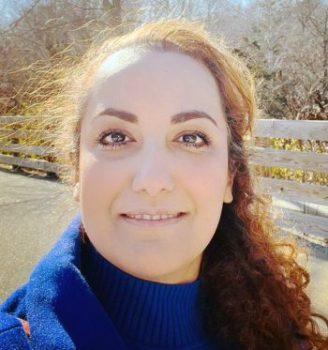
When an international woman pursues graduate studies in the United States, she faces a unique set of challenges, often including visa uncertainties and the potential for encountering unprofessional conduct from advisers or educational institutions. As she follows the path toward earning a PhD, she may harbor aspirations of academic excellence and profound personal development. However, her aspirations can sometimes be undermined by negative experiences that significantly impact her journey.
A woman who comes to graduate school from abroad must get a visa to study in the United States and obtaining it can be a major source of anxiety. It is a complicated process. Hopefully her institution will provide essential support and guidance throughout. If not, she might be forced to tackle it on her own.
The worry does not end when the visa is obtained. She cannot easily go home to visit family. Students who have a singleentry visa will have to apply for a new one if they leave the country. Getting a new visa is not guaranteed – especially depending on the country of origin. I am from Iran and have not visited my family for almost five years.
Even with a multiple-entry visa, there is a fear that you might not be able to reenter the U.S., or you might not feel safe going home given the circumstances of your country. This puts a burden on the student’s mental health to miss holidays and family support. Some advisers exploit these travel constraints by assigning heavy workloads knowing that the student cannot take holidays.
Speaking of advisers, they play an important role in a student’s educational journey. For an international student who may already feel alienated in an unfamiliar academic culture, a good adviser is an absolute key to success.
A toxic adviser, one who fails to provide the requisite mentorship and support, or who displays unprofessional behaviors, can obstruct the student’s academic progress. Encountering a toxic adviser can lead to academic setbacks, mental health issues, and, in some cases, to the premature and unsuccessful conclusion of a PhD journey.
This problem can be compounded if both the department and other faculty members align with these advisers, strategizing to dismiss the student from the department. This may involve diminishing the student’s research efforts or disparaging the student for speaking out about the adviser’s unprofessionalism and unreliability. When these issues become apparent to others, the department or the Office of Equity may begin to reconsider the unfolding events, questioning why such circumstances were allowed to transpire. If this occurs after the international student has already lost her PhD opportunity, she will experience both an emotional and a career loss.
If the situation is dismissed by the university as a “learning opportunity and chance for growth,” it can be particularly frustrating. For individuals whose academic pursuits have been compromised by such experiences, the path to recovery and to regaining their footing can be incredibly challenging, both personally and professionally. Therefore, it is imperative that universities put into place training for advisors, clear policies and expectations, and strong accountability measures and strict repercussions for violations.
In addition, immigrant women are more likely to experience bias in educational environments. The quest for higher education is meant to be a life-changing and enriching experience for every student, irrespective of their nationality or background. Through the enforcement of rigorous policies, educational institutions have the power to foster a more secure and welcoming environment. Establishing comprehensive support networks and making resources accessible can greatly aid international students in overcoming both academic and nonacademic hurdles. This will enable international students to not only pursue but also to achieve their academic and personal growth ambitions in a supportive setting.
 Behnaz Akbari received her BS in chemistry and MSc in analytical chemistry in Iran, where she developed a chromatography method for detecting a biomarker of oxidative stress in human serum samples. Before joining the University of Nebraska-Lincoln (US) to obtain her second MSc in chemistry (2021), she worked at Newcastle University (UK) in fluorescence probes to establish a photochemical platform within ROS-mediated DNA lesions (e.g., 8-oxodG) in 2017. To advance her career in medicine, Behnaz pursued her interests at Boston University School of Medicine and obtained her third MSc in bioimaging in 2022. In 2023, she received two travel awards; one from the National Organization for Rare Disorders (NORD) and another one from Stanford University School of Medicine; one Educational Grant award from Mass Spectrometry & Advances in the Clinical Lab, and later, the FeMS Empowerment Award from the Females in Mass Spectrometry (FeMS) community. She was recognized as among the Top 10 Most-Cited Papers from WILEY in 2024. She also serves as the Purdue University Chapter of NORD students for rare. She has earned several awards and publications, accumulating a total of 268 citations to date. Behnaz is pursuing her PhD studies, having joined Purdue University in Fall 2023 in the Division of Analytical Chemistry.
This article was originally published in AWIS Magazine. Join AWIS to access the full issue of AWIS Magazine and more member benefits.