
My mother’s friend Jean experienced a stroke in her 50s; doctors warned her family that she might never walk nor talk again. Nevertheless, she found the resilience to achieve success in real estate. Coincidentally, I know three other women who leveraged the flexibility of independent work to maintain and build their professional skills and networks when their own disabilities proved challenging to full-time employment.
The stories of their journeys profoundly inspire me. However, even able-bodied women often have responsibilities that make a full-time work schedule impractical. We witnessed this starkly when COVID-19 hit, and gender-based inequalities became glaringly apparent for women scientists.
For many women in STEM, entrepreneurship offers a compelling alternative, providing unique opportunities and autonomy along with, admittedly, the downside of unique uncertainty. I reached out to several women STEM entrepreneurs who have grown their own businesses, hoping to learn how to reduce this uncertainty. Their experiences do reveal challenges but also steps to overcoming these obstacles. They also helpfully recommended resources you can turn to for support in becoming an entrepreneur.
Step One: Are You Ready?
First, consider your interests and areas of expertise. Aligning your business with these passions and specializations will help you to remain committed and to differentiate your offerings from those of your competitors. Most business owners I spoke with are highly skilled, have acquired significant specialized expertise, and acknowledge past excitement about previous work for various employers including universities and biotech companies. Before launching their own businesses, these entrepreneurs began with a feeling that they had more to give professionally and a desire to “spin off” the work they were already doing.
 Of course, you should also consider your personal and financial readiness. Deborah D. Stine, PhD, founder of the Science and Technology Policy Academy, advised entrepreneurs to try running a new business as a side gig before committing full time. This approach gives the business founder the opportunity to see whether they like running the new operation, to gauge income potential, and to get an idea of whether there’s enough work out there to keep the business running. Stine noted that it takes a substantial amount of time to reach the same level of income as traditional employment. She also explained that adverse circumstances can arise unexpectedly: “When the pandemic came, I was in the midst of several contracts (including major universities) who could not pay me in a timely manner and other potential clients decided not to move forward.” One of her key pieces of advice for an aspiring entrepreneur is to “make sure you have a long runway—at least six months of salary, maybe even a year.”
Another entrepreneur I spoke with, Indira Carey, PhD, founded AccelSci Consulting to provide services to biotech companies based on work she spent over 15 years doing in the sector. She said: “The consulting company was something that I had been thinking about for a really long time. But from a practical perspective, it’s not something that I was able to leap into until my kids were out of college.” During the period between thinking about the business and starting it, she set aside bootstrap money. To finally ensure her personal and financial readiness to work full time for her own business, she arranged to work part time for about six months. This was the runway she needed to complete all the setup activities for her business.
“I needed the time to do it, but I wanted to make sure that I at least had some money coming in, which is where my part time role really helped,” Carey explained. To get this working arrangement, she considered the business needs of her employer’s organization, then pitched the idea of working part time, explaining how this would help both Carey and the company. She acknowledged that there was an element of luck in the success of this proposal, but she noted another key element: “I had to be bold enough to ask. When you’re building your own venture, you have to be bold. You have to put yourself out there and get used to people telling you no. So I figured, taking the first step by going to my employer and talking through an idea was setting me up for the rest of what I was trying to do. That’s how I talked myself through that challenge, helping myself get over my own stumbling blocks.”
Step Two: Is Your Target Audience Ready?
Next, explore the market for your business to gauge your target audience’s interest and your income potential. For Carey, determining market fit began with interviewing her professional connections. She explained, “I would say, ‘Hey. I’m thinking of consulting in this space, and my services will be helping biotechs figure out their support solutions.’” Another layer of her networking involved interviewing connections who were founders and CEOs. Carey would ask them, “When you were at this phase in your biotech, would it have been helpful to work with a consultant who was offering x y z service?” She used the feedback she collected to tailor her business idea for viability, so it had the best chance of gaining traction in her target market when she made the leap to working for her business full time.
Meleah Ashford, founder of Ashford Engineering and Find Solid Ground Coaching, encountered a business challenge when she moved from San Diego to a small town in Oregon. She echoed Carey’s advice about informing your business strategy by working to understand your target audience. She explained, “If someone’s thinking about the transition [to running a business in an area] and they don’t already have that strong network in the area—both experientially and in locale—they should start building a network and talking it up. ‘Do you ever hire individuals? If you hire individuals, what would you want them to do?’”
Step Three: Create a Business Plan
Once you have assessed your readiness to launch a new business, you should formalize your idea with a business plan. This document is a great way to turn your idea into a road map that can guide decision-making on your entrepreneurial journey. For free guidance on developing this document, aspiring small business owners in the United States can turn to resource partners of the United States Small Business Administration (SBA), a federal agency that provides support to entrepreneurs and small businesses.
For example, one such resource partner, Norcal SBDC, provides a lean planning canvas that you can use to develop the clear and concise value proposition you need for your business plan. This tool provides a space for identifying key information, including:
- potential initial customers, “early adopters;”
- overall customers who will eventually buy your product or service;
- the opportunity in the market that your business aims to seize;
- existing competition;
- channels that potential customers use to get information, for instance social media or direct contact;
- revenue streams—sources of the company’s income; and
- metrics you can use to measure the company’s performance.
Step Four: Set Up a Business Entity
The next consideration is to create a legal business entity, which can help you separate your personal property from your business assets. It can also be a necessary step for doing business with particular clients. Ashford said she needed to be official in this way to work for a municipality that only hired businesses with liability insurance. Stine explained that she also needed to register her business on SAM.gov, the system that covers contract opportunities for the US federal government. She noted, “I was doing some work for NIH, and they wanted to hire me, but SAM registration was required in order to do business with the federal government. Because the government was in transition to a new system, it took several months to obtain the ‘CAGE code’ needed for my agreement. I was lucky NIH was willing to wait for me to get through this process, so I could take on the work they wanted me to do.”
SBA resource partners can provide free guidance for this step as well. For instance, SCORE’s Startup Roadmap course includes a Setting Up Your Business module that guides you through choosing an official business name, getting a tax identification number (EIN), opening a business bank account, selecting and registering a legal structure for your business, and getting any necessary licenses.
Step Five: Build and Raise Visibility for Your Brand
After establishing administrative and organizational structures and processes, you can start communicating with potential customers about your business, products, and services, and then you can engage with your first customers. One way to do this is to create a professional website. You can also utilize social media platforms and other digital marketing strategies to reach your target audience and to build a strong online presence. To conserve limited resources of time and money, you can start by confining initial outreach to two or three information channels that your business plan identifies as most important to your potential early adopters.
Soody Tronson, another experienced entrepreneur, heads a boutique intellectual property law firm, STLG Law Firm, and has a health-tech startup, Presque. Tronson has served as an advisory board member to STEM to Market: The Association for Women in Science Accelerator, and as an AWIS Palo Alto board member. She recommended that business founders initially limit what their company provides. If you are a service provider, for instance, you should assess “what your core competencies are, what you can do, and what you know how to do. Promote the ones you know how to do very well as your one or two services. Then over time, build your expertise in other areas and start adding it” [into the mix of what you offer]. This can be important for efficiently directing your communication to potential, relevant customers.
Tronson also emphasized that service providers should introduce their personal qualifications when they communicate about the business they have established. She said, “If it’s a service-oriented company, people are not buying a gadget from Amazon. They’re buying a professional personal service. Knowing who you are is important.”
Networking is crucial for building a small business. The article ‘Small business networking’ holds tips for getting started.
Step Six: Launch and Adapt
When you launch your business, it is important to be prepared to adapt, as the business landscape is always evolving. Gather feedback from clients to strategically refine your offerings. Identify challenges, and leverage the support of your communities and of organizations in your neighborhood, focus area, or market space. For instance, if you face the common challenge of managing your finances, you can get help from a local professional accountant or invest in a financial software package like QuickBooks to alleviate some of that burden.
Call to Action
In summary, starting a business begins with personal readiness and then moves on to vetting your business idea, laying out a plan, setting up an entity, raising visibility of your brand, and being ready to adapt once your business starts taking on work. The experiences of women I talked to reveal a host of challenges: putting yourself out there; finding a mutually supportive community; funding the launch of a business; finding a sufficient number of the right clients; managing finances; differentiating your solutions from others on the market; and encouraging a potential client to become a paying customer.
Their experiences also reveal steps that we can take to minimize these challenges for ourselves and for our peers. For instance, we can use our LinkedIn networks to connect with others who are on similar journeys, as well as to conduct market exploration. We can encourage women small-business owners by making it easier for them to maintain professional connections; by giving them time and space to promote their businesses; and by maintaining platforms that match them with people who are looking for freelancers or short-term contracts, since freelancers looking for project-based work have a harder time finding opportunities on platforms tailored to people looking for full-time positions.
By leveraging their expertise and resilience in analyzing, strategically planning, and continuously learning, women scientists can overcome barriers and achieve autonomy and fulfillment, growing their own businesses, making uniquely impactful contributions to their communities, and inspiring future generations.
Additional Resources
This brief list features articles AWIS previously published on entrepreneurship and a few general resources. You will find many more when searching online for particular geographical areas, institutions, and focus topics.
Select AWIS articles on entrepreneurship and starting a business:
- Four Entrepreneurs, Four Journeys
- Think You’re Not an Entrepreneur? Think Again!
- 5 Steps Toward Success with Federal Contracts for Women-Owned Small Businesses
Small business and entrepreneurship education
- The SBA learning platform
- SBA resources partners who provide local training, opportunities, and funding to communities in their areas
- FORM+FUND workshop offered at UC Berkeley
- MoFo scaleup series
- The Sustainable Economies Law Center Legal Cafes
Select entrepreneurial training programs and incubators
- Activate provides non-dilutive funding, excellent community, learning programs and large resource network.
- Berkeley Skydeck
- Baker Innovation Fellows
- NSF Innovation Corps (I-Corps™)
- Bay Area I-Corps Program
- UC Davis UC Entrepreneurship Academy
- HS Chau Women in Enterprising Science Program
Select startup grants:
- Small Business Innovation Research (SBIR) and Small Business Technology Transfer (STTR) Programs (provided through the NIH, DOE, NSF, ARPA-H, and other US government agencies according to their missions)
Select organizations, industry related conferences and expos, and other networking contacts can be built through platforms such as LinkedIn:
- US Chamber of Commerce local chamber finder – chambers of commerce gather business leaders working in a community.
- BioXchange runs in-person meetings but has also offered online meetings on a platform called Grapevine.
- BioCom life science association has locations in San Diego, Los Angeles, the Bay Area, Washington, DC, and Tokyo.
- BioscienceLA
- San Diego BioTech Networks
- Berkeley Innovative Solutions (BIS) Consulting Group links company projects with teams of interdisciplinary graduate students at UC Berkeley.
- Life Sciences Entrepreneurship Resources at Berkeley
- Women Entrepreneurs of Berkeley
- Networking events organized at UC Berkeley for entrepreneurship community
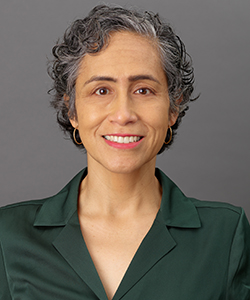
 Georgina To’a Salazar, PhD, works to create innovative solutions in science communication, research, and policy. With a BS in chemical engineering from Stanford University and a PhD in biomedical engineering from the University of California, Irvine, Dr. Salazar has fulfilled her dream of exploring the world, having taken research positions in Singapore and Japan before returning to the United States to focus on science communication. She currently works as a freelance scientific writer through her small business, Redwood Scientific Communications, LLC.
This article was originally published in AWIS Magazine. Join AWIS to access the full issue of AWIS Magazine and more member benefits.