

You know there must be a magic formula when a volunteer gardening program can directly reach 84 million people, as one did in 2020. That formula, it turns out, is one part science and one part community. It’s a sweet spot for people who crave learning and working collaboratively while serving the public. And what could be better than learning how to make the natural environment around you more sustainable, one plant at a time?
Founded in Washington State in 1973, the Extension Master Gardener program is now in all 50 U.S. states, eight Canadian provinces and South Korea. Individuals who participate, without needing any previous horticultural background, learn about botany essentials, soil management, plant nutrition, pest identification and control, diagnosis of plant problems, growing vegetables, sustainable landscape design, fruit trees, pollinators, and more, all in community with fellow learners whose sole purpose is to gain and share knowledge.
Sustainability is woven throughout the program, which encourages environmentally responsible horticultural practices that create the fewest downstream consequences— in other words, preventative practices. Examples of these practices include: using integrated pest management; growing your own food using low-cost gardening methods; incorporating sustainable landscape designs; and cultivating native plants. Master gardeners encourage the public to use practices that reduce fertilizer and pesticide pollutants, protect water quality, promote water conservation, reduce landfill materials, improve air quality by composting green waste, detect and manage invasive species and diseased plants, and raise wildland fireprotection awareness.
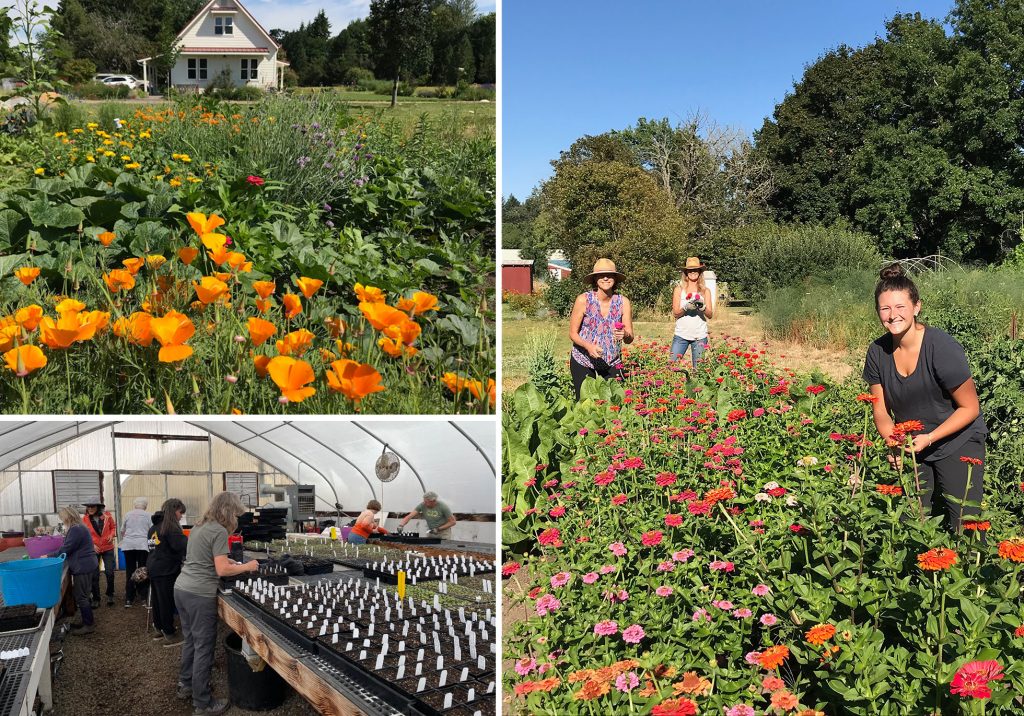
After 40 hours of coursework in classrooms, both online and in the field, newly trained master gardeners pair up with a seasoned master gardener to learn the ropes of helping out with the research-based public hotline (help desk), plant clinics, and other volunteer opportunities. In addition, volunteers teach hands-on classes in community gardens, grow food and plants in demonstration gardens, and work year round planting, propagating, and prepping for an annual plant sale that supports master gardening activities.
Nearly all Extension Master Gardener programs in the United States are administered by a state land-grant university and its Cooperative Extension Service. In 2020, more than 84,000 certified Extension Master Gardeners volunteered across the nation, providing research-based information to the public, according to a 2022 report by the National Institute of Food and Agriculture, Master Gardeners by the Numbers. These master gardeners tallied more than 3 million volunteer hours—with a value of more than $76 million.
My own master gardener experience started when I was seeking a place to satiate my scientific interest and plug into the community. The Extension Master Gardener program taught me the science behind what I knew to be true from growing up in a family that grew a garden for food. The training I received has made me an expert at pruning the 80 blueberry, raspberry, and blackberry bushes, grapevines, and fruit trees we grow on our small family farm, a skill I readily share with anyone who needs a little help.
I love the Master Gardener program because it provides me with a community of very diverse people, who work together, literally shoulder-to-shoulder, without regard for economic status, race, gender, or education. It provides me with lifelong, science-based learning, challenging opportunities to speak, teach, and lead, and the incentive to grow my own food, knowing everything about the growing conditions of each plant from seed to table. I encourage you to contact your local Cooperative Extension Service and to see how you can learn new skills, join a network of likeminded people, and give back to your community.
 Meleah Ashford is a water resources engineer with a BS from Oregon State University and an MS from University of California at Berkeley. She worked in industry for 30 years, most of her career as an engineering consultant. Ashford is now a certified Life Coach with Find Solid Ground Coaching where she helps people meet goals related to financial well-being, starting a business, living the life they desire and being a women in STEM. She has owned two businesses; an engineering firm and a life coaching business. Meleah grew up in rural eastern Oregon and now lives in the Oregon’s Willamette Valley.
This article was originally published in AWIS Magazine. Join AWIS to access the full issue of AWIS Magazine and more member benefits.