
I walked into my first Anatomy and Physiology class and stared at the pile of bones on the lab bench. The student next to me dug into the pile, pulled one out, and started reciting the names of its different parts. She did so confidently and without hesitation, almost chant-like. I silently watched her, trying to follow along. At the end of class, I went to the registrar’s office and changed my major from pre-med to Biochemistry. Why? Because I couldn’t envision myself getting past the hurdle of memorizing the details of those bones. It was the tipping point in an already existing sea of doubts about choosing a pre-med major. Deciding then and there that I wouldn’t pursue medicine, freed me to follow an entirely different trajectory in my life. Understanding what I’m passionate about, and what I enjoy doing, are cornerstones of my career journey. Taking calculated risks, like the decision to change my major, without knowing precisely where it would take me, only that I would learn and grow along the way, is another part of my story.
During my post-doc training, I knew that I wouldn’t go the academic route. My husband and I were both postdocs, with 2 young sons (a 6-year-old and an 18-month-old). Academia didn’t pay well. I didn’t like grant and paper writing, and the failure rate in landing funding was overwhelming to me. I wanted a role that would pay decently and allow me flexibility to be with my family. Spending late nights and weekends in the lab, something that was such a part of my life during my PhD and post-doc years, were simply no longer part of the equation.
 I applied for more than 200 positions. In those days, applications were done by mail and rejections came back on postcard sized pieces of paper. Looking back, I took none of the steps that come so naturally to me today, like using my network or asking for referrals. The skills I thought I had to offer were knowing how to do a bunch of experiments in the molecular biology field, interpret data and explain it, and being able to teach, since I had mentored many summer students and other graduate students. I felt that having the PhD was enough to open doors. I lacked understanding of my transferable skill sets and how to build and sustain professional relationships. I had no idea of opportunities that were open to PhDs beyond the bench.
I eventually landed an industry role as an R&D scientist with a small biotech firm, which spun off a startup venture a few years later. That startup experience enabled me to dabble in new skills, including product development and delivering customer facing presentations. I was exposed to the commercial side of science and loved it. I started to understand that I had knowledge and skills beyond the bench. This all happened because, when asked, I raised my hand to join the startup. For me, a startup, looking to launch a new, innovative technology, was the path forward. A passion for technology and innovation identified. Another calculated risk taken.
A few years later, I briefly returned to academia to immerse myself in an innovative technique using the polymerase chain reaction (PCR), to monitor DNA amplification as it occurred (real-time PCR). Leveraging my expertise in real-time PCR and its applications, I transitioned into a non-bench industry role at Roche Applied Science as a Field Applications Scientist (FAS), supporting Roche’s flagship real-time PCR instrument.
FAS roles, quite common today, are a great starting point for academics or industry scientists looking to leave the bench. How did I land that first FAS role? By creating and executing a strategic plan. I devoured books on how to transition from the bench, how to convert my CV into a resume, found a recruiter who specialized in placing scientists into non-bench roles and paid for coaching to help me interview prep. In addition to my scientific expertise and skills, I also leveraged my teaching skills, customer facing presentation skills, and commercial knowledge from my first industry experience to land the FAS role. These were my initial steps to re-brand myself from the bench scientist mold. And another calculated risk taken.
Today, the 6-year-old and 18-monthold are young adults and negotiating their own career journeys. My FAS role at Roche led me onto a leadership track, which I continued building on at several organizations. I recently launched my consulting company, AccelSci Consulting, which enables biotechs to build and scale scientific support teams. A passion of mine is helping PhDs to navigate the transition to a non-bench industry role. Hopefully, some of the lessons I learned may be valuable to someone else considering that leap.
Has it been financially rewarding? Yes — over 16 years — I quadrupled my industry bench starting salary.
Has it been a struggle? Yes. The biotech sector can be volatile, and I found myself at the receiving end of two layoffs, one delivered over Zoom. Those left me reeling and questioning my abilities and competency.
Would I change anything? No – because all the ups and downs led me to where I am today.
What is your passion? What are you good at and enjoy doing? Explore – ask questions, network with people in the field you’re interested in, ask for feedback from your current manager/ lab head and peers.
Take a calculated risk. Create and execute your strategic plan – what are you going after? What gap might you have? How do you mitigate the gap?
Don’t burn bridges. I received one of the best bonuses I ever got, from a manager that had to give me the news that I was laid off. Luckily, I was still bonus eligible after that layoff. Recently, I had a great conversation with another manager who gave me the dreaded layoff news early last year. I’ve come to understand that a layoff is simply one chapter ending and another adventure beginning.
I continue to learn, grow, reclaim, and define my success.
What can your success look like?
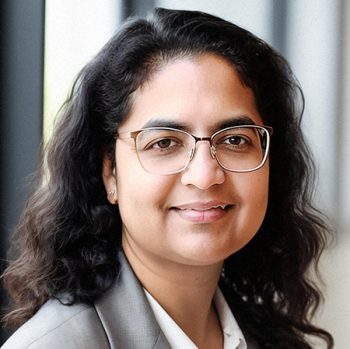
 Dr. Indira Carey earned her PhD in Biochemistry and Molecular Biophysics from the Medical College of Virginia/ Virginia Commonwealth University. Her career in the Biotech sector spanned 17 years, where she held various positions including Field Applications Scientist and Marketing roles. Dr. Carey has more than 10 years of expertise leading Field Application Scientist and Technical Support Teams. She is the Founder of AccelSci Consulting LLC, which partners with biotechs to build and scale their scientific support teams.
This article was originally published in AWIS Magazine. Join AWIS to access the full issue of AWIS Magazine and more member benefits.