
How do leadership roles in university organizations and professional societies benefit your career? What do you get in return for your time serving in what is likely to be a volunteer leadership position?
As a graduate student or postdoc, you can gain a multitude of benefits from carrying out such a role: you can develop your professional skills, gain help in advancing your career, and experience the satisfaction of making a tangible impact on your community. Even if you have natural leadership skills, you must intentionally search for opportunities that provide these benefits.
During my PhD training at Drexel University, I participated in various committees, including the Teacher Assistant Taskforce and the International Society Plasma Chemistry Meeting planning committee that my laboratory organized. When my responsibilities caused me to miss the entire conference because of running from errand to errand, I experienced one downside to being in charge, but the volunteer role was still very valuable.
Near the completion of my PhD and through the first two years of my postdoctoral training at Thomas Jefferson University, I applied to be and was elected Chair of the Gordon Research Seminar (GRS) on Plasma Processing Science, a student- and postdoc-organized program that helped plan the larger Gordon Research Conference (GRC). This role included two days of training in which all the GRS and GRC chairs came together to learn about organizing a conference, writing travel grants to the National Science Foundation (NSF), selecting abstracts, and fundraising. This leadership role provided me with invaluable hands-on experience, learning opportunities, and some training wheels as I worked closely with the experienced GRC chairs who actually wrote the NSF grant.
As a postdoc, I continued my leadership journey by joining the Jefferson Postdoctoral Association (JPA), where I served as Treasurer and VP of Career Development. This gave me a seat at the table, early knowledge of upcoming events, and influence on the selection of speakers and topics. I also participated in several planning committees (e.g., Sigma Xi Research Day, the Postdoctoral Research Symposium Planning Committee, and Speed Networking events). These committees provided high-quality networking opportunities, a chance to refine my organizational skills, and service experiences to add to my CV. Furthermore, my leadership roles with the JPA proved even more valuable because they led to me being offered the inaugural administrative postdoctoral fellow position at the Office of Postdoctoral Affairs. All my requests for a high-quality professional development program at Drexel caught the eye of the associate dean, who designed this position especially for me.
The job came with membership to the Graduate Council at Jefferson College of Life Sciences, the governing body of the College, an organization that taught me the power of advocacy, and I increasingly felt that my voice mattered. This, in turn, inspired me to volunteer for the Advocacy Committee of the National Postdoc Association (NPA) and to make a run for the NPA Board of Directors. Although I wasn’t elected, I again valued what I learned.
However, my most meaningful leadership experience came through my journey with the Philadelphia Chapter of the Association for Women in Science, where I held numerous roles that culminated in my becoming chapter president (President-Elect 2019-2020, President 2020-2021, Past President 2021-2022). AWIS-PHL was particularly special for me. It was the first organization where I gained a strong sense of belonging. At the time, Drexel University was an AWIS Institutional Partner, which allowed all graduate students to join for free. So, I joined and learned of the chapter’s Mentoring Circle program. Honestly, I had no idea what group mentoring was all about, but I gave it a try. Next year, I served as a mentor myself and soon after became the mentoring co-chair. With that role came the opportunity to make a real difference, to build a strong connection to the leadership team, and to serve others. Ultimately, it also allowed me to sponsor other women to join the leadership team.
My advocacy journey continues with my current work for the American Association for Medical Colleges (AAMC) Group on Research, Education, and Training (GREAT) Postdoctoral Training Section Committee, where I advocate for international postdocs and contribute to improving the quality of postdoctoral training of all postdocs. In addition to my work for the AAMC, I can now use my leadership skill set to identify gaps and create opportunities for change. This includes founding the Steering Committee for the Virtual National Postdoc Appreciation Week in collaboration with the National Postdoc Association, co-chairing the Community of Practice for International Career Practitioners as part of the Graduate Career Consortium (GCC), and, most recently, co-founding SPHERE, a community of practice that seeks to adapt and create professional development resources for postdocs outside of the life sciences umbrella.
For anyone who wants to step into university or professional society leadership, I advise starting small and testing the waters. Volunteer at an event, or join a small committee. Otherwise, It is too easy to become overcommitted and let the team down if you take on too much too soon. Also, you should choose the right role—one you’re passionate about—so that you will have the internal motivation to contribute fully. Be sure to share with your network that you want to grow into larger leadership roles. Don’t necessarily assume that somebody will see you work hard and then automatically offer you additional leadership opportunities. Leadership roles are present at your university, in your community, and nationally, but you do have to seek them out.
In short, I have used my numerous leadership experiences in academic settings and professional societies to make an impact and gain valuable skills. Taking on leadership roles in student and postdoc associations and professional societies not only benefits your personal and professional development but also contributes significantly to the academic community, ensuring a supportive and thriving environment for current and future scholars.
Author’s note: I’d like to thank Jordan Anderson, Communication and Marketing Assistant, Drexel University’s Office of Postdoctoral Affairs, for her initial draft of this article from my leadership presentation materials and to Ellie Cantor, PhD, Webmaster AWIS Philadelphia Chapter, for her assistance reviewing this article.
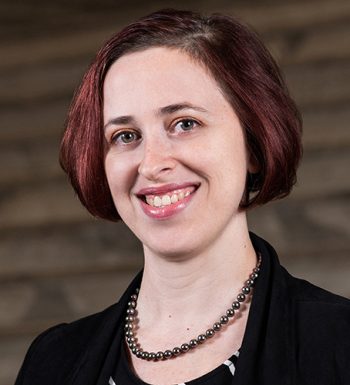
 Natalie Chernets, PhD, is the Director of Postdoctoral Affairs and Professional Development at Drexel University, Associate Director for the MD/PhD program at Drexel University, and Assistant Professor in the College of Medicine. She strives to prepare the next generation of research leaders by advancing each postdoc’s research training and mentoring. Her multidisciplinary training in Physics, Electrical Engineering, and Biomedical Sciences and her industry experience inform how she motivates trainees to take charge of their career plans. Her office collaborates with postdocs, faculty, administrators, and external entities to support a culture of enhanced personal growth and professional development to benefit teaching, scholarship, and innovation at Drexel University and the global scientific community.
Dr. Chernets is committed to supporting the next generation of scientists through her service with the Philadelphia chapter of the Association for Women in Science, where she served in multiple roles, including President and Mentoring co-chair. Lastly, she serves on the Postdoctoral Section of the National Steering Committee for the Group on Graduate Research, Education, and Training (GREAT) by the American Association for Medical Colleges. Dr. Chernets completed her B.A. in Physics from the Technion, Israel Institute of Technology, M.Sc. in Electrical Engineering from Tel-Aviv University, Ph.D. in Electrical Engineering, and MBA from Drexel University. She concluded her training at Thomas Jefferson University, where she pursued postdoctoral training in the Department of Orthopaedics, Department of Biochemistry, and the Office of Postdoctoral Affairs.
This article was originally published in AWIS Magazine. Join AWIS to access the full issue of AWIS Magazine and more member benefits.