
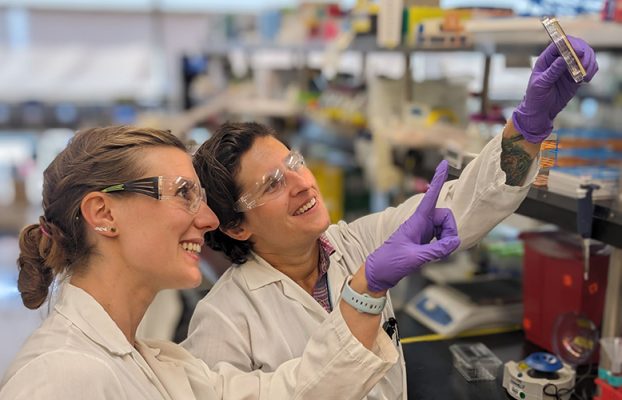
Dr. Maren Wehrs and Monika Rozkowska are fermentation scientists working with Protein Evolution, the first biological recycling company in the United States. Protein Evolution aims to greatly reduce carbon emissions through reusing plastic waste. They see a future in which plastic waste is eliminated worldwide. In October 2023, Protein Evolution announced their groundbreaking partnership with the U.S. Department of Energy’s Agile Biofoundry, the Advanced Biofuels and Bioproducts Process Development Unit, and the Joint BioEnergy Institute, both led by Lawrence Berkeley National Laboratory. The partnership aims to speed up the process of managing waste sustainably and the transition toward a low-carbon, circular economy for the world.
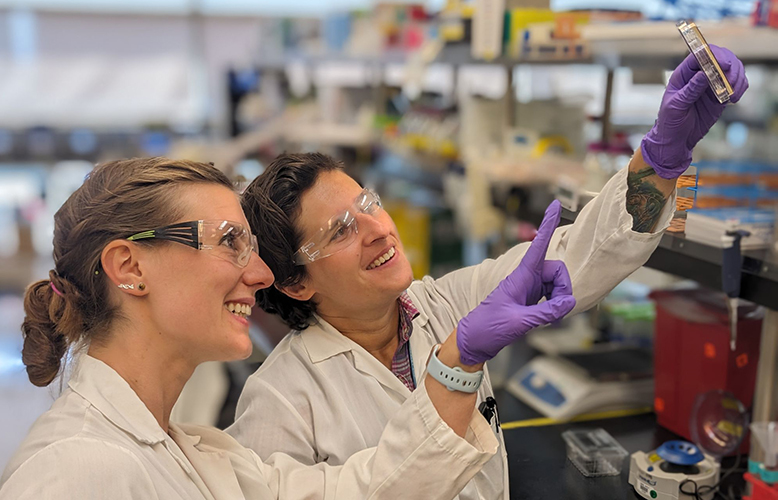
I had an opportunity to interview Maren Wehrs, Director of Bioprocess Development, and Monika Rozkowska, Research Scientist, to learn more about their pioneering work.
Congratulations on the new partnership, which will use AI and enzymes to break down plastic and textile waste. What does it mean for you to be at the center of this cutting-edge technology?
MW: Being at the center of this cutting-edge technology represents an extraordinary opportunity and responsibility. It means pioneering a sustainable future by combining the precision of artificial intelligence with the immense specificity of enzymes to address one of the most pressing environmental challenges: plastic and textile waste. This position allows me to contribute significantly to advancing sustainability by demonstrating the transformative potential of integrating AI with process development to create real-world solutions.
MR: For me, this project not only aligns with my professional aspirations but also reflects my personal value of making a significant, positive impact on our planet. This technology holds the promise of transforming our approach to recycling, of potentially reducing environmental pollution on a global scale, and of promoting a more sustainable future that I am honored to be a part of.
How does this technology work? How are enzymes developed using AI?
MW: Enzymes can be developed using AI through a process that begins with the identification and optimization of enzyme candidates capable of breaking down specific types of waste. AI algorithms analyze vast data sets of enzyme structures and functionalities to predict which enzymes will most effectively degrade plastic and textile polymers. This is followed by AIdriven, directed evolution processes, where enzymes are iteratively modified and tested for performance improvements. Machine learning accelerates this cycle, efficiently evolving enzymes toward desired outcomes, allowing for large-scale production of optimized enzymes for waste degradation.
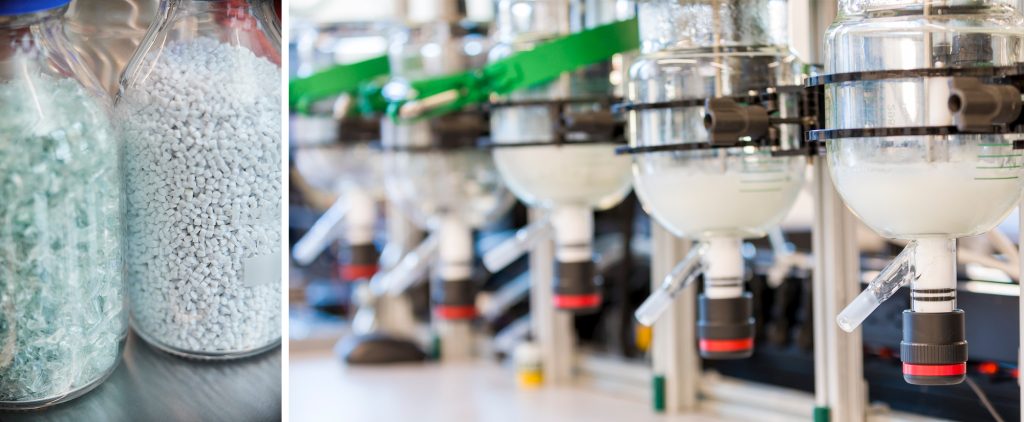
How will these enzymes transform polyester waste into new, useful raw materials?
MW: These enzymes catalyze the depolymerization of polyester waste, breaking it down into its components. This process transforms polyester waste into new, useful raw materials that can be repurposed for creating virginquality polyester. By enabling a true circular-economy model, these enzymes not only mitigate waste but also reduce reliance on fossil fuels for the production of new polyester, showcasing a sustainable pathway for the textiles industry.
What magnitude of waste is being targeted, and what contribution will this make in the United States and globally?
MW: Protein Evolution’s Biopure technology represents a significant advancement in waste recycling, and it specifically addresses the challenge of processing complex materials like blended and colored textiles. With Biopure, Protein Evolution aims to process hundreds of millions of pounds of waste over the next decade, significantly reducing the amount of polyester waste directed toward landfills, incineration, or oceans.
How does this process of using AI-generated enzymes on plastic waste reduce costs while ensuring that the raw material produced is high quality?
MW: We optimize cost and ensure quality by using AI to generate enzymes with high specificity, efficiency, and low-energy requirements. This leads to the rapid and complete breakdown of polyester, producing pure outputs, all while operating under low temperature and pressure. Together, the low-energy consumption, high specificity, and speed of our enzymes ensure a costeffective structure without compromising quality.
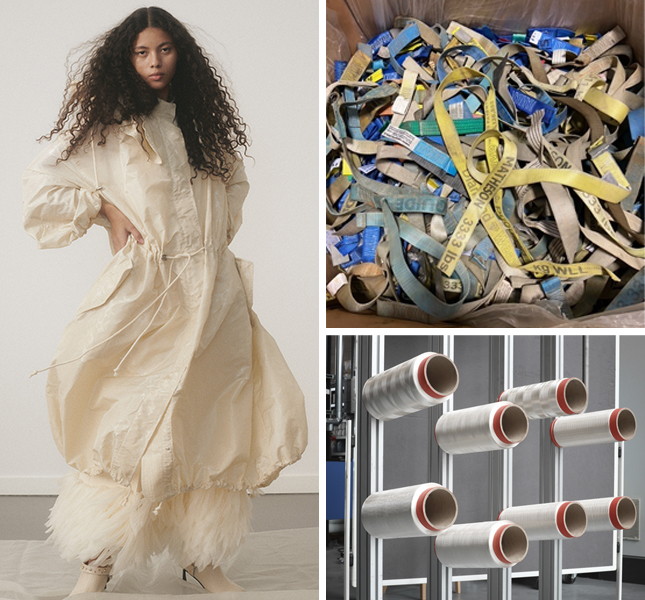
Protein Evolution is promoting the development of clothing and partnering with fashion designer Stella McCartney. How did this collaboration come about? How has it been received?
MW: A pioneer in sustainable fashion, and a catalyst for bringing new materials to the mainstream fashion industry, Stella McCartney was an early investor in Protein Evolution and is an advocate for the company’s innovative technology. Protein Evolution’s initial fundraising round was led by the Collaborative Fund’s climate-focused Collab SOS, which is in partnership with McCartney and LVMH (a luxury goods company). In late 2022, Protein Evolution and Stella McCartney announced a groundbreaking R&D collaboration to turn unused polyester fabrics from Stella McCartney’s previous collections into virgin-quality polyester, piloting a circular solution for the fashion industry. With the introduction of the first-of-its-kind parka, the team has marked a major breakthrough and milestone for the partnership in less than a year.
The parka has been incredibly well received—for both its style and its innovative material. It is the world’s first garment produced by way of biological recycling. We’re proud to partner with Stella McCartney because she [promotes] the importance of new sustainable materials and processes for the fashion industry.
You have both been working with Protein Evolution for a year now. Please share what your greatest satisfaction has been in your roles.
MW: The greatest satisfaction in my role over the past year has been witnessing the tangible impact of our work. Seeing the concept of enzymatic recycling move from theoretical models to practical, scalable solutions and then to actual products has been profoundly rewarding. It validates the hard work and innovative spirit of our team and reinforces the belief that science and technology can drive positive environmental change.
MR: My greatest satisfaction has stemmed from contributing to the endeavor of fostering a more sustainable world. Engaging in the tangible and attainable work of Protein Evolution has not only been deeply rewarding but has also broadened my horizons. Delving [into work] beyond my primary focus on the fermentation processes involving bacteria and yeast, I’ve had the privilege of collaborating with and learning from other teams. This interdisciplinary engagement has enriched my understanding and appreciation of the myriad ways in which Protein Evolution can drive environmental sustainability. Looking ahead, I am filled with excitement for the potential impacts our collective efforts at Protein Evolution will unveil in the coming years.
What inspired you to follow a STEM career path? What advice might you give to women interested in STEM careers?
MW: My journey to biological processing was paved by curiosity, perseverance, and the conviction that science has the power to make a difference. To young women in the science fields, my advice is to embrace challenges as opportunities for growth. Seek mentors, cultivate resilience, and never underestimate the value of collaboration. Science is vast and interdisciplinary—stay open to learning and exploring new avenues. Your unique perspectives and contributions are vital to driving forward the frontiers of knowledge and innovation.
MR: From my earliest days in school, the realms of science and mathematics have held a profound fascination for me. This passion has shaped my journey, instilling in me the ethos of being a lifelong learner and of constantly seeking new knowledge and discoveries. My career has traversed diverse fields—from behavioral neuropharmacology to forensic science and now to the pioneering area of green synthetic biology. Each transition reflects my deep-seated desire to leave a meaningful impact on the world. My commitment to exploring innovative and sustainable ways of living has naturally aligned with the work of Protein Evolution, where I’ve found a harmonious convergence of my skills and values.
My advice to young women is to explore what you find interesting and don’t be afraid to change paths within your science journey. Working on what is interesting and what aligns with your values will make your work the most rewarding.
Is there anything else you want our readers to know?
MW: The intersection of biotechnology and sustainability is fertile ground for innovation. Our work with AI and plastic depolymerization is just the beginning. There’s immense potential for science to address global challenges, and we’re committed to exploring these avenues further. We encourage aspiring scientists and innovators to join us in this endeavor—together, we can shape a more sustainable world.
 Mary Tibezinda is an Assistant Lecturer and doctoral candidate in the College of Agricultural Sciences’ Department of Agricultural Production at Makerere University in Uganda. She previously worked first in agricultural extension and then in agricultural research. Her goal is to be an inspiration to her students. Tibezinda is a member of the East African Reawakened Fellowship, and she loves attending the group’s gatherings and also enjoys reading.
This article was originally published in AWIS Magazine. Join AWIS to access the full issue of AWIS Magazine and more member benefits.