
There is an underrepresentation of people of African American, Latine, Native American, and Pacific Islander descent, people from groups who are economically disadvantaged, and women in science fields. AI has the ability to both reproduce and exacerbate these existing inequities. The idea that AI will expand inequities is strengthened by the greater underrepresentation of these groups of people in the fields of computer science and engineering compared to other STEM fields.
There are many interventions aimed at narrowing the divide. One example is Khanmigo, an AI platform that uses bots as learning partners that provide personalized tutoring for students, curriculum development assistance for teachers, and homework help for parents.
Shams et al. in a 2023 article in AI and Ethics wrote that DEI considerations are substantially neglected in the design, development, and deployment of AI systems, which leads to unaddressed issues of equity, trust, bias, and transparency. Through a review of 48 papers published 2017-2022, they identified challenges and solutions to address and enhance DEI in AI. The basis of their review used a five-pillared approach to ensure alignment between DEI and AI, including attention to human diversity, biases in data, system development, testing and monitoring, and governance. Based on their findings, they plan to design a risk-based framework to tackle areas of DEI misalignment at various stages of AI development.
Trust in AI, especially within underrepresented communities, is the goal of TRAILS (Institute for Trustworthy AI in Law and Society), a $20M NSF-NIST grant to University of Maryland in partnership with Cornell, George Washington, and Morgan State Universities. The mission of the Institute is to transform the practice of AI from one driven mostly by technological innovation to one that is driven by “ethics, human rights, and input and feedback from communities whose voices have previously been marginalized.” Doing so promises to foster AI innovation while keeping communities “safe, engaged, and informed.” The Institute’s target audience ranges from undergraduates and high school students to faculty and teachers to the public at all stages of AI development. The latter includes participatory design with diverse communities, technical design with algorithms that promote transparency and trust, design of psychometric measures that ensure interpretability and explainability, and governance for efficient regulation.
Hidden Figures and Underrepresentation
The film Hidden Figures revealed the contributions of three African American women mathematicians, Katherine Johnson, Mary Jackson, and Dorothy Vaughan, to NASA’s successful launch of early spaceflight in the 1960s. According to IEEE Spectrum of the Institute of Electrical and Electronics Engineers, the contributions of women to the programming for the first general purpose programmable digital computer ENIAC (Electronic Numerical Integrator and Computer) with rudimentary AI capabilities went similarly unacknowledged. Like the hidden figures of NASA, the women of ENIAC, Kathleen McNulty, Frances Bilas, Betty Jean Jennings, Ruth Lichterman, Elizabeth Synder, and Marlyn Wescoff, initially served as “human computers.”
The lack of recognition was in part due to a perception that the design and construction of the hardware, which was assigned to men, was more vital to computer capacity than the human computation work assigned to women. Further, the public relations spin led to the diminishment of the human element behind the machine.
What has changed in the current state of women in AI? There are wide disparities between men and women at educational and workforce levels. Georgetown University’s Center for Security and Emerging Technology shows a large difference among AI-related conferred bachelor’s (about 115K for men and 25K for women), master’s (50K men and 30K women), and PhD degrees (4.4K men and 1.3K women) in 2021. The World Economic Forum reports that women compose 22% of professionals among the global AI workforce, 14% of authors of AI papers, and 2% of venture capital directed towards AI startups.
This disparity makes it all the more important to celebrate the women who are leaders in AI, such as those honored among AI Magazine’s 2024 top 10 women in AI list. The list includes Dr. Fei-Fei Li, a professor at Stanford University, recognized for her work in advancing computer vision, and co-directing Stanford’s ethics-focused Human-Centered AI to Dr. Cynthia Breazeal of MIT Media Lab, a dean at MIT and roboticist, recognized for her book on designing sociable robots.
And there exists many organizations and initiatives committed to increasing the representation of women in AI, including Black Women in AI and Women in AI. Break Through Tech AI is committed to industry-focused training for low-income women undergraduates and others from underrepresented groups in AI.
Organizations like these are vital to ensure that future iterations of AI do not perpetuate biases and discrimination.
Read the Summer 2024 AWIS Magazine article about AI roboticist, Dr. Ayanna Howard, and her work in assistive technologies.
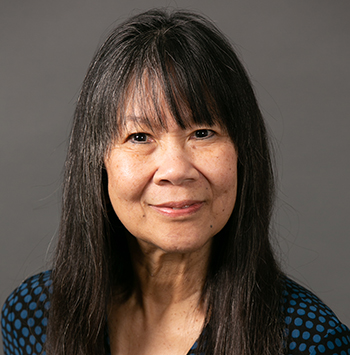
Patricia Soochan is a senior program strategist in Data Science, Research, and Analysis in the Center for the Advancement of Science Leadership & Culture at Howard Hughes Medical Institute (HHMI). In her role, she collaborates with the Center’s programs to capture, analyze, synthesize, and communicate program-level data to promote organizational effectiveness and evaluation. Previously she shared lead responsibility for the development and execution of Inclusive Excellence (IE1&2) initiative and had lead responsibility for science education grants provided primarily to undergraduate institutions, a precursor of IE. She is a member of the Change Leaders Working Group in the Accelerating Systemic Change Network and is a contributing writer for AWIS Magazine and The Nucleus. Prior to joining HHMI, she was a science assistant at the National Science Foundation, a science writer for a consultant to the National Cancer Institute, and a research and development scientist at Life Technologies. She received her BS and MS degrees in biology from George Washington University.
Editor’s Note: The contents of this article are not affiliated with HHMI.