
Building a fulfilling career managing a freelance business and chronic illness
In the United States, approximately 12-16% of women aged 20 to 65 years have a recognized disability. October is National Disability Employment Awareness Month (NDEAM). NDEAM’s goal is to educate the public about disability employment issues and celebrate the valuable skills and talents that people with disabilities bring to the workplace.
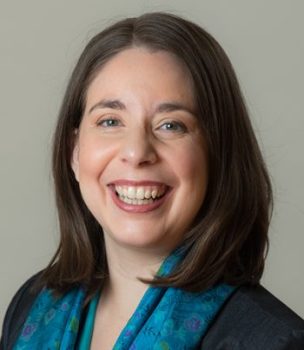
Mia DeFino, a freelance medical and science writer, has successfully navigated career hurdles while living with multiple chronic illnesses. She has a master’s degree in pharmacology, certifications as an Editor in the Life Sciences and a Medical Publications Professional, and over eight years of experience working with CROs, pharmaceutical companies, medical communication agencies, and academic institutions. She is also an advocate, speaking at professional conferences to raise awareness of how to be successful in managing a freelance business alongside chronic illness. Georgina Salazar spoke with Mia to learn more from her journey, identify work resources for people with disabilities, and highlight ways to create more awareness and better support for those managing chronic illness and other types of disabilities. In this article, we use chronic illness and disabilities interchangeably.
Navigating Career Hurdles with Chronic Illness
People with disabilities face many challenges in traditional employment settings, including a lack of understanding, flexibility, and accommodations even with the American with Disabilities Act in place. Many people choose not to disclose their disability, in some cases because of fear of judgement and in other cases because it is not clear how and when to do so. Employers and fellow colleagues can help by asking if there is assistance needed and not assuming that a certain condition leads to not being able to do a particular activity/task. Also, people with disabilities face competing priorities ranging from performing well at work to going to medical appointments and managing treatment and managing other day-to-day responsibilities. Depending on when one develops a chronic illness/disability, work experience may be limited, and one may need to keep employer benefits. One option for workers who have chronic illness/disabilities is to seek out employers who are more aware and flexible.
Mia decided to prioritize her health and well-being by launching her own business. This also addressed practical limitations associated with time required to receive care and flexibility in setting work hours. Running her own business has allowed Mia the space to create her own metrics for success and invest in her professional development.
Empowering Resources for People with Disabilities
Mia used a variety of resources to build her business, which were invaluable in providing guidance, networking opportunities, and practical advice. These included the American Medical Writers Association (AMWA) and a marketing course from Lori DeMilto, which helped her set up a website and marketing materials. Mia also emphasized the importance of interviewing other writers and freelancers to understand what services to offer and how to market oneself. Networking at conferences helped her meet similar people, building a sense of camaraderie and support. (Mia has provided a complete list of resources at the end of the article and here.)
Understanding and Addressing Ableism
Ableism, discrimination, and prejudice create barriers in the workplace for people with disabilities. Mia shared insights on the societal perceptions and biases that people with disabilities often face, and how this can impact their ability to advocate for themselves. For better work environments, employers must give employees a voice in the work they do, and employees can advocate and raise awareness through this process. Employers will see benefits from being as flexible as they can in granting accommodations to people with disabilities. Some accommodations needed for certain disabilities are relatively inexpensive (for example, costs of less than $100 for a special keyboard or headset for computer work) and in some cases, are more related to flexible scheduling and workload management rather than buying equipment. For Mia, achieving this better work environment involved working for herself: “As a corporate employee, it’s hard to know sometimes where your work fits in in the grand scheme of corporate goals. As a consultant, I can say what I need to say and know my voice is heard. If the client chooses to take use what I say, that’s their choice, but at least I have the opportunity to present my opinion and then be included in those key conversations.”
Besides allowing her to prioritize accommodations she needed for her health, business ownership empowered Mia to prioritize her professional growth. “My approach to starting my business was to figure out, ‘What can I market myself as an expert in, and what can I add to that along the way?’ The clients I’ve worked with have provided opportunities to try new types of projects. Although scientific publications were my mainstay when I first started, over the last five years, I’ve built equivalent experience in regulatory work.”
Good Work Accessible to All
Through highlighting role models like Mia, becoming part of more supportive networks, and advocating for greater flexibility and understanding from employers, we can support initiatives such as NDEAM and make good working conditions accessible to all. Accommodations to create a more inclusive and equitable job market is more than a nice thing to do. Accommodations make the work being done better, improve communities and the economy along with the lives of those with disabilities. In closing, Mia encourages others, “When I started this journey 8 years ago, I didn’t know what was possible, but as I’ve continued to grow my business and professional development more doors have opened. I’ve gone from merely surviving to thriving as a small business owner. Creating a space that allows me to work successfully with multiple clients on a regular basis while doing what is best for my health is a dream come true. I hope that other people with chronic illness can create their own space to continue in the work force and thrive. Through sharing my story, I hope others can see that there are other opportunities for people with disabilities to succeed and create a fulfilling career.”
Resources
- Use technology to help automate routine/time consuming tasks
- Stream deck app (buttons on phone or bar on your desk to automate certain computer tasks)
- Macros for editing
- Text expander
- Talk to text function in Word, your phone, etc.
- Shortcuts
- Specialized apps
- https://www.csescienceeditor.org/article/publishing-accessible-content/
- Free resources and mentoring
- https://www.sba.gov/local-assistance/resource-partners/womens-business-centers (find local center, focused on women)
- https://www.score.org/ (virtual and real-time assistance, mentorship and webinars, templates for business plans etc.)
- https://askjan.org/topics/Entrepreneurship.cfm (specific for people with disabilities interested in starting own business)
- https://www.dol.gov/agencies/odep/program-areas/employers/self-employment-entrepreneurship
- https://invisibledisabilities.org/
- Funding
- https://ambergrantsforwomen.com/get-an-amber-grant/apply-now/ (simple application, could be used for startup funds)
- https://www.halcyonhouse.org/about/
- https://backstagecapital.com/for-founders/
- SBIR/STTR grants
- https://www.nidcd.nih.gov/directory/national-institute-disability-and-rehabilitation-research-office-special-education-and
- Professional Organizations
- https://nawbo.org/
- https://wise-stem.org/about-us/
- Women in Bio
- AMWA (American Medical Writers Association)
- Articles of interest and Podcasts
- https://www.forbes.com/sites/serenitygibbons/2024/02/20/how-more-equality-can-be-brought-to-women-in-stem-fields/
- https://www.inc.com/author/project-entrepreneur
- https://www.ncbi.nlm.nih.gov/pmc/articles/PMC8292768/
- https://communitycentricfundraising.org/2023/11/13/its-time-to-throw-away-the-spoons-employers-dont-get-it/
- https://www.forbes.com/sites/gusalexiou/2021/11/28/disabled-entrepreneurs-speak-out-on-the-choice-to-go-it-alone-and-be-your-own-boss/?sh=41d3f85e1431
- https://benderconsult.com/insights/disability-matters-podcast/#recent-episodes
- Job opportunities
The following is a list of disabilities which are evaluated when applying for be classified as a “disabled-owned small business.”
- ADHD
- AIDS
- Alcoholism
- Alzheimer’s
- Amyotrophic Lateral Sclerosis (ALS) (Lou Gehrig’s Disease)
- Anxiety
- Asthma
- Auditory Processing Disabilities
- Autism
- Autism Spectrum
- Bipolar
- Bleeding Conditions
- Blindness or Low Vision
- Brain Injuries
- Burn Injuries
- Cancer
- Cerebral palsy
- Chronic Fatigue Syndrome
- Chronic Pain
- Complex Regional Pain Syndrome (CRPS)
- Complications from Pregnancy
- Cumulative Trauma Conditions
- Depression
- Diabetes
- Dwarfism/Little Person
- Dystonia
- Eating Disorders
- Epilepsy
- Fibromyalgia Syndrome
- Fragrance Sensitivity
- Graves’ Disease
- Guillain-Barré Syndrome
- Hashimoto’s Disease
- Hearing or speech disabilities
- Heart Conditions
- Hepatitis
- HIV Infection
- Intellectual/Cognitive Disabilities
- Latex Allergies
- Learning Disabilities
- Lupus
- Major depressive conditions
- Marfan Syndrome
- Mental Health conditions
- Migraine Headaches
- Mobility Impairments requiring the use of mobility devices
- Multiple Chemical Sensitivity or Environmental Illness
- Multiple sclerosis
- Muscular dystrophy
- Myasthenia Gravis
- Obsessive-compulsive disorder
- Orthopedic impairments
- Paralysis
- Parkinson’s
- Partial or Completely Missing Limbs
- Personality Disorders
- Post-traumatic stress disorder (PTSD)
- Reflex Sympathetic Dystrophy (RSD)
- Schizophrenia
- Sickle Cell Anemia
- Skin Disorders
- Sleep Disorders
- Speech-Language Impairment/Stuttering
- Spinal Cord Injuries or Conditions
- Thyroid gland disorders (Hyper/Hypothyroidism)
- Tourette Syndrome
- Tuberculosis
- Vertigo
- Wheelchair/Scooter users
 Georgina To’a Salazar, PhD, works to create innovative solutions in science communication, research, and policy. With a BS in chemical engineering from Stanford University and a PhD in biomedical engineering from the University of California, Irvine, Dr. Salazar has fulfilled her dream of exploring the world, having taken research positions in Singapore and Japan before returning to the United States to focus on science communication. She currently works as a freelance scientific writer through her small business, Redwood Scientific Communications, LLC.