

How do humans cope with living in extreme and unwelcome conditions either on Earth or beyond our planet? What can scientists do to help them?
One trailblazing researcher, Dr. Sandra Häuplik-Meusburger, explores these subjects as a practicing architect specializing in compact and sustainable habitability design solutions for terrestrial and extraterrestrial environments. She has taught and conducted what she refers to as space architecture design studios at the Department of Building Construction and Design at Technische Universität Wien (TU Wien) in Vienna for more than 15 years.
Since 2019, Dr. Häuplik-Meusburger has also served as academic director for a two-year interdisciplinary course that she designed for teens called Space of the Science Academy in Lower Austria. She has served as academic director for the Executive MBA in Management and Technology in Space Architecture at TU Wien since 2022. In addition, she has published several scientific papers and worked on aerospace design and research projects as PI, collaborator, manager, and initiator.
Dr. Häuplik-Meusburger focuses her research on habitability design in extreme environments. She compares and analyzes isolated, confined, and extreme environments (ICEs) for humans on Earth and in space, and she systematically assesses the viability of both existing and future space habitats. Her work incorporates several data collection methods, including personal interviews with astronauts, polar researchers, and simulation participants.
She is a full member of the International Academy of Astronautics (IAA) and former chair for the Space Architecture Technical Committee (SACT) of the American Institute of Aeronautics. She has published the books Architecture for Astronauts: An Activity-Based Approach (Springer Praxis Books, 2011); Space Architecture Education for Engineers and Architects: Designing and Planning Beyond Earth (Springer Praxis Books, 2016, with co-author Olga Bannova); and Space Habitats and Habitability: Designing for Isolated and Confined Environments on Earth and in Space (Springer Praxis Books, 2021, with coauthor Sheryl Bishop).
I had the pleasure, recently, of interviewing Dr. Häuplik-Meusburger about her fascinating and innovative work.
Dr. Häuplik-Meusburger, could you tell us a bit about yourself and your career?
I specialize in space architecture and habitability design solutions for extreme environments, both on Earth and beyond. As an architect, researcher, educator, and author, my work focuses on creating small, sustainable, and human-centered spaces that enable people to thrive in challenging conditions. Through my practice, space-craft architektur, I design adaptable environments that reflect the unique needs and personalities of their occupants. I’ve also authored several publications, including Space Habitats and Habitability and Architecture for Astronauts: An Activity-based Approach, published by Springer Praxis Books.
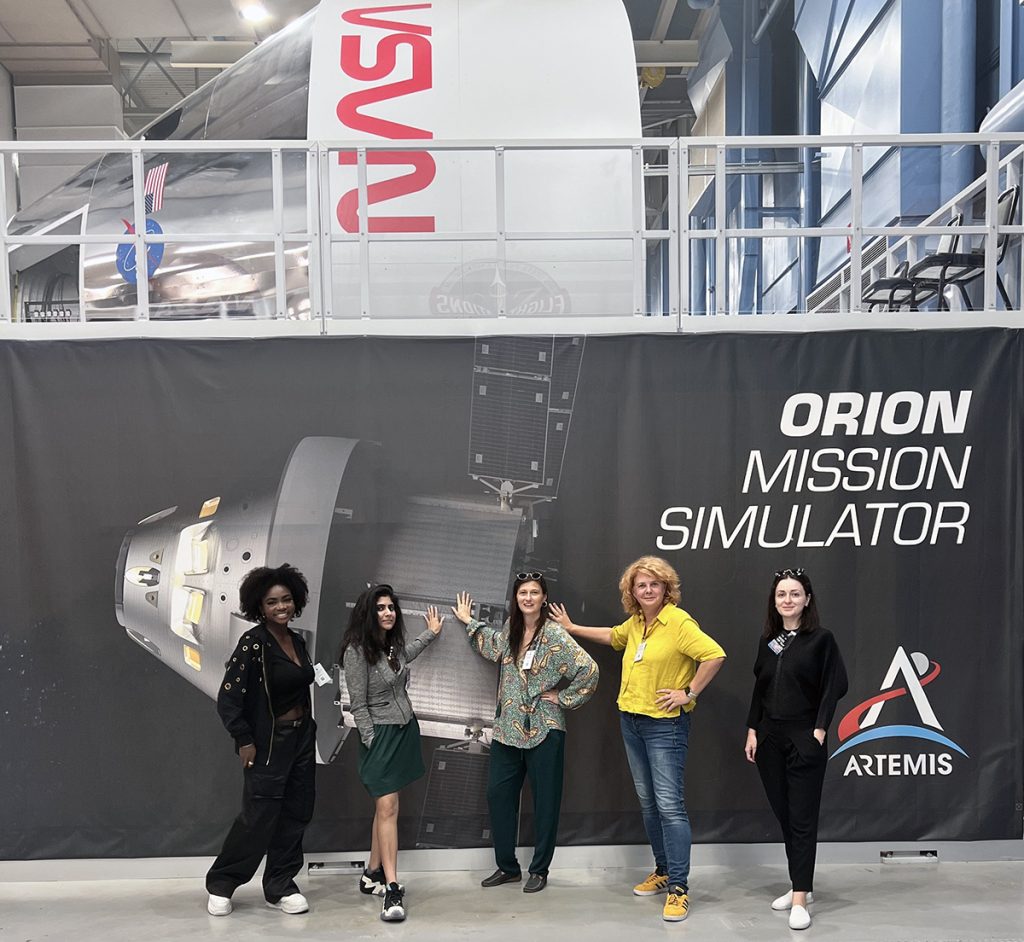
How did you first become interested in space architecture?
It started during my academic studies, when I became fascinated by the challenges of designing for harsh environments. I was particularly intrigued by the idea of creating livable spaces in extraterrestrial settings, which led me to pursue a PhD at the Technical University of Munich (TUM). There, I studied the design and functionality of American, Russian, and international space stations, which deepened my expertise in the field.
How did you more fully establish yourself as an expert in this field?
It’s been a combination of academic research, hands-on projects, and extensive publications. I’ve conducted in-depth studies on habitat design, participated in international analog habitat simulations, and collaborated on aerospace projects. My role as the academic director of the Executive MBA in Space Architecture at TU Wien, along with my active involvement in professional organizations like the American Institute of Aeronautics and Astronautics (AIAA) and the IAA, has also helped solidify my reputation in the field.
What are some of the biggest challenges you’ve faced in your work, and how have you addressed them?
One of the biggest challenges involves translating visionary ideas into technically feasible solutions. Strict limitations on mass, volume, energy, and safety considerations constrain space missions, and these constraints require multidisciplinary collaboration to overcome. Another challenge involves advocating for the importance of human factors and psychological well-being in habitat design, as mission planning often prioritizes technical performance over habitability. I address these challenges through evidence-based research, collaboration with psychologists and engineers, and a focus on user-centered design.
What do you currently work on?
I’m working on several exciting projects, including sustainable lunar bases, commercial space station concepts, and analog habitat research. One of my favorite projects has me revisiting a historic spinning space station concept from the 1920s and reflecting on its visionary architecture. I’m also thrilled about the translation of two of my books into German and Chinese, which makes my research accessible to a broader global audience.
Why is sustainability so important in space architecture?
Sustainability represents a cornerstone of my work. Long-term space missions and the survival of human presence beyond Earth depend on sustainable design. Space habitats must be durable, efficient, and capable of recycling resources. The lessons we learn from designing sustainable space systems can also inform efforts to improve sustainability on Earth, particularly in areas like resource management and closed-loop life support systems. This focus on sustainability is also a key component of the Executive MBA in Space Architecture and Management at TU Wien.
What new perspective do you want people to have about sustainability, whether in space or on Earth?
I want people to view sustainability as a fundamental design principle rather than as merely an environmental requirement. I advocate for circular design, adaptability, and regenerative systems, both on Earth and in space. I also challenge the concept of “waste” and suggest that materials discarded in one system could be valuable resources in another. By integrating social and human values into sustainable design, I believe we can create livable environments for future generations, whether on Earth or in space.
Where do you see your career and the industry heading in the future?
The field of space architecture is rapidly evolving, with growing interest in lunar and Martian habitats, commercial space stations, and space tourism. My work will continue to focus on advancing sustainable and human-centered design solutions, contributing to the development of livable ecosystems both on Earth and beyond.
How do you balance your demanding career with personal well-being?
For me, I prioritize time with my family and friends, and I find joy in my work, which blurs the line between professional and personal time. This passion for what I do allows me to consistently bring my best self to my projects.
What advice would you give to young women considering a career in this field?
I would say: “See yourself, be courageous, and keep asking questions. Count on your own strengths and deliberately foster confidence among people around you. Your unique perspective matters, and your curiosity and bravery will open numerous opportunities. Use them!”
Are there specific opportunities you’d recommend for those interested in space architecture?
Absolutely! I recommend exploring university programs in space architecture, human factors, or extreme environment design, such as the Executive MBA in Space Architecture at TU Wien. Participating in research internships, analog habitat projects, and space architecture seminars also proves invaluable. Joining professional organizations like the SATC, SpaceArchitect.org, and AIAA can help you network and access resources. Attending conferences like the International Astronautical Congress (IAC) and AIAA events, and participating in design competitions, are also great ways to showcase your work.
Finally, is there anything else you’d like to share with the AWIS readers?
I want to emphasize that space exploration fundamentally focuses on people, not just on technology. The habitats we design today will shape how humans live and work beyond Earth tomorrow. I believe we need architects, designers, psychologists, sustainability experts, engineers, and scientists to collaborate and create truly habitable, healthy, and self-sustaining communities. As I like to say, “We can enable people to thrive in space and ensure a sustainable future both on Earth and beyond only through multidisciplinary cooperation. Do it together.”
Dr. Häuplik-Meusburger’s websites:
 Mac McGuire is a current PhD candidate in astronautical engineering at Capitol Technology University, and she works on the design of space suits and their maintenance processes. She holds an MS in chemistry, from Southern Methodist University, where she worked on putting APIs into novel glassy materials and on characterizing them. She currently participates in the 2nd Astrophysics Mission Design School at Nasa’s Jet Propulsion Laboratory and works as a lab technologist, where she analyzes unknown materials from oil, gas, and aerospace applications. In her free time (which she clearly has too much of), she loves cooking, baking, being active, learning languages, and working through a Top Modern Classics Movie List with her partner and two cats.
This article was originally published in AWIS Magazine. Join AWIS to access the full issue of AWIS Magazine and more member benefits.