

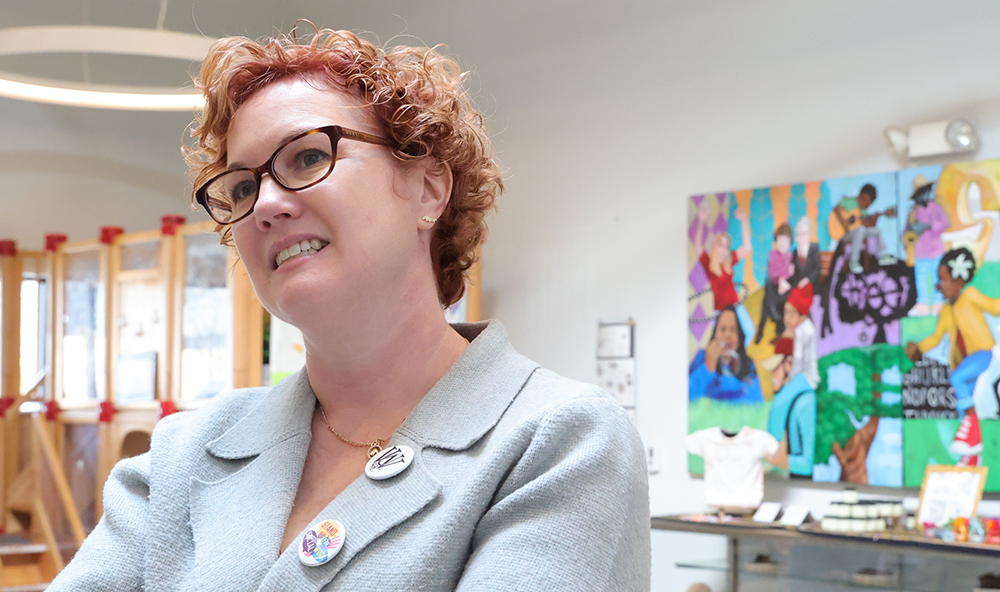
Sitting in her bright, cheery Hillman Hall office, with flowered wallpaper behind her, Dean Dorian Traube, PhD, exudes serene confidence and quiet authority. She just stepped into her role as Neidorff Family and Centene Corporation Dean of the Brown School at Washington University in St. Louis in February.
Many years ago, a younger Dorian had her heart set on becoming a dancer. She pursued her passion by majoring in modern dance and even moved to New York to train in José Limón’s studio. However, she soon realized that her choice was not the most employable option in her post-college world. She then reevaluated her career path and found herself drawn to studying social work in Columbia University’s graduate program.
Two months into her studies, Dr. Traube completely lost her aspiration for dance and wholeheartedly fell in love with social work. She became deeply interested in early childhood development, home visitation, and telehealth solutions for families with young children and completely immersed herself in clinical social work in New York.
Years later, while pursuing an academic career at the University of Southern California, Dr. Traube faced a turning point as the world plunged into the COVID-19 pandemic. She spotted a looming crisis in child welfare and made it her mission to help establish Parents as Teachers@USC Telehealth, a groundbreaking collaboration between national home visitation providers and a university-based telehealth clinic. Dr. Traube’s contribution to this initiative earned her a multimillion-dollar grant to make it accessible nationwide during the COVID-19 pandemic. I recently interviewed the dean about her career, new role, and her views on contemporary social work.
Congratulations on your appointment as Dean of the Brown School. It has been a few months now. How has your experience been so far?
It has been incredible. Saint Louis has been a great city to come to, and everybody at the Brown School is so brilliant and doing such amazing work that it’s been a real thrill to be here.
What has the change of pace required by this leadership role been like for you?
You’re asking this question at a very busy time of the year, as it’s commencement season, and we’re also admitting our next class, so things have been hectic. However, I generally enjoy the fast-paced environment. As a social worker, I tend to get bored when things are slow. Previously, I was a tenure-track faculty member, and so I had my body of research, and I was teaching, and then for a while, I also was managing faculty affairs for the school, so I had done some administrative work as well. All the experience has helped my transition into the new role.
What are your top priorities as Dean?
I feel fortunate to have joined Brown School, which already had a great strategic plan called Driving Equity 2030. This serves as my road map for the school. My top priority is to make our degree program affordable for students. I believe it is the biggest challenge facing our field of social work. Another important goal is to launch our new School of Public Health, which will be an amazing achievement. We’ve never seen it before, where one school was incubated in another and then came out as a full-fledged school. I’m very excited about it, and I want to ensure that both schools are healthy and successful at the end of it all.
In retrospect, what could you say has inspired your journey?
I tell many people that I became a professor because I couldn’t afford to pay off my student loans (laughs). One of the driving reasons that prompted me to pursue my PhD was the need for additional income. I was working two jobs as a social worker while studying, and during this period, I developed a love for academia. After becoming a tenured professor, I began working in higher education administration, faculty affairs, and academic affairs, which I equally enjoyed. You could say that I just went where things took me. Sometimes, I would focus all my attention on robust research projects, and other times, I would focus on administration.
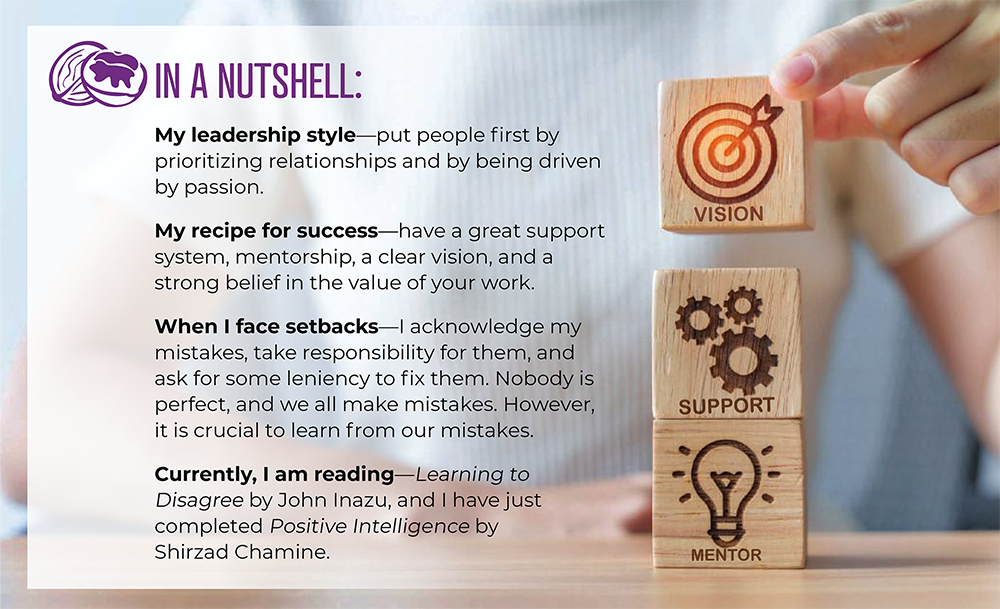 However, last year, I began feeling exhausted and contemplated leaving academia. Then, the folks at WashU called me and offered me the position as new dean. Initially, I hesitated to accept the offer as I was still considering leaving academia. However, the Brown School had an exciting plan that intrigued me. I also believed that the Brown School was unique in its ambition and talent, and I wanted to stay and see it through. And I am glad I did.
What are the biggest changes you have observed in the social work academic landscape after 18 years of being part of it?
In recent times, social work has seen an increased focus on the scientific aspects of the profession, leading to changes in research expectations for professors. This has led to greater collaboration between social workers and other disciplines. In addition, there has been a shift in how the field deals with equity, diversity, and inclusion issues. Currently, there are debates on whether to defund the child welfare system, which many view as inherently racist, or to reform it. Furthermore, there are discussions on whether social workers should be placed in police forces. These debates are causing significant upheaval in the field and require careful attention.
What is your take on the child welfare system debate?
Certain individuals in our society require protection, which is why we have institutions such as the police and child protection agencies. However, we must evaluate our practices critically, especially if they lead to harm.
You have won accolades for some of your work. What would you say has been your proudest achievement?
It would probably be the response we had to COVID, deciding to provide virtual home visitations, because we didn’t think that that project would be so successful. We were trying to do telehealth work when it was just there for convenience and not a necessity. How we were able to respond rationally to the need for virtual home visitation and then scale it within a year still stuns me. That program is now one of my proudest accomplishments, followed by becoming a Dean here.
What is your biggest unfulfilled professional ambition?
I want to tackle the issue of the cost of a social work degree. It’s not just a problem for this sector, though. This is also the case for degrees related to other helping professions, like teachers, early childhood educators, and such health-care providers as nursing assistants. The degree for the training is expensive, yet the salary doesn’t match up to that, and there is something wrong about that. If we can solve this in social work, other fields can do the same.
What advice would you give to women scientists?
As a mother and a professor, I studied the transitions women scientists go through when they become parents. While not all women choose to become parents, for those who do, it is a significant challenge. Now is the time to make changes to the structures and systems currently in place to make them more responsive to the needs of women scientists. Whether it is addressing childcare issues, equal workplace treatment, or fair compensation, we must speak up and be as vocal as possible. There is strength in numbers, so it is important that we not just let one woman speak up; we must all be the mouthpiece. If we come together and speak out, we can make a difference and create a more equitable environment for women in science.
What are some of the challenges you have faced as a woman in leadership?
As a woman, I have experienced people questioning my credibility and qualifications. Most of this is due to unconscious bias. I have witnessed male colleagues receiving more support than I have gotten, which significantly impacts their career growth. And I have seen inadequate parental leave policies, which will leave a mark on your career.
 Judith Mwobobia is a PhD student in Public Health at Washington University in St. Louis. She received her master’s degree in Global Health from Duke University and previously worked as a health journalist in Kenya. Her research focuses on health communication and mental health issues among black youth.
This article was originally published in AWIS Magazine. Join AWIS to access the full issue of AWIS Magazine and more member benefits.