
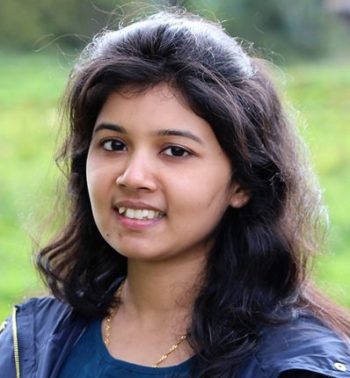
Dr. Arpita Biswas, a computer scientist and currently a Research Associate at the Harvard T.H. Chan School of Public Health, has been adroitly balancing her personal and professional lives as she works to rise steadily in her career and to make her mark among top women scientists. This brand-new mother showcases what one can achieve at a young age at work while also shouldering the significant responsibility of parenthood.
U.S. Academic Employment and Motherhood
Dr. Biswas represents a generation of researchers who still face the challenge of women’s underrepresentation in STEM and in faculty positions at R1 universities across the United States. She recently grappled with finding a job for fall 2023, encountering some initial skepticism about her qualifications, due to misperceptions stemming from the fact that she had completed her PhD in India. Persisting through the academic application process and preparing carefully for her interviews, she maintained a positive outlook. Her tenacity bore fruit when she received multiple tenure-track offers, and she finally accepted a position as an assistant professor in Rutgers University’s Department of Computer Science. Shortly after making the decision, however, she discovered that she was pregnant, and she naturally worried about whether to embark on the tenure-track position immediately, given the demands and responsibilities the new job would entail.
So, she faced a conundrum: with no family members nearby, except for her husband, she knew that simultaneously starting a new career and becoming a mother would be really challenging. The computer scientist decided, therefore, to defer taking on the faculty position until next year. This choice would inevitably shift her tenure clock forward by a year, but she felt that prioritizing her biological clock was the right decision.
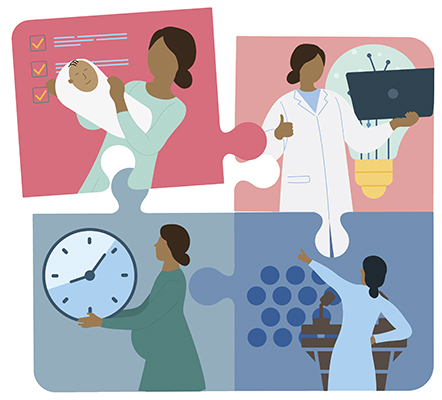 During the ensuing pregnancy, Dr. Biswas and her husband diligently set up a routine, dedicating their evenings to delving into prenatal essentials, to learning about newborn care, and to educating themselves about the fundamentals of parenthood. Additionally, she engaged in transparent discussions with her current colleagues, outlining her work commitments, timelines, and maternity-leave dates, with the goal of ensuring a seamless and satisfactory research path for herself and her colleagues.
Career goals and motherhood often bump up against each other, presenting a complex intersection for women. The immediate aftermath of childbirth poses unique challenges that include the profound responsibility of learning how to be a good parent, in effect, of learning how to nurture and shape a new life. Because she knew all this, Dr. Biswas made the strategic decision to prioritize the initial responsibilities of motherhood over immediately taking her next career step. Her decision reflects a commitment to both professional and personal aspirations, a holistic journey of growth, fulfillment, achievement.
Work Timeline and Real-World Impact
For now, Dr. Biswas continues as a Research Associate at Harvard, a role she began in February 2023 and where she has been actively engaged in what she hopes will be cutting-edge research. Prior to this role, she worked as a Postdoctoral Fellow at the Center for Research on Computation and Society (CRCS) in the Harvard John A. Paulson School of Engineering and Applied Sciences from November 2020 to 2022, contributing to interdisciplinary projects there. Her academic journey also includes short but broadening stints as a Visiting Researcher at Google Research, as a Research Intern at Microsoft Research Cambridge and at Microsoft Research India, and as a Research Engineer at Xerox Research Centre India from July 2014 to July 2016, which further solidified her growing expertise in the field.
She also collaborated with an India-based non-profit called ARMMAN, working with a team to use data-driven methods to identify solutions to problems faced by health-care workers as they try to decide which maternity patients need interventions and when to intervene. These solutions will potentially improve the scalability, robustness, and efficiency of the maternal healthcare intervention program carried out by ARMMAN.
Additionally, she helped design scalable solutions for finding suitable locations for the placement of mobile health vans (in collaboration with The Family Van, a Boston-based non-profit) and for predicting the high-risk areas most appropriate for scheduling vaccination drives (a project supported by the Global Alliance for Vaccines and Immunization).
Awards and Honors
Dr. Biswas has already received numerous honors and impressive recognition for such a young academic, including winning the Best PhD Thesis Prize from the Indian National Academy of Engineering; a Google PhD Fellowship; and several grants. She has also received invitations to lecture at various academic institutions, research organizations, and technical events, including the 2021 Symposium on Theory of Computing. Her CRCS Fellowship at Harvard enabled her to conduct independent postdoctoral research in conjunction with her non-profit work with The Family Van and ARMMAN. So far, her research has yielded 30 papers and 6 U.S. patents.
Recently, Dr. Biswas was honored as an alumni invitee to the 10th Heidelberg Laureate Forum, where she not only presented a workshop on “Algorithmic Fairness” but also curated a lunchtime discussion on the topic of work-life balance in academia. It’s worth noting that she juggled this, along with her current work at Harvard, while being six and a half months pregnant. Her ability to seamlessly manage and execute successful events under such circumstances is a testament to her dedication, expertise, and resilience in the academic sphere.
Working Toward Diversity, Equity, Inclusion, and Social Responsibility
Dr. Biswas has navigated the challenges of growing up in a developing country and of being the first in her family to pursue research, so she is acutely aware of the obstacles that women, in particular, face in pursuing select opportunities in higher education. Her personal experiences drive her passion to encourage women and other underrepresented communities to seek out intellectual pursuits. This passion comes across in her efforts to organize science events and workshops for public school students; and in her associations with international diversity forums, including Women in Data Science (WIDS), Women in Theory (WIT), and Women in Machine Learning (WiML), which that aim to foster diversity and to spark interest in STEM fields. In her research, teaching, mentoring, and service roles, she advocates for inclusivity, has zero tolerance for discrimination, and actively engages with underrepresented communities.
Advice for Women in Science
This talented researcher has advice for any woman scientist who may find herself at a similar worklife crossroad: be a proactive planner and an open communicator, but also learn to say no, and avoid overcommitment. She says that it is important to recognize the strength in yourself to set boundaries and to be mindful of your personal capacities. She also emphasizes that the decision to defer certain professional commitments in favor of prioritizing personal well-being is not a sign of weakness but is, in fact, a demonstration of strength and foresight. She insists that you seek out support, both at home and in the workplace, and engage in honest conversations with colleagues and mentors about your unique circumstances. Finally, she says that when you are navigating your work-life balance, where resilience and adaptability are crucial, be sure to reach out to social and professional groups that share similar goals and outlooks. Dr. Biswas insists that it is entirely feasible to pursue STEM ambitions while also prioritizing personal milestones, and her own journey reflects just how possible this is.
 Yamini Sharma, PhD, is a biologist specializing in microbial infections and lung tissue scarring. Her research focuses on the antifungal properties of natural products, identifying novel drug targets, and studying drug resistance in infectious diseases. During her postdoctoral studies, she played a key role in establishing an immunoactive ex vivo lung cryopreserved bank for studying SARS-CoV-2 pathogenesis, with potential applications in various infectious lung diseases. She earned her Bachelor’s and Master’s degrees in Biotechnology and PhD in India, and has done research in esteemed labs in Germany and the United States. Her longterm goal is to address the high mortality rate in fibrosis and lung infections, and make a meaningful impact in the critical research area.
This article was originally published in AWIS Magazine. Join AWIS to access the full issue of AWIS Magazine and more member benefits.