
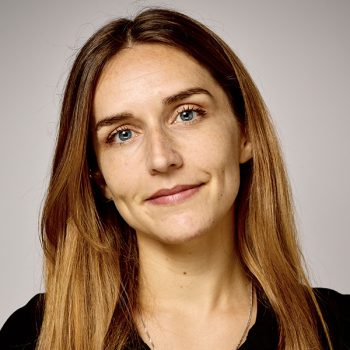
I left Portugal when I was 21 years old, having gotten accepted into an internship at a well-known pharmaceutical company in Switzerland, and I lived in Basel for ten months (I am drooling now, remembering that Swiss chocolate). As a medicinal chemistry intern, I worked on drug candidates for people living with chronic kidney disease, and I was the only woman in a lab of seven researchers. My boss treated me differently: He would come to me more often for fashion advice and less often for scientific matters. To be fair, my European fashion style was on point back then—but so was my science.
I looked around in search of role models, and to my surprise, I couldn’t find any. I decided the best way to succeed was to work harder, prove myself, and let my work speak for itself. As a result, I worked a lot, but what are your 20s for anyway?! Traveling and exploring are overrated, I told myself.
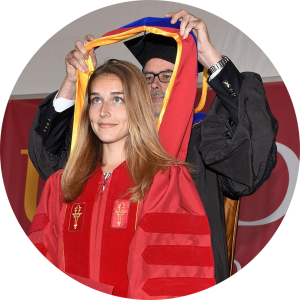
Because I was eager to gain knowledge and to discover the world, I then decided to move to an English-speaking country where I could be myself and experience less gender bias. I moved to the United States, and yes, I now understand the irony; naivete leads to blissful ignorance in many ways. In 2014, I joined a PhD program in chemistry at the University of Southern California (USC) in beautiful Los Angeles. What a dream!
Reality came rushing in as I realized that LA was the opposite of any European city that I had ever lived in or visited. If there is something that characterizes LA, it’s that the city humbles you instantly. Everything requires extra planning because neighborhoods lie so far apart from each other. LA traffic will push you over the edge, as you throw the best version of yourself out the window. And to me, the most difficult thing of all was to accept that when Californians say, “Yes, let’s definitely hang out soon,” they actually mean that you will never see them again. It was culture shock, but in spite of it all, I slowly started falling in love with the city and the magic it carries.
As an immigrant or “nonresident alien,” as the US government described me, I also had to embark on a journey to figure out who I was without my family. Portugal was 5,500 miles away, and 8 hours ahead, so I could never share anything in real time with them; I literally lived in the past. It only took me 5 years (and 2 tattoos) until I found my authentic self! LA does embrace authenticity, so I ran with it.
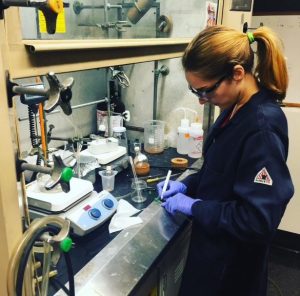
In my PhD work, I focused on synthesizing bioorganic molecules and medicinal chemistry to discover potential drug candidates to treat cancer and hearing loss. My 5-year program had ups and downs, as expected, but overall, I loved my time in the lab. I would blast Spice Girls songs while attempting to purify my compounds using high-performance liquid chromatography for days and days. Most of my experiments did not work, and when they did work, the compounds would often decompose with exposure to light. Science doesn’t care about holidays or birthdays, so we all had to keep going, which certainly felt isolating at times.
I started looking around for role models again. The one woman professor in the department served as our North Star. After she came back from a three-week maternity leave, we all cheered! We saw her choice to return to work so quickly after giving birth as empowering and as proof that we could do it all! (Now, my heart sinks as I think about it—three weeks, that poor woman).
Time has passed, and my lab days are now behind me (I do still listen to Spice Girls occasionally, though). I work at a biotech company where my job is to understand the external landscape and anticipate the future to better inform our current strategy. I have assessed business development opportunities, crafted a pipeline of commercial recommendations, and supported product launches, as well as early pipeline research. I love my job, and I am good at it! I have worked with people from all over the world, and I have seen more and more women role models who inspire me, but I have also observed the adversities that women continue to face in the workplace.

I became more aware of these challenges when I gave birth to my son two years ago. I realized that for a woman to thrive in the workplace, she needs a lot more than just career advancement. The workload for moms is heavy and takes a toll. As Reshma Saujani beautifully wrote in her 2022 book Pay Up: The Future of Women and Work (and Why It’s Different Than You Think): “I am the home life CEO. I am the coordinator of parent-teacher conferences, birthday parties, dental checkups, sneaker replacement, flu shots, haircuts, and karate classes for my kids. I am the designated homework helper, splinter remover, weird rash identifier, lost stuffed animal finder, and itchy tag remover. I am the family event planner, transportation controller, in-house chef, social secretary, food and supplies monitor, travel agent, and both headhunter and human resources for babysitters, dog walkers, cleaners, and repair persons. I am also the go-to when my aging parents need medical assistance or when my niece Maya needs the rental agreement for her apartment renewed.”
For years, we have talked about the lack of women’s representation in executive seats, the challenges of retaining women employees, and the tactics we can use to ensure salary equity. What I have not heard much about, however, is how women’s health fits into this whole conversation. Today, discussing women’s health remains a taboo because people feel uncomfortable when anyone broaches it. I believe that we should talk about and advocate for women’s health as the first step in creating an equitable workplace.
Not only is this the right thing to do, but it is also, financially, the smartest thing to do. Addressing the health gap could boost the global economy by $1 trillion annually by 2040. Women represent nearly half of the US workforce, and we are instrumental to businesses. Given that 50% of American women intend to have children, and that 25% of the US workforce are women that could be experiencing menopausal symptoms, it is of utmost importance that companies support women throughout these transitions.
These days, working mothers in the United States make just $0.58 for every dollar paid to fathers. This means that after becoming mothers, women lose 4% of their salary every time they have a child, while fathers receive a salary increase of 6%. We refer to this inequity as the motherhood penalty. According to Reshma Saujani, who is the founder and CEO of MOMS F1RST—an organization that advocates for working mothers—motherhood represents the unfinished business of gender parity. I agree!
Women who experience a stillbirth today only have access to three days of paid leave in most US states (five days in California), often having to use their short-term disability benefits. If we look deeper into racial disparities, we find that Black women have a stillbirth rate twice as high as that of white women, so they face even greater emotional and physical challenges. Another astonishing fact is that women of reproductive age in the US in 2015 were 50% more likely to die in childbirth (including pregnancy & postpartum complications) than their mothers 25 years before them.
In addition, women spend 25% more time in poor health than men do, mainly during our prime working years. Major contributors to this discrepancy consist of underinvestment in women’s health research (with less than 5% of R&D directed to it), lack of data on sex-based health differences, and inadequate care.
I don’t know about you, but I have no intention of living in poor health, and I certainly want my 4% back.
Being a woman in a STEM workplace makes for an interesting life, but, funnily enough, science is the easier part, isn’t it? Challenges include achieving a work-life balance and advancing in academia or industry, all possible goals, but ones that present big hurdles. And of course, the question of when we intend to have kids comes up more often than we want to hear it.
The good news is that many organizations address these biases and champion women’s health in the workplace and through their policies, in STEM fields and beyond. Here are several resources and policy guidelines that can help US employers (and individuals) to be better equipped in supporting women’s health:
- UNICEF’s Family-Friendly Policies initiative advocates for workplace policies that support families, such as paid parental leave, and affordable childcare, to promote child development and gender equity.
- Harvard Business Review (HBR) urged US employers to provide 1) better health insurance, without high deductibles, co-pay or out-of-pocket costs, given families are usually faced with medical bills of thousands of dollars after birth; 2) Paid Parental Leave, which results in healthier moms and healthier babies; 3) maternal health services, flexible working schedule (e.g. breastfeeding breaks) and childcare support.
- Paidleave.ai, by MOMS F1RST, is a free tool that helps families determine their eligibility for paid family leave and guides them through the application process.
- Star Legacy Foundation provides free resources for people suffering from miscarriages and infant loss. They also highlight Maternal Mental Health Hotline that is available 24/7 for free and provides confidential assistance for pregnant and postpartum individuals.
- HBR also encourages employers to host webinars addressing women’s health concerns, such as menopause, and pro-actively send out surveys to hear from menopausal women how to best support their needs.
As for me, I am committed to having uncomfortable conversations and to presenting alarming statistics as I encourage equity. I will also never stop seeking out my North Stars—those empathetic, transformational leaders who share their journeys and inspire us through their actions. Together, we can break down barriers, foster an environment where women’s health achieves priority, and ensure that everyone hears our voices. The path to a healthy life begins with us.
 Dr. Carolina Amador has seven years of experience in the pharmaceutical industry, including roles at Roche, Amgen, and BioMarin, and she has lived in three different countries. She joined BioMarin in 2023 as an Associate Director of Corporate Intelligence, focused on rare diseases. Dr. Amador is also the Co-chair of the BioMarin Women’s Alliance ERG, a role in which she champions women’s health and career advancement. She holds a PhD in chemistry from USC, and she actively contributes to the biotech community through her involvement with nonprofits like the Healthcare Businesswomen’s Association (HBA) and Biotech Connection LA. She has received several leadership awards over the years from esteemed organizations such as HBA, Biocom, and USC. Outside of work, Dr. Amador enjoys spending time with friends and family, watching movies, and going on hikes. She lives in Los Angeles, and one of her favorite evening pastimes involves preparing dinner alongside her husband, while they listen to music and entertain their son and their feline companion.
This article was originally published in AWIS Magazine. Join AWIS to access the full issue of AWIS Magazine and more member benefits.