
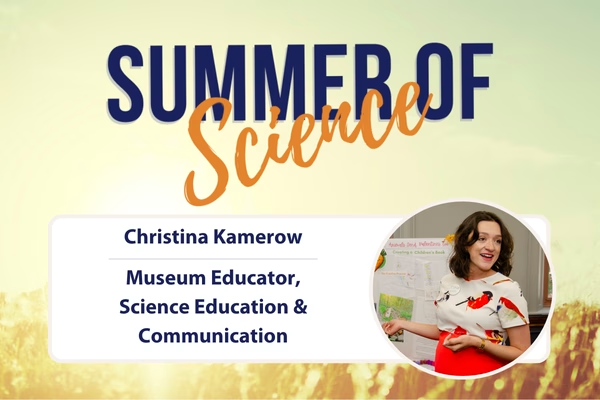
As a museum educator at the American Museum of Natural History and an independently published children’s book author, Christina Kamerow is passionate about making science meaningful for young minds.
A Day at the Museum
What does a typical day in your role look like?
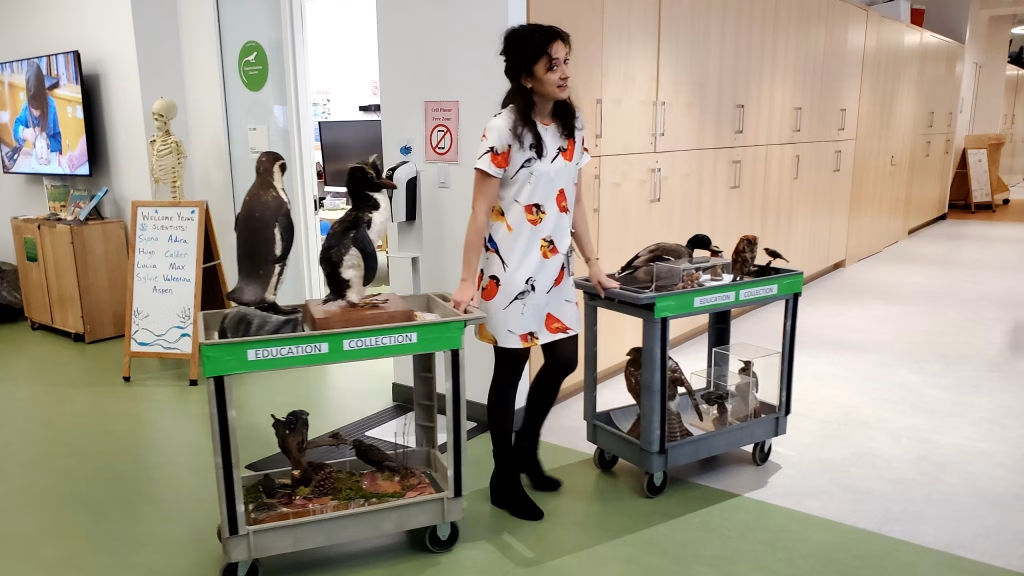
As a Museum Educator I design, plan, and teach classes to children and families in our school year-long program. One morning I may be comparing live millipedes and centipedes with four-year olds and their adults, and in the same afternoon I could host an “archeological dig” for our first grade students and their family members.

Crafting a Career in Science Education
I am a passionate educator with over nine years of experience developing and implementing a differentiated learning environment for students with diverse needs in varied settings. From the public elementary classroom to private one-on-one instruction, I have been grateful to be able to use my Creativity, energetic personality, and flexible problem solving skills to positively impact those around me and contribute to a broad learning community.
I work with live animals that live in the museum classrooms! Amphibians, reptiles, invertebrates, underwater tanks, and a chinchilla make up our animal ambassadors within the program! Cookie, the crested gecko, is one of my favorites. I usually share about her dropped tail and ask students “Why do you think it came off?”
I am a flexible person and life-long learner. I am balanced and militantly positive. I set social endeavors (which I crave) and personal health as high priorities. My outlook points me to success and my grit leads me there.
Storytelling with Impact
How has your work or research helped drive discovery, innovation, or impact?
I am also an independently published children’s book author and illustrator. Inspired by nature and my experience with child development, I have taken my ideas and developed them into stories and texts that communicate concepts to a young (and adult) audience. Those who read “Animals Send Valentines Too” will not only learn about individual animals’ courtship behaviors through rhyme and pictures, but may also gain respect and interest for the natural world through connection and empathy.
The Power of Science and Community
What does the power of science and community mean to you?
Science helps us understand the world around us which leads to innovation, solutions and technology advancements. The science community, especially during rough political times, has been supportive of each other and can find ways to take action on shared goals. In my local chapter of WINS we hosted a book club for “Braiding Sweetgrass” by Robin Wall Kimmererand also brought together local Indigenous people to speak and invited community members to hear and learn more about their stories. I was able to help organize an informational workshop that showcased the work that educators within the museum were developing for fourth graders who are learning about the people of New York as a part of the event. The combination between education and the powerful impact of science can be seen in real-life interactions as we keep learning as a community through purposeful collaboration and understanding.
How has science shaped your sense of community—and how has community supported your journey?
I am so grateful for the WINS chapter I have been a member-at-large for in the past year. I have met interesting people and have learned from their studies and perspectives. One of the most impactful aspects of this community resource group has been the “mentor circles” which meet every month. A group of varied professionals join to discuss and mentor each other in whatever way comes. We shared readings from Jane McGonigall’s “Imaginable,” the best thrift stores to check out, and new exhibit excitement. I have been exposed to mentors and have served as a mentor while discussing career goals, emotions around life changes, and the group has served as a safe space.
Inspiring the Next Generation
What advice would you give to someone just starting out in your field?
When teaching young learners you can guide your planning and instruction with the thought in the back of your head “What is the real-world application” or “What would this look like in the real world.” This way we can connect what we do each day with others and the world we live in. Our goals can be our compass.