
“A gender line … helps to keep women not on a pedestal, but in a cage,” Ruth Bader Ginsburg once warned. Her words resonate now as loudly as ever, as gender inequalities continue to restrict and erase the experiences of women.
We have become so accustomed to these disadvantages that we often don’t speak about them and fail to notice them in our daily lives. Gender biases, or the preferential treatment of one gender over another, often emanate from harmful stereotypes and assumptions about intelligence, income, aspirations, and lifestyle and have far-reaching consequences, as well as deep-seated roots in history.
One of the most consequential effects of gender bias is seen within the medical field, where women are more likely than men to experience dismissal of their symptoms, obstacles to quality care, and misunderstandings by their providers. Despite composing 50% of the population, women are grossly underrepresented in medical studies. Historically, they have often been absent from clinical research and have only recently gained access to large-scale clinical trials.
Following the devastating outcomes of doctors prescribing thalidomide in the 1970s for morning sickness, which led to birth defects and infant deaths, the FDA composed guidelines that excluded women in their reproductive years from drug trials. The agency did not officially reverse this policy until almost 20 years later. In 1993, Congress passed a law requiring NIH-funded research to include women and minorities in clinical trials, but researchers were not required to include female animals in preclinical trials until as recently as 2016.
Many other factors have also contributed to this disparity, including consideration of men’s physiology as the “norm”; concerns over inclusion of women and even of female animal models due to hormonal fluctuations; and the increased costs of recruiting and adding women to participate in studies. The result for women has been higher rates of adverse medication reactions, mistreatment and undertreatment of disease, and a deficiency in evidence-based care.
Even less is understood about the differences in clinical manifestations, biopsychosocial challenges, and long-term health-care outcomes in gender-non-conforming people. There can often be significant delays or inadequate care provided to transgender, gender-nonconforming, and nonbinary people, due to discrimination and lack of knowledge and training on how to provide quality care. Underlying the lack of inclusion of women and gender-nonconforming people in medicine is the entrenched, societal ideal that upholds white, able-bodied men as archetypal and views other people as inferior. This discrimination prevents providers from recognizing the complex interplay of biological sex and gender, psychosocial factors affecting health care, and socioeconomic differences between genders.
 One of the most significant factors that compounds gender bias in health care involves intersectionality with race/ethnicity. This is evidenced by the treatment of Black and Indigenous women. Black women don’t just experience bias based on gender; they also face the continued systemic oppression of racial inequality. Studies have found that even after controlling for income and barriers to care, Black, Indigenous, and POC women still have poorer health outcomes compared with those of white women. Black women have a higher prevalence of chronic medical conditions, shorter life expectancy, and increased maternal mortality.
They are also three to four times more likely to die while pregnant or in the first year postpartum, while Indigenous women have twice the maternal morbidity and mortality rates of White women. This is the result of complex, generational, and deeply rooted, institutionalized systems of race-based discrimination. Despite the fact that Black women experience disease at higher rates, they are not yet adequately represented in research, which limits the generalizability of treatment recommendations, even compared to those of white women.
Several studies examining why Black women are recruited less often and participate less in clinical trials have found logistical constraints and mistrust in the research community due to fear of experimentation to be the most common concerns. Many potential participants fear medical exploitation, and rightfully so, given the history of horrendous injustices inflicted on Black men and women by medical researchers: In 1840, Black women were subjected to gynecological surgery without anesthesia; in 1932, the 40-year Tuskegee experiment began, which egregiously harmed Black men by withholding syphilis treatment; and researchers famously cultured and used cancer cells from Henrietta Lacks without her consent in the 1950s. These are the most well-known offenses, but they only scratch the surface of the medical abuses Black people have endured. This year, in a sign of progress, the American Cancer Society announced a large study that will examine the increased breast cancer risk for Black women, and we hope that this is just the first of many upcoming efforts to understand and improve their health.
The good news is that medical science finally appreciates the reality that gender is an important factor in patient care when considering age-appropriate preventative measures, anatomical differences, and genetic influences that affect pathophysiology and the clinical manifestation of disease. For example, researchers have studied the gender disparities in how pain is experienced and treated by practitioners. Chronic pain and associated conditions are more common in women than in men, and studies have found the biological response to pain is influenced by gender.
Investigations in the perception of pain have suggested that fluctuations in estrogen and inflammatory responses, as well as in women-specific genetic variations, may lead to increased pain sensitivity and severity. Women’s response to pain is postulated to be present at birth, as demonstrated in one study, where infant girls undergoing heel sticks were more likely to have widespread nociceptive cortical activation than males were, indicating an increased sensitivity to pain. Unfortunately, this research is not always reliable. For instance, gender stereotypes lead men to underreport pain, so they are often perceived to have higher pain tolerance. One study also found that providers perceive women to be in less pain than they actually are and therefore underestimate their self-reported pain. A large factor in this discrimination was due to women’s facial expressiveness, which providers discounted as exaggerated. These findings suggest that doctors regard women’s pain as less credible and so fail to properly treat it. This failing is even more pronounced for Black women patients. The overarching theme of these studies is how gender biases result in generalized treatments that may not be as effective or as safe for anyone other than White men, who tend to be the test subjects, and how gender stereotypes affect how we understand patients.
Not only has gender bias affected the availability of reliable data on women’s health, but it also has had repercussions on the access to care. One large scale survey found that younger women, particular those who are non-White, have reported more delays in obtaining medical care than men have. Many of these barriers are related to difficulty in affording services. This is even more significant for Black and Hispanic women. Women pay around 20% more annually for health care outside of pregnancy, despite meeting insurance deductibles and utilizing medical services at higher rates than men. Black women, on average, continue to earn less money than men do, which contributes to difficulties such as affording medications and accessing transportation to address medical issues. Additionally, there are underrecognized yet significant time and monetary constraints that come with the domestic labor and childrearing that fall largely to women, even today.
As we continue to examine gender and racial differences, a key question arises: Since we now know better, how can we do better? Disassembling a system that has supported bias in health care for decades is no easy feat. However, we have made some progress in recent years to address racial and gender disparities. Medical educators increasingly recognize the different clinical presentations of pathology in women compared with those in men, such as in acute myocardial infarctions or heart attacks. Medical colleges more frequently address the complex biopsychosocial factors and social determinants of health that affect the well-being of the population. An expanding willingness to discuss and explore gaps in medical knowledge related to institutional biases and to implement new curricula to deconstruct these stereotypes is one pathway toward approaching equitable care.
Cultural sensitivity is no longer a choice; it’s a public-health mandate, and if we fail to address and discuss differences in our experiences, we will only continue to perpetuate them. Another way the medical field is now attempting to deconstruct bias is by utilizing tools to help providers identify their own implicit biases, because awareness is the first step to change. If we can start to recognize that women’s’ health extends far beyond pregnancy and menopause and to explore the complexities not only of biology but also of being a woman in today’s world, then we can make progress. We must continue to encourage participation in difficult conversations about race and gender and to be curious about our own actions and biases in daily life. Despite seemingly insurmountable and systemic challenges, women have continued to live full, long, and abundant lives. What might we accomplish in a society that strives to truly value and respect all people?
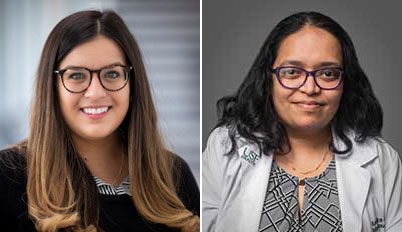
 Jayme Verdi, MD, is an Internal Medicine-Pediatrics Resident at the University of South Florida (USF). Her professional interests are within the fields of Infectious Disease and Public Health. Outside of medicine, she is an avid fan of music, spending time in the Tampa sun, and exploring new bars and restaurants.
 Ambika Eranki, MD, MPH, AAHIVS, is an Infectious Disease Specialist and Attending Physician at USF. Her areas of interest include Humanistic Health Care in underserved populations, and all matters related to infectious diseases. She is passionate about advocating for and mentoring women in the workplace.
Editor’s Note: The contents of this article are not affiliated with the University of South Florida.
This article was originally published in AWIS Magazine. Join AWIS to access the full issue of AWIS Magazine and more member benefits.