
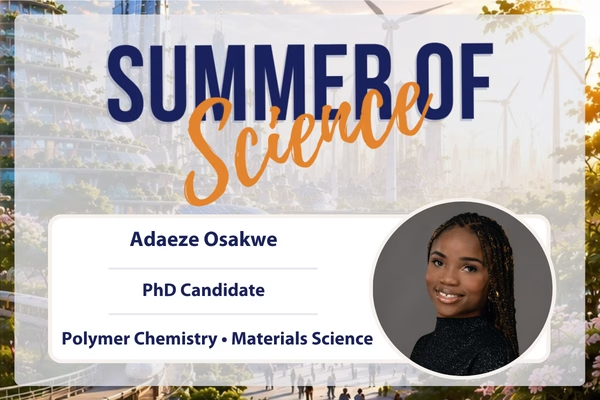
Adaeze Osakwe is a PhD candidate in Chemistry at the University of Georgia, where she develops polymer-based materials and pharmaceutical formulations to improve drug delivery and material performance. Her research combines polymer chemistry with predictive design strategies to create more efficient, sustainable materials for healthcare and industry. Driven by a curiosity about how materials shape the world around us, she is passionate about developing innovations that benefit both people and the environment.
A Day in Polymer Chemistry
What does a typical day in your role look like?
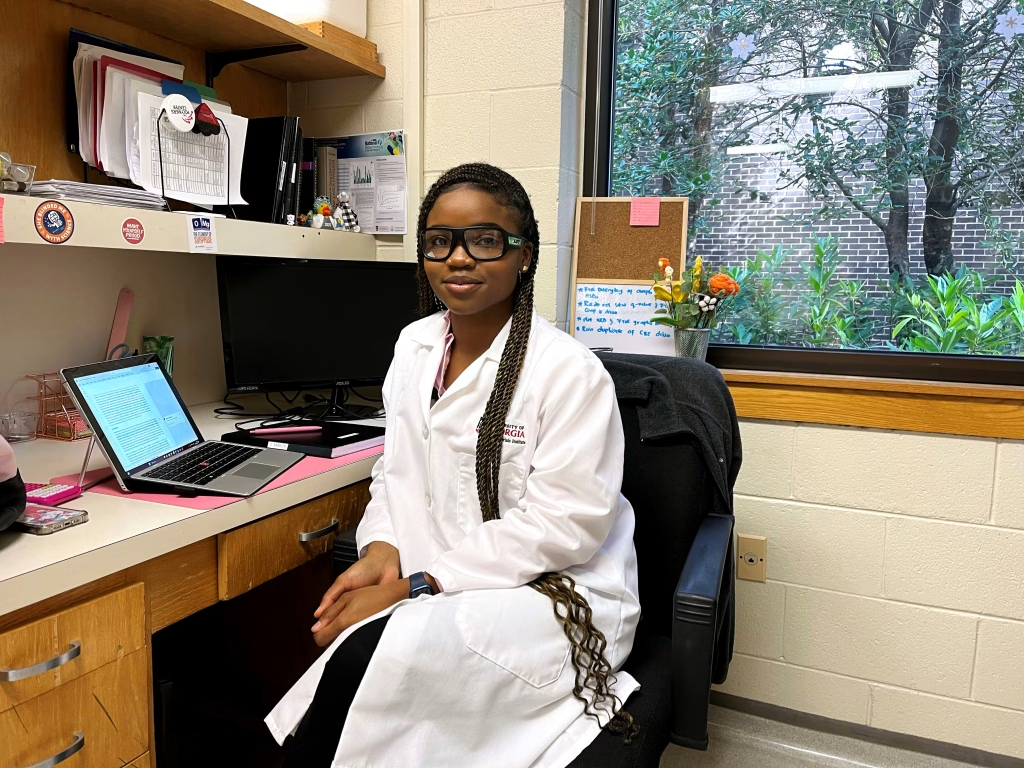
I am currently a Ph.D. candidate in Chemistry at the University of Georgia. My research focuses on developing polymer-based materials and pharmaceutical formulations to improve drug delivery and performance. On a typical day, I spend time designing experiments, collecting and analyzing data, reading scientific literature, and collaborating with my advisor and research team. I also mentor undergraduate researchers and participate in leadership and outreach activities.
How would you explain your field of work to a kindergarten class?
I study tiny building blocks called molecules that are much too small to see. I use them like LEGO pieces to make a large molecule called a polymer. These polymers are then used to make new materials that can help people. Sometimes I work on materials that help medicine work better in the body, and sometimes I work on materials that can break down more easily and create less waste.
The Path to Materials Science
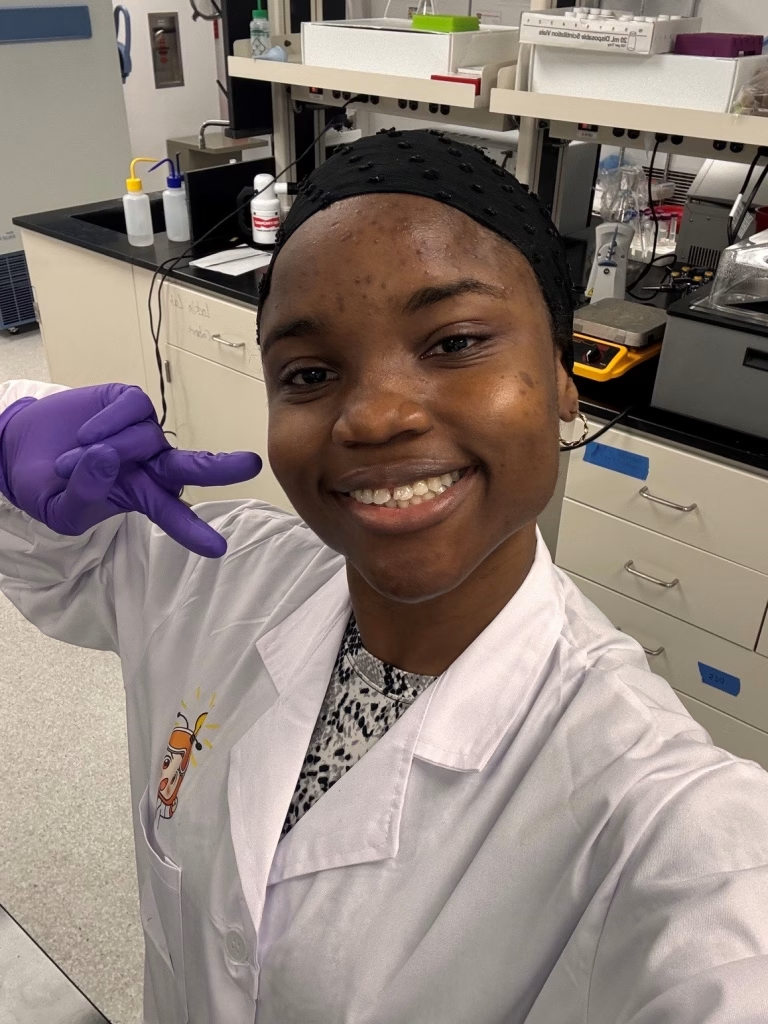
Before graduate school, I earned a degree in Chemistry from the University of Ibadan, which provided me with a strong foundation in the theoretical principles underlying materials and polymer science. After graduation, I worked as a Quality Control Technician, where I evaluated building and construction materials against established quality and performance standards. That experience gave me practical insight into how material properties influence real-world applications and reinforced my interest in materials research. The combination of academic training and industry experience prepared me well for my current role as a polymer chemist, where I apply both fundamental scientific principles and practical problem-solving skills to develop and characterize advanced sustainable materials.
I decided to study chemistry as an undergrad major because my innate curiosity made me love science. During my studies at the University of Ibadan, I became particularly interested in materials and polymers because they are found in nearly every aspect of modern society, from healthcare to packaging and sustainable technologies.What keeps me excited about my work today is knowing that the research I conduct has the potential to make a tangible difference. Whether I am developing materials that improve drug delivery or exploring more sustainable alternatives to conventional plastics, I am motivated by the possibility of creating solutions that benefit both people and the environment. The combination of creativity, problem-solving, and real-world impact is what makes science so rewarding to me.
Research involves the use of high-tech instrumentation for analysis and formulation design. This means my day-to-day involves me exploring the capabilities of these top-of-the-edge machines to move my projects forward.
My proudest achievements are always seeing our projects successfully become peer reviewed publications. Completely writing that detailed report documenting your findings for another scientist to learn from is put a nice finish to numerous hours of unpredictable experimentation.
The Science That Moves Us Forward
How has your work/research helped drive discovery, innovation, or impact?
My research helps drive innovation by developing tools and strategies that improve the design and performance of polymer-based materials. In pharmaceutical formulation development, I have investigated how experimentally derived Hansen Solubility Parameters can be used to predict drug–polymer compatibility, reducing reliance on trial-and-error approaches and improving formulation efficiency. My work also explores how polymer structure and processing influences material performance, generating insights that can be applied to sustainable materials development.
Where do you see your work heading next?
I see my work evolving toward bridging fundamental materials science with real-world applications in pharmaceutics, material science and sustainability. I am particularly interested in developing predictive strategies that help researchers design better pharmaceutical formulations and polymer systems more efficiently. In the long term, I hope to contribute to innovations that improve patient outcomes while also advancing sustainable materials solutions. What excites me most is the possibility of using chemistry and materials science to solve problems that affect both human health and the environment, creating technologies that are impactful, scalable, and accessible.
How do you see your work helping shape the future of STEM?
I believe my work can help shape the future of STEM by contributing to the development of more efficient, sustainable, and data-driven approaches to materials design. Through my research, I aim to improve our ability to predict how materials will behave and interact, reducing reliance on trial-and-error experimentation and accelerating innovation in areas such as pharmaceutical formulation and advanced materials development.Beyond the technical impact, I am passionate about helping build a more inclusive and accessible STEM community. Through mentoring students, participating in outreach activities, and serving in leadership roles, I strive to encourage the next generation of scientists to see themselves as contributors to scientific discovery. I believe the future of STEM depends not only on technological advances but also on creating opportunities for diverse perspectives and experiences to drive innovation.
To a Future Scientist Just Starting Out
What advice would you give to your younger self / someone just starting out in your field?
I would advise them to be intentional about their growth and continuously expand their knowledge base. One lesson I have learned is that an hour spent studying and building understanding can often be more valuable than a full day of experimentation without a clear purpose. I would also encourage them to be persistent while remaining patient with the process. Scientific discovery rarely happens overnight, and meaningful results often require time, perseverance, and repeated iterations.Finally, I would advise them to seek out mentors and build a supportive community of colleagues who are willing to challenge their thinking and provide constructive feedback. Great scientists are not developed in isolation; they are shaped by continuous learning, collaboration, and the guidance of those who help them grow.
What are some strategies you use to maintain resilience and persistence in the face of obstacles?
One of the biggest lessons I have learned through graduate school is that resilience is built through consistency rather than technical know-how. When faced with setbacks, I remind myself a professor told me in my first year – “that I am in graduate school to learn and not to know”. If I knew all the answers, I wouldn’t be here. In research, unexpected results are often as valuable as expected ones because they provide new insights and directions for investigation.I maintain resilience by celebrating small wins along the way. Whether it’s solving a technical challenge, mentoring a student, or reaching a project milestone, acknowledging progress by writing them down helps me stay motivated during long-term projects. Another important source of resilience is my support network. Mentors, colleagues, friends, and family provide valuable perspective and encouragement during challenging periods.
What message would you share with future scientists about the power they hold to make a difference?
My message to future scientists is that they should never underestimate the impact their work can have, no matter how small their contribution may seem at the time. Many of the technologies, medicines, and innovations we rely on today began as a single question, experiment, or idea. I would encourage aspiring scientists to remain curious, courageous, and committed to lifelong learning. Not every experiment will succeed, and not every answer will come quickly, but persistence and curiosity often lead to the most meaningful discoveries.Most importantly, remember that science is ultimately about people. The knowledge we generate has the potential to improve health, protect our environment, and create opportunities for future generations. By approaching our work with integrity, purpose, and a desire to serve others, we can use science as a force for positive change.