

Achini studies how mercury and other gases behave in the atmosphere, capturing reactions that unfold in billionths of a second. Using advanced optical tools and a lot of patience, she produces data that strengthens environmental models and informs better policy decisions. With a passion for mentoring and a mind tuned to the tiniest details, Achini shows how wonder and precision can shape science with real-world impact.
A Day in the Lab
What does a typical day in your role look like?
I am a Ph.D. candidate in Physics at Mississippi State University, USA, where I build and work on laser‑based instruments to study the fast reactions of atmospheric mercury compounds. My work combines cavity ringdown and laser‑induced‑fluorescence spectroscopy to measure trace gases at parts‑per‑trillion levels, with applications to air‑quality modeling and climate policy.
Before graduate school, I completed a B.Sc. (Hons) in Physics in Sri Lanka, then joined MSU’s Laser Spectroscopy & Plasma Laboratory as a graduate research assistant. My days revolve around maintaining high‑precision laser experiments and sustaining the habits that make rigorous research possible.
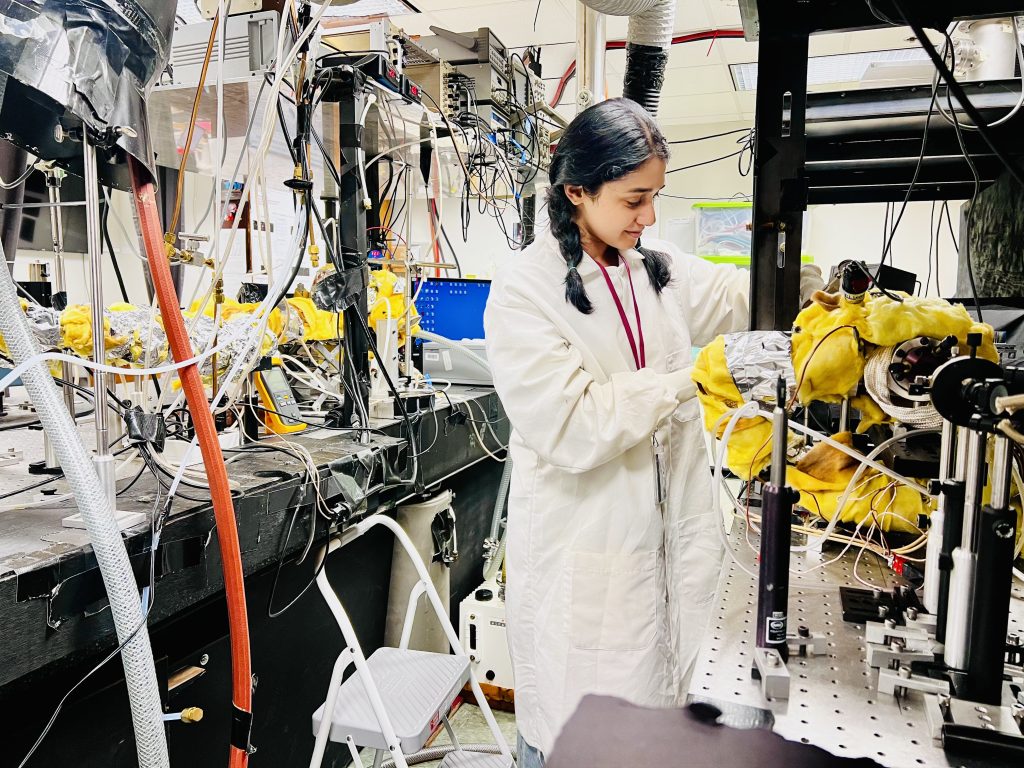
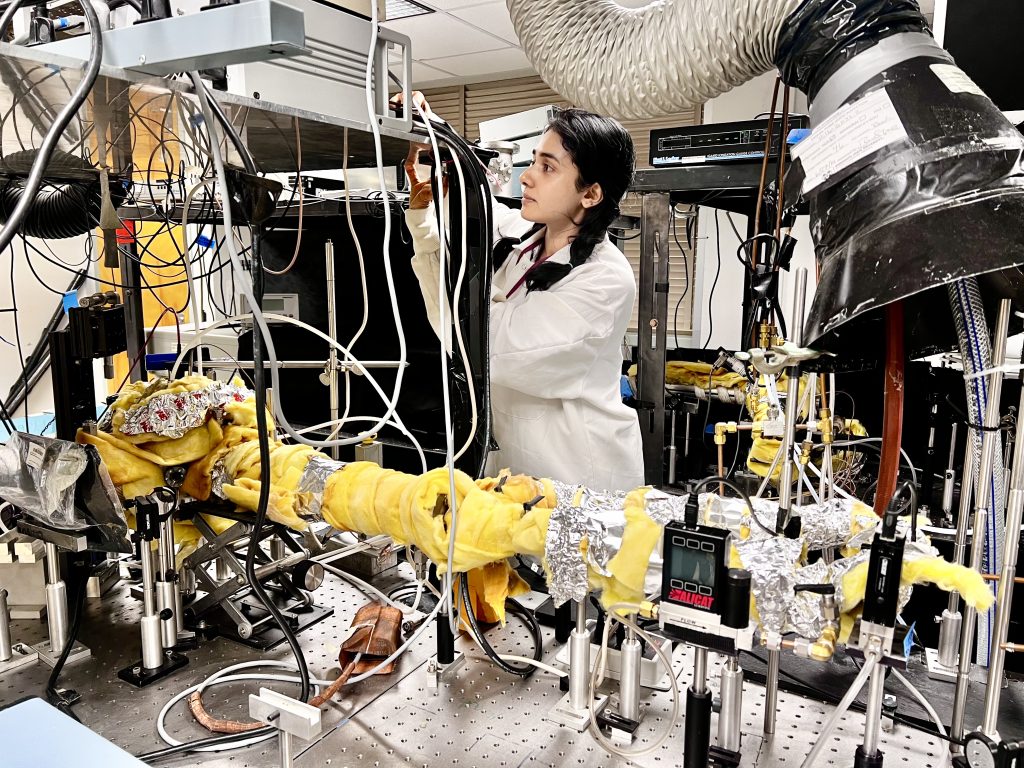
I begin by bringing two pulsed systems—Nd:YAG and a tunable dye laser—into alignment, then operate our dual experimental platforms (cavity ringdown spectroscopy for absorption measurements and laser‑induced fluorescence for kinetics). Once data are streaming, I handle acquisition scripts, verify signal quality, and run preliminary analyses so that emerging trends can be discussed quickly with my advisor and collaborators. Afternoons often find me refining data analysis, drafting figures, or incorporating feedback on manuscripts in progress. Throughout the day, I prioritize clear communication—updating my supervisor and mentoring junior students who share the lab. After lab shutdown, I head to the campus gym—physical focus keeps mental focus sharp—then spend the evening reading the latest spectroscopy literature or polishing sections of manuscripts.
Balancing meticulous optical work with consistent writing, collaboration, and personal well‑being keeps both the lasers and my motivation in steady alignment.
The Path to Laser Science
I earned a B.Sc. (Hons) in Physics from the University of Sri Jayewardenepura, where coursework in optics and the final year thesis on “Estimation on Atmospheric Turbidity Parameters Using Solar Intensity Measurements” sparked my interest in atmospheric physics, optics, and laser‑based diagnostics.
I am now completing a Ph.D. in Physics at Mississippi State University, focusing on cavity ringdown and laser‑induced‑fluorescence techniques for trace‑gas analysis. As a graduate research assistant, I have trained to design and align high‑vacuumed optical cavities, operate Q‑switched Nd:YAG and dye‑laser systems, manage data acquisition, and publish results in collaboration with chemists and atmospheric scientists. Teaching undergraduate optics labs and mentoring junior students have strengthened my communication skills and reinforced the fundamentals I apply daily in the lab.
Together, this blend of rigorous academic training, hands‑on laser and optics work, data‑analysis expertise, and collaborative project management has equipped me for laser‑focused R&D roles—whether developing next‑generation industrial sensors, refining spectroscopic instrumentation, or supporting field‑deployable optical systems in the photonics industry.
I fell in love with science the first time I darkened a room and sent white light through a glass prism. Seeing a single beam explode into a spectrum made me realize that nature hides elegant structures inside everyday phenomena—if you shine the right light at the right angle, the invisible becomes measurable.That curiosity pushed me from high school optics demonstrations in Sri Lanka to a physics degree and, ultimately, to exploring atmospheric chemistry through advanced laser spectroscopy research in my Ph.D.
What still excites me today is the combination of discovery and impact. Every time our cavity ring down spectrometer captures the distinctive absorption signature of a newly introduced species, it reminds me that precise optical measurements can reveal how mercury travels through the atmosphere, how combustion products evolve, and how effective policy can help curb their impact. Equally motivating is the community around the work: collaborating with chemists and sharing results at conferences where a single hallway conversation can spark a new experiment.
Science gives me a daily dose of puzzles, purpose, and people. That trio—seeing something no one has seen before, knowing it can improve public health, and doing it alongside a supportive network—keeps the laser switch flipping on every morning.
Fun fact: In a single 500 nanosecond ring down measurement, light in our 46 cm cavity bounces back and forth about 160 times and covers roughly 150 meters one and a half football field before it fades below the detector threshold. So, although the setup fits on a tabletop, every data point captures a photon journey that would stretch the length of the entire lab corridor.
When an experiment stalls or a cavity refuses to align, I lean on four habits that keep me moving forward. First, I break every challenge into small, testable steps, an approach borrowed from alignment protocols, so progress is measurable, and setbacks remain contained. Second, I protect routines that recharge me: an hour at the gym most evenings, followed by a brief reflection on something that went right. Third, I invest in steady practice and training, whether repeating delicate mirror adjustments until muscle memory sets in or sharpen data analysis skills, because consistent skill building makes the next obstacle easier. Finally, I cultivate community through quick Slack check ins with lab mates, weekly bullet point updates to my advisor. Together, these habits turn inevitable hiccups into manageable tasks and remind me that resilience is a learned and continually practiced team effort.
Science with Impact
What is your proudest achievement in your career?
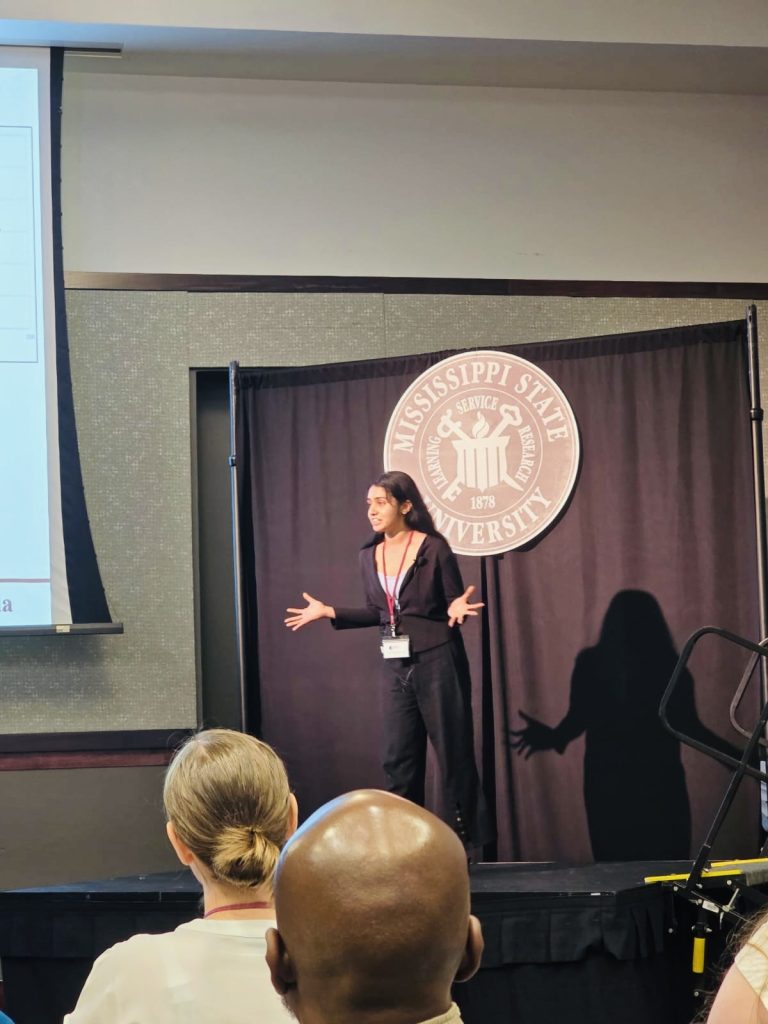
My proudest moment so far was becoming the first student from our Physics & Astronomy Department to win the university wide Three Minute Thesis (3MT) competition.
How has your work or research helped drive discovery, innovation, or impact?
My work addresses a critical gap in mercury atmosphere models through detailed, temperature- and pressure-dependent rate constants for the redox reactions of BrHg with key trace gases (NO₂, NO, O₃, O₂, and selected VOCs).
Using a laser photolysis/laser-induced fluorescence platform paired with a newly characterized laser photolysis/cavity ringdown spectroscopy approach, I generate BrHg radicals in situ and track their evolution with nanosecond time resolution—even under conditions where fluorescence quenching would obscure traditional LIF signals.
These kinetics data feed directly into global chemical transport simulations, enabling more accurate forecasts of how emission control strategies will shift the geographic pattern of toxic Hg(II) deposition. By uniting advanced optical diagnostics with environmentally significant chemistry, the research turns fundamental reaction rates into practical insight for policymakers and ecosystem managers.
The Power of Science and Community
What does the power of science and community mean to you?
For me, the power of science lies in its ability to reveal truths about the natural world, and the power of community lies in turning those truths into shared progress. When I measure a reaction rates, the data by itself are just numbers but once they flow to modelers who refine pollution forecasts, to policymakers who write cleaner air regulations, and to students who see a pathway for their own curiosity, the work gains momentum far beyond my lab. Community also multiplies resilience and keeps doors open for the next generation of women in STEM. Science gives us the tools to understand; community gives us the reach to apply, improve, and inspire. Together they form a feedback loop where discovery fuels collaboration and collaboration accelerate discovery, creating impact none of us could achieve alone.
How has science shaped your sense of community—and how has community supported your journey?
Community has propelled my own journey through conference discussions that sparked new collaborations, through AWIS workshops that provided role models and practical career advice, and through outreach events where I see curiosity ignite in younger students. Every time I share data, exchange ideas, or mentor someone else, the cycle continues: science creates the community, and community sustains the science.
To a Future Scientist Just Starting Out
What advice would you give to someone just starting out in your field?
Build a solid scientific foundation and keep meticulous notes so you can trace every decision you make. Ask questions early, share your work frequently in group meetings or local events, and cultivate habits, adequate rest, balanced meals, regular exercise that safeguard long term focus and creativity. Finally, stay connected to professional communities, where mentorship and collaboration will speed your progress and enrich your career
What message would you share with future scientists about the power they hold to make a difference?
Never underestimate how far a single, well framed question can ripple. Every data point you collect, every line of code you refine, and every poster you share has the potential to shift someone’s understanding and, in turn, shape policy, technology, or public perception. The power of science isn’t only in discovering new facts but in translating them through clear communication and collaboration into solutions that improve lives. Use your skills with integrity, stay curious, and remember that even small advances, sustained over time and amplified by community, can rewrite what the world believes is possible.
What would you tell your younger self?
Stay curious and patient: meaningful progress is rarely instant, but each careful step adds up to breakthroughs you can’t yet imagine. Keep your notebooks messy but complete future you will rely on those scribbles. Seek out mentors and peers early, because ideas grow faster in conversation than in isolation. Guard your well being as fiercely as your data; clear thinking depends on rest and balance. And remember that detours failed trials, unexpected results often lead to the most interesting discoveries, so greet them with the same enthusiasm you give a success.