
Many of us have advocated for something in our journey to becoming women in STEM. Often that relates to advocating for things that matter uniquely to us, such as visibility of women in research, having a healthy work-life balance, or being able to be our most authentic selves. However, as I have learned from attending the American Association for the Advancement of Science (AAAS) Catalyzing Advocacy in Science and Engineering (CASE) conference, advocacy extends to encompass people, topics, and audiences that we never envisioned ourselves in.
In applying to be an AWIS Advocacy Scholar, I envisioned a space in which I would learn how to advocate for inclusion of underrepresented populations in my research within my university and throughout my career. And while this topic is important, I found that the experience I was granted allowed me to explore advocacy that extended to the federal level, a skill that I never thought I would have. If you are interested in advocacy, particularly in relation to political advocacy, here’s a brief overview of everything that I learned.
- Tell the story, not the statistics. As a researcher, it is easy for me to rattle off several statistics or complex mechanisms that explain why my topic matters to me, and therefore should matter to my audience. However, unless you are in my bubble of female exercise physiologists, what I’m saying is likely going to confuse you. What’s more, I’m probably going to lose your interest along the way. Instead, telling a story of how our findings on female bodies can help inform treatment for burn victims, the next global pandemic, etc. is probably going to keep you more involved, and make my ask memorable!
- Make an ask and make it broad. Science is a unique field in that each of us work on niche topics that matter to us for specific reasons. It’s easy, therefore, to feel that others should feel just as passionate about our topics as we are. What you’ll often find though, is while your research may pique someone’s interest, it doesn’t mean they are willing to donate resources to support it. This is particularly true when the person you are pitching your research to is an elected official, who is tasked with addressing the interest of all those who elected them! Therefore, to ensure that you are getting a favorable outcome, it’s best to ask about something broad. Think increased pay and protections for graduate students or increased funding to the NIH, rather than increased funding for a rare condition. That way, the ask is easily digested by your audience (and you’re still going to get to reap the benefits).
- Tailor your ask to your audience. It’s easy to surround yourself by people that have the same ideological views as you. In fact, this psychological phenomenon, called the “similar-to-me effect,” is common, even comforting (Pilat and Krastev n.d.). However, this bias can limit our ability to appeal to those that have different beliefs. When taking on the task of talking to someone who you’re trying to convince to go to bat for something you’re advocating for, you must make it matter to them. And that can mean tailoring your ask to fit within their ideological frame. That doesn’t have to mean compromising your beliefs, or even changing the ask, it just means that instead of asking it in your way, you might have to modify it to match their way!
- Federal funding is confusing. For all the flaws that the government may have, they do have the difficult task of allocating money to a lot of things that matter to a lot of people. Unfortunately for us, more money for one area (i.e., research) means less area for another. And unfortunately for our elected officials, they must decide what area that comes from. After spending 45-minutes arguing with the “other side of the isle” for a hypothetical exercise, I found that choosing how to allocate money was a harder task that I gave it credit for.
- Advocacy is only as intimidating as you make it! Being an advocate doesn’t mean that you have to fly to Washington, research your elected officials, and make your case. Instead, advocacy could be as simple as signing a petition, calling your congressperson, or, even educating yourself on why a particular topic matters. Advocacy is a personal journey, so make it personal!
I had no idea what to expect when I arrived in Washington, DC for the AAAS CASE conference. However, after a week of networking, listening to outstanding speakers, and stepping out of my comfort zone, I could not be more grateful for such an extraordinary experience. I was amazed by how much I learned about advocacy, the federal government, and jobs outside of academia and industry. I highly recommend this experience, and I would be remiss if I didn’t express my most sincere gratitude to AWIS for this amazing opportunity!
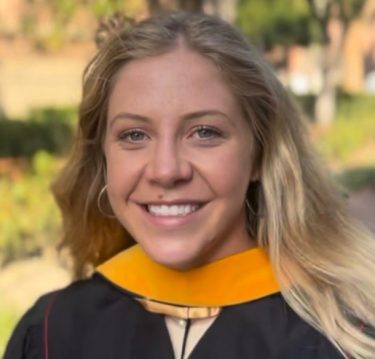
 Bailey McLagan is a PhD student at the University of Southern California in the Clinical Exercise Research Center. Her research focuses on the effect of the menstrual cycle on biomarkers of recovery from muscle damage as a result of exercise. Outside of her PhD, she enjoys running, her dog, Moose, and exploring the outdoors.