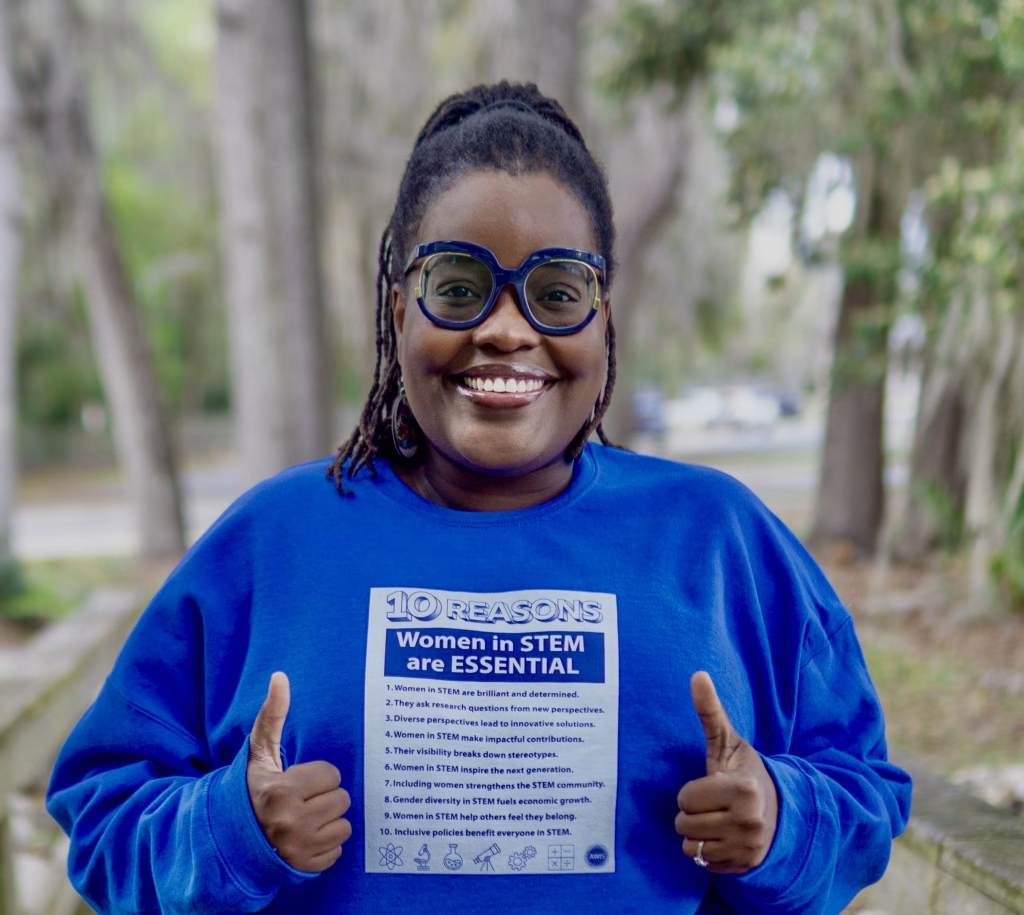
Christ Mane Belizaire is a Graduate Research Assistant and Ph.D. candidate in Plant Pathology at the University of Florida. After earning a bachelor’s degree in Agronomy from the State University of Haiti (UEH) at the School of Agronomy and Veterinary Medicine (FAMV), she completed a master’s degree in Plant Pathology at the University of Florida. She is also completing an internship with Bayer Crop Science’s Plant Biotechnology/Controlled Environment Disease Testing group. Through her research on blueberries and other agricultural systems, she is helping identify healthier, more resilient plants that can reduce crop losses and support growers.
A Day in Plant Pathology
What does a typical day in your role look like?
How would you explain your field of work to a kindergarten class?
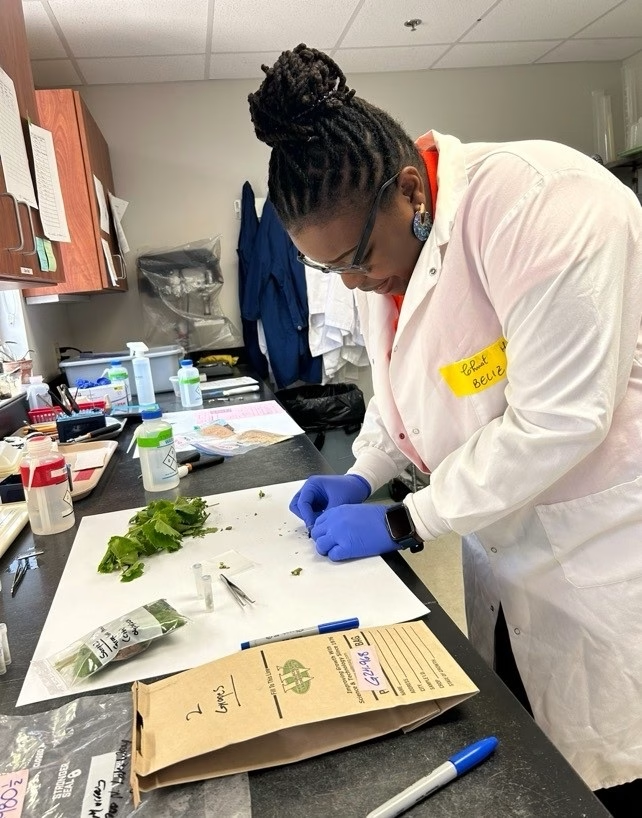
A fun part of my work is that plant disease research can sometimes feel like detective work. We often investigate symptoms, trace the source of infections, and use microscopes, molecular tools, and field observations to figure out what is happening inside plants. Every experiment can reveal something unexpected
What’s a fun fact or lesser-known part of your day-to-day work?
I would say:” I help plants stay healthy, just like doctors help people feel better. Sometimes plants get sick from tiny germs called fungi or bacteria, and my job is to study those diseases and find ways to protect crops so farmers can grow healthy food for everyone”.
The Path to Agricultural Research
I got my bachelor in agronomy at the School of Agronomy and Veterinary Medicine (FAMV) at the State University of Haiti (UEH). I completed advanced training in crop and disease research and gained international academic experience through research and graduate studies. My master’s research focused on avocado scab, a fungal disease that damages fruit skin and makes them unmarketable. Building on that, my PhD project consists of two main goals which include analyzing blueberry rust fungus genetic diversity throughout Florida and detecting rust-resistant UF breeding material. My background in plant pathology, laboratory techniques, field experiments, and scientific communication prepared me to work on solving agricultural problems and conducting applied research in both academic and industry settings.
I was born and grew up in Northern part of Haiti (Pilate) surrounded by trees, cacao and coffee plants which first sparked my curiosity about plant health. At the same time, I watched my grandparents and family struggle with crop losses caused by plant diseases they knew nothing about. Seeing both the beauty and the challenges of agriculture inspired me to pursue a career dedicated to understanding plant diseases and finding solutions that can help growers.
I have always been fascinated by agriculture, and the role science plays in feeding and supporting communities. Growing up, I saw how important crops are to people’s lives, which motivated me to study plant health and food production. What keeps me excited today is knowing that research can lead to practical solutions that help farmers, improve crop resilience, and support sustainable agriculture worldwide.
Pursuing advanced research opportunities internationally and continuing my PhD in Plant Pathology while contributing to industry research through my co-op experience at Bayer. Teaching online General Biology and Introduction to Plant Pathology classes at FAMV/UEH (Haiti)
AWIS has provided a supportive community, through seminars and workshops, that encourages networking, mentorship, and professional growth. It is inspiring to connect with scientists from different backgrounds who are passionate about advancing science and supporting one another throughout their careers.
The Science That Moves Us Forward
How has your work/research helped drive discovery, innovation, or impact?
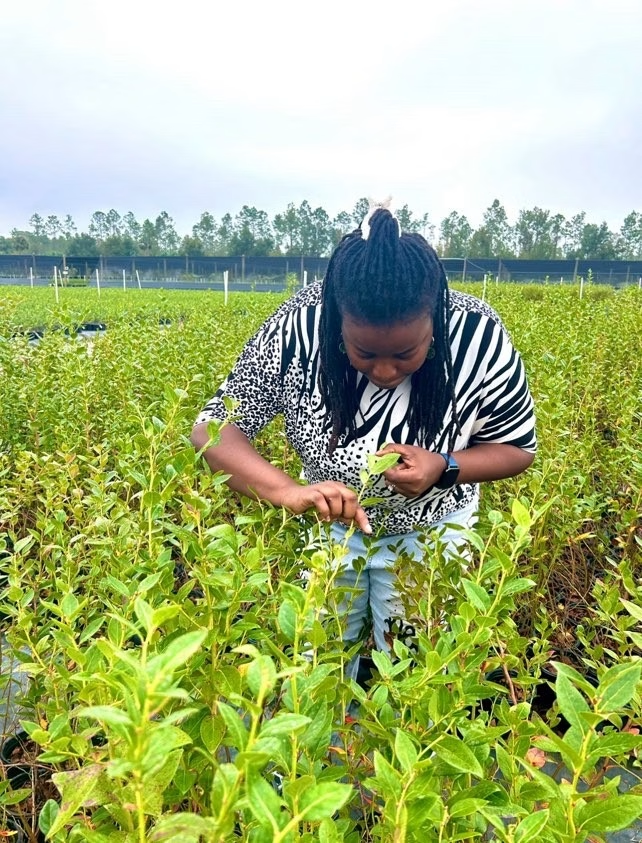
Today, as a Graduate Research Assistant in the Department of Plant Pathology at the University of Florida, I study Blueberry Leaf Rust, a fungal disease caused by *Thekopsora minima*. This disease can lead to premature leaf drop, reduced plant vigor, and lower fruit yield and quality, ultimately affecting blueberry productivity and profitability. My research focuses on understanding the disease and identifying resistant genotypes within germplasm developed by the University of Florida Blueberry Breeding Program to support the development of more resilient blueberry cultivars. These efforts can help growers reduce crop losses, improve productivity, and support more sustainable agricultural systems
Where do you see your work heading next?
I hope to continue working at the intersection of plant pathology, plant diagnostic, plant breeding, crop protection, and applied agricultural research. My goal is to contribute to developing innovative and sustainable solutions that help improve crop health, food security, and agricultural resilience.
Beyond research, I am dedicated to teaching, outreach, and community engagement. I’ve taught online courses in Haiti, supported 4-H university programs, and led K–12 outreach through field trips, virtual sessions, and teacher workshops. I hope to keep building bridges between science and practice, working alongside growers, industry partners, and extension agents to empower communities with tools to protect plant health and thrive.
How do you see your work helping shape the future of STEM?
Agricultural science plays a critical role in addressing global challenges such as food security, climate change, and sustainable production. I hope my work contributes to building more resilient agricultural systems while also encouraging more students from diverse backgrounds to pursue careers in STEM and research.
To a Future Scientist Just Starting Out
What message would you share with future scientists about the power they hold to make a difference?:
Science has the power to improve lives, strengthen communities, and solve real world problems. Never forget that your work, no matter how small it may seem, can contribute to discoveries and innovations that positively impact people around the world.
What are some strategies you use to maintain resilience and persistence in the face of obstacles?
I remind myself of the purpose behind my work and focus on long term goals rather than temporary setbacks. I also value mentorship, collaboration, and continuous learning. Challenges are part of science, and every obstacle becomes an opportunity to improve, adapt, and grow.
What advice would you give to your younger self / someone just starting out in your field?
Do not underestimate the power of consistency, curiosity, and asking questions. Opportunities may not always come easily, but persistence, networking, and staying open to learning can open unexpected doors. Believe in your potential, even when the path seems uncertain.