

From the first tentative sip to the last lingering note, fermented beverages present a symphony of flavors and aromas, enhancing and elevating the overall human experience. Sensory science lies at the heart of this: a structured study of measurement, interpretation, and understanding of responses to a product’s properties through the assorted senses. In brewing, this multidisciplinary field represents more than a tool for quality control or product innovation: It also serves as a connector for community, culture, and a shared experience that can simply elicit, “Cheers!”
These days, sensory opportunities flood a variety of markets where consumers place more emphasis on the overall experience. Among these markets, the brewing industry sees a growing opportunity for creating inclusive spaces for women and other female-identifying individuals to lead, educate, and reclaim the legacy of fermentation.
Putting the Sense in Sensory
Sensory science, put simply, is the study of how people perceive products by using their senses. In brewing, this includes:
- Flavor and aroma
- Mouthfeel assessment
- Visual evaluation (color, clarity, foam)

In brewing, sensory methods range from descriptive analyses (relying on trained panels to quantify specific attributes) to hedonic testing (evaluating consumer preferences). In utilizing these techniques, brewers maintain consistency, troubleshoot issues, and develop new beers tailored to evolving tastes
As Lindsay Barr, Chief Sensory Officer and Cofounder of DraughtLab, explains: “A sensory program isn’t the final decision-maker: It informs decisions for brewery stakeholders. It works alongside production data, customer feedback, and business priorities. The best decisions happen when sensory insight is integrated, not isolated.”
Brewing with All Senses
Sensory professionals get their training in controlled environments, where they observe slight nuances in bitterness, sweetness, mouthfeel, and aroma complexity. However, the experience of drinking a beer represents more than an analytical exercise since sensory perception also directly ties to memory and emotion. A beer serves as a vessel for storytelling, nostalgia, and connection. A flavor may connect to a song, a humorous quip, or a person, creating a deeply personal experience for the imbiber.
As Barr emphasizes, “Using common language fast-tracks product alignment while building trust. Relying on gut feel alone can erode trust. But when a brewery identifies a clear product target and uses it as an objective guidepost, teams move faster and more confidently.”
Women as the Original Fermenters
For millennia, women worked as the stewards of fermentation. From Sumerian priestesses to medieval alewives and all the way to industrial workers, women brewed fermented drinks to nourish families, serve communities, and provide spiritual guidance. This history became so deeply ingrained that no one should feel surprised by the fact that we continue to refer to brewers’ microbes as “cultures” or to view beer as subsistence that helps maintain our culture.
Over time, however, women’s contributions faded into the background, got minimized or erased, even as brewing science continued to advance. Statistics from the Brewers Association, an international nonprofit trade organization, from a 2021 study of 8,000 breweries, found that only 23% of brewery owners were women and just 2% of all breweries were fully woman-owned.
Jen Blair, Master Cicerone, reflects on this lineage in her work: “Being the only one can be very lonely, so I strive to create open communication not just around learning about beer but also by ushering people into the world of beer.”
Reclaiming the Craft
Today, women across the brewing world do lead sensory panels, design educational tools, and reshape how we understand beer.


These women do not just participate in sensory science: They redefine its scope and reach.
Sensory Science as a Tool for Community Building
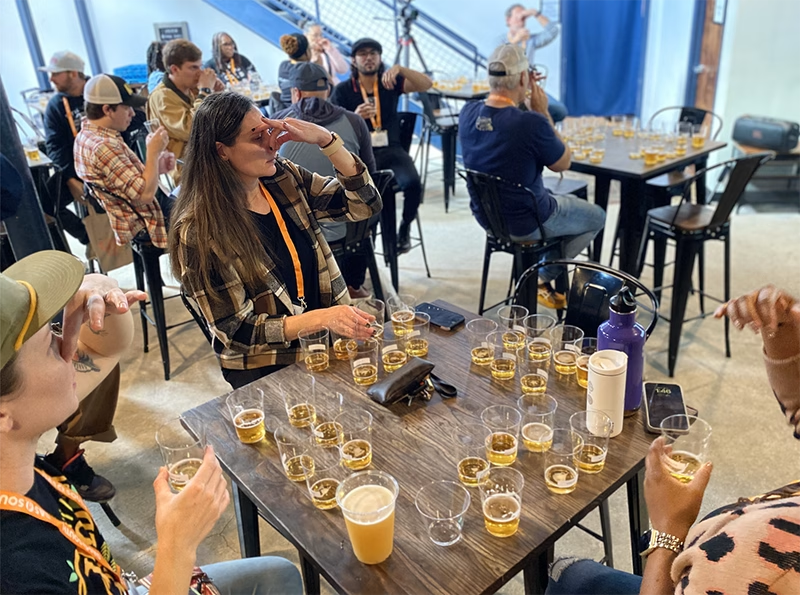
Beer tasting is a communal experience. It encompasses curiosity, discussion, and storytelling, whether at a friend’s house or at a table with trained professionals. When structured with intention, these sensory experiences can:
- Empower nontraditional voices.
- Make technical concepts accessible.
- Create a sense of belonging and community.
Blair describes sensory experiences where “people get validation from others in the space,” and she explains that even newcomers can engage in vibrant, inclusive conversations. Knowing that others have a similar flavor journey engenders enthusiasm and safety. Barr adds that “when consumers decide what to buy, they use their senses,” making sensory science a crucial bridge between breweries and their communities.
Science, Equity, and Belonging
A thriving future for sensory science in brewing will have inclusive practices, broad access to education, and systems that value all palates.
“Your sensory panel can’t just be the brewing team sitting around with the brewmaster,” Blair notes. “That’s not representative, and you won’t get good, actionable data.”
Both Blair and Barr stress that sensory science must reflect the diversity of the people who drink beer. That means recruiting from different backgrounds, experiences, and expertise since, as Blair concludes, “A successful sensory program needs clear goals, consistency, and diversity.”
A Toast to Sensory Stewardship
Sensory science encompasses more than a method of understanding perception: It represents a movement. In the hands of women reclaiming their place in fermentation, it becomes a tool for education, empowerment, and empathy.
Sensory science, in fact, honors history, celebrates differences, and builds community through shared experiences. As Barr says, “All of this is important, which is why sensory science is so cool. It integrates quantitative and qualitative information to make sense of all factors that influence purchase.”
So, how will you raise a glass to the future of fermentation, beyond saying, “Cheers”?
 Frances Tietje-Wang has a BS in biology and chemistry from Le Moyne College in Syracuse, NY. They founded Fermly, a data portal for craft brewers, in 2018 and became a TTB-certified brewing chemist that same year. Tietje-Wang works as a Cicerone Certified Beer Server, serves as a provisional BJCP judge, and has earned their Brewing and Malting Science certificate from the Master Brewers Association of the Americas. They volunteer on both the MBAA DEI Committee and the American Society of Brewing Chemists Webinar Committee, and they teach as a Subject Matter Expert in the MBAA Brewing and Malting Science Course. They speak on various subjects in the fermentation sciences and raise money for nonprofits that elevate marginalized communities in the brewing industry. They are a passionate hiker, runner, and rock climber in preparation for the zombie apocalypse.
This article was originally published in AWIS Magazine. Join AWIS to access the full issue of AWIS Magazine and more member benefits.