
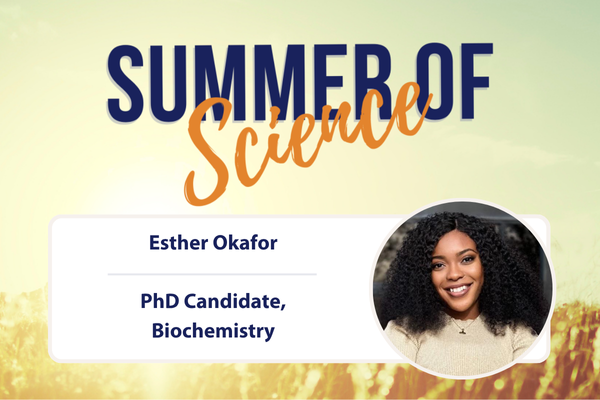
As a PhD candidate in Biochemistry, Esther Okafor is investigating how inflammation affects stem cells in fat tissue and drives metabolic disease. From environmental toxicology to drug discovery, her scientific journey has been shaped by big questions and an unwavering desire to improve public health. For Esther, science isn’t just about what we discover—it’s about who it helps. Her research is powered by purpose, and her commitment to collaboration reminds us that community is a catalyst for innovation.
A Day in the Lab
What does a typical day in your role look like?
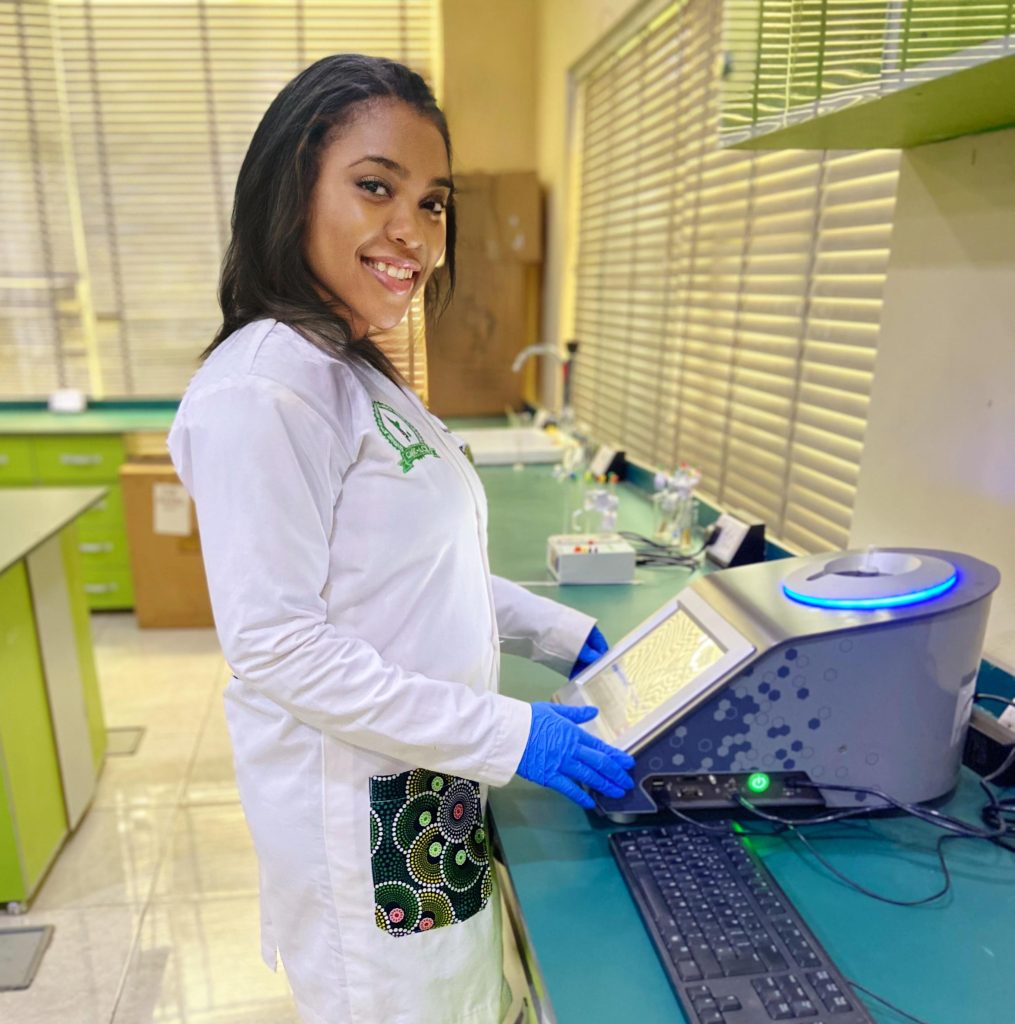
I’m a PhD student in Biochemistry, which means my days are a mix of curiosity, chaos, and caffeine. I study how obesity messes with fat tissue—especially how inflammation disrupts the stem cells that are supposed to help it function. Most mornings start with checking on experiments or setting up new ones, collecting samples, or running assays. It’s a mix of hands-on work and problem-solving, especially when experiments don’t go as expected (which is often).Afternoons are usually for deep work: analyzing results, writing, or reading papers that either inspire me or completely derail my thought process. I also help run events for our metabolism group, and peer review research when I can fit it in.No two days are the same, and honestly, that’s what I love most about it. It’s messy, demanding, and sometimes frustrating but also full of discovery and meaning.
The Path to Biochemistry
I have a BSc and MSc in Biochemistry, and I’m currently pursuing my PhD in Biochemistry at the University of Utah. My early research experiences focused on malaria and environmental toxicology, where I learned how to design experiments, analyze biological systems, and think critically about complex health problems. That foundation shaped how I approach science with curiosity, patience, and a deep respect for detail.During my master’s, I started exploring transcriptional regulation and drug discovery, which eventually led me to study obesity-related diseases. Now, in my PhD, I work on how inflammation affects stem cells in fat tissue and contributes to metabolic dysfunction. Each stage of my education has built on the last, giving me both the technical skills and the big-picture mindset I need to ask meaningful research questions and follow them through.
I didn’t grow up dreaming of being a scientist, but I’ve always been drawn to asking questions and figuring out the “why” behind things. During my undergraduate degree in Biochemistry, I focused on environmental toxicology specifically, how exposure to electronic-waste affects biological systems. That experience opened my eyes to how everyday environmental exposures can cause molecular changes that lead to long-term health problems, especially in vulnerable communities. In my master’s, I shifted toward infectious disease research, working on malaria and antimalarial drug targets. That phase of my training sharpened my interest in molecular mechanisms and translational science.What keeps me excited now is how science allows me to connect the dots—from the tiniest signaling molecules to big-picture health issues like obesity and diabetes. In my PhD, I study how inflammation disrupts fat tissue stem cells, and even though the work can be challenging, there’s something deeply fulfilling about contributing to knowledge that could one day improve lives. It’s the possibility of discovery, and the purpose behind it, that keeps me going.
A fun fact is that I spend a surprising amount of time just waiting—for cells to grow, for gels to run, or for antibodies to bind. In those moments, I’ve learned to multitask in creative ways: catching up on podcasts, or sketching out ideas. Some of the best breakthroughs actually come from those in-between moments, usually spontaneous conversations with lab mates.Some days I spend more time labeling tubes and cleaning up spills than actually doing experiments. A lot of people imagine research as constant discovery, but there’s a surprising amount of routine like defrosting antibodies, convincing cells to behave, or timing things down to the minute so nothing gets ruined. Also, I talk to my cells. Out loud. Especially when they’re not differentiating the way they should. It’s weirdly therapeutic, and sometimes they listen.
I’ve learned to give myself permission to pause, breathe, and then come back stronger. When things don’t go as planned and that happens a lot in research, I try not to internalize the failure. I also lean into the people around me talking to someone who understands, even for five minutes, can make a huge difference. Most importantly, my faith grounds me. I’ve learned that resilience isn’t about being unshaken, it’s about showing up, even when you don’t feel 100%.
Science with Impact
What is your proudest achievement in your career?
One of my proudest achievements was passing my PhD preliminary exam with distinction. It pushed me to think critically, defend my ideas, and refine my scientific voice.
How has your work or research helped drive discovery, innovation, or impact?
Across each stage of my research journey, I’ve contributed to projects aimed at understanding and addressing real health challenges. My undergraduate work explored the toxicological impact of e-waste exposure, helping highlight how environmental pollutants affect oxidative stress and organ function. In my master’s, I shifted to malaria research, where I helped identify and model potential drug targets using computational biology—work that supported the global push for more targeted and less resistance-prone therapies.Now in my PhD, my work is helping uncover how inflammatory signals disrupt adipogenesis and tissue remodeling by impairing primary cilia function in adipose stem cellsAlongside benchwork, I’ve also contributed to scientific peer review, and co-organized research forums all part of creating a research environment that values collaboration, innovation, and translation.
The Power of Science and Community
What does the power of science and community mean to you?
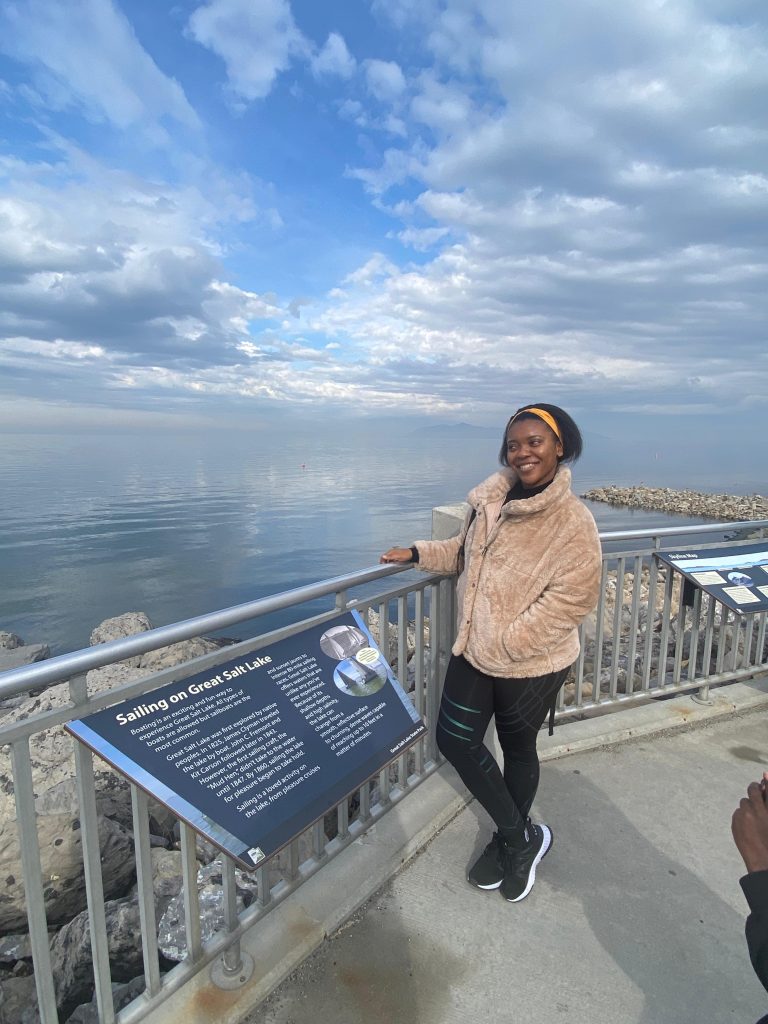
To me, it means not doing this alone. Science is powerful, but it can be hard, slow, and frustrating. Having a community, people who get it, who show up, who share ideas or just check in makes all the difference. It’s where support, collaboration, and growth happen. That mix of discovery and connection is what keeps me going.
How has science shaped your sense of community—and how has community supported your journey?
Science has taught me that community isn’t just helpful, it’s essential. The lab can be isolating, especially when things aren’t working, but having people around who understand that struggle makes it easier to keep going. I’ve found community in mentors who pushed me to think deeper, in friends who reminded me to rest, and in peers who celebrated the small wins with me.Being part of a scientific community has also shaped how I see myself, not just as a researcher, but as someone who can contribute, support others, and grow alongside them. Whether it’s mentoring, reviewing work, or organizing spaces for others to share, community reminds me that I don’t have to figure everything out alone and that makes all the difference.
To a Future Scientist Just Starting Out
What would you tell your younger self?
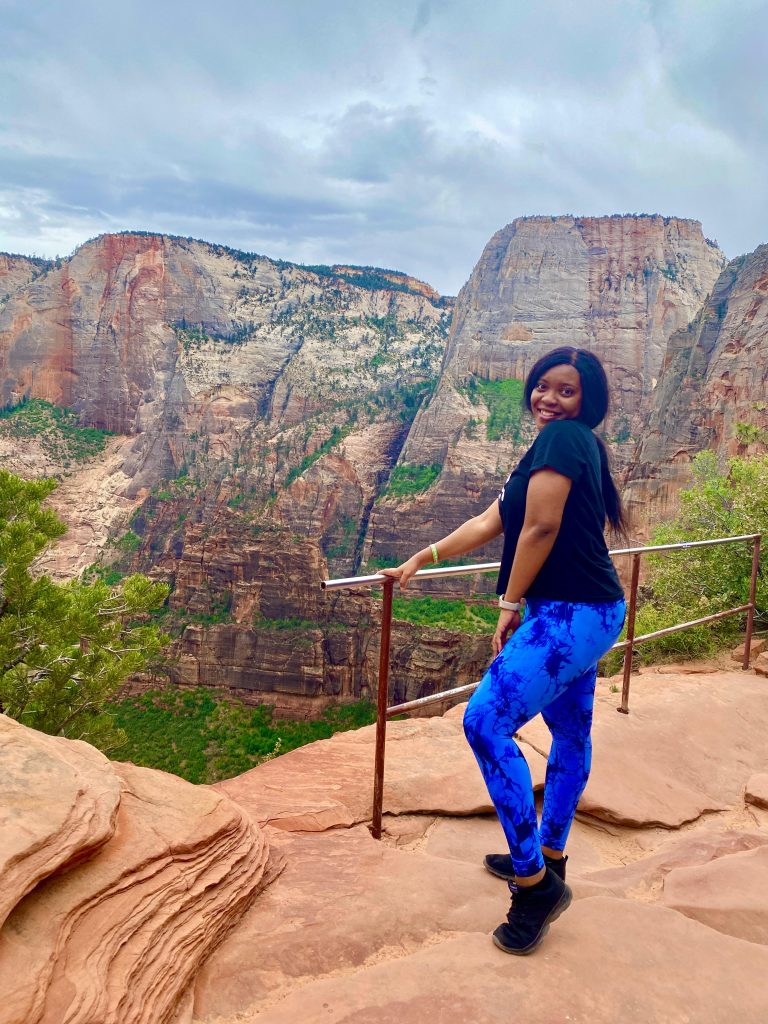
I’d tell her that it’s okay not to have it all figured out at once. The path won’t be straight and that’s not a failure, it’s growth. You’ll face rejection, self-doubt, and moments where nothing makes sense, but you’ll also find purpose, strength, and community in unexpected places. Trust your curiosity, keep asking hard questions, and don’t shrink yourself to fit anyone’s expectations. You belong here, even on the days it doesn’t feel like it. Keep going. You’re building something that matters.
What advice would you give to someone just starting out in your field?
Be patient with the process and with yourself. Research is full of things that don’t work the first, second, or even third time, and that’s normal. Learn to ask questions, even when you think you should already know the answer. Build genuine relationships with people around you; science is collaborative, and your community will matter more than you realize. Most importantly, remember why you started. That sense of purpose will keep you grounded when the work gets tough.
What message would you share with future scientists about the power they hold to make a difference?
Never underestimate the impact of your curiosity, your voice, and your persistence. Science isn’t just about big discoveries, it’s about asking questions that matter and being brave enough to follow them. The power to make a difference doesn’t always come in a breakthrough moment. Sometimes it’s in mentoring someone, challenging a bias, sharing your work with others, or simply not giving up. You don’t have to be loud to be powerful. Just keep showing up with purpose. That’s where change begins.