As a doctoral student in civil engineering, Chinyere blends sedimentology, groundwater modeling, and geochemical analysis to better understand how aquifers behave—and how to protect them. Her research uncovers new insights into water sustainability and pollution prevention, turning data into action to support healthier communities and a safer environment.
A Day in the Lab
What does a typical day in your role look like?
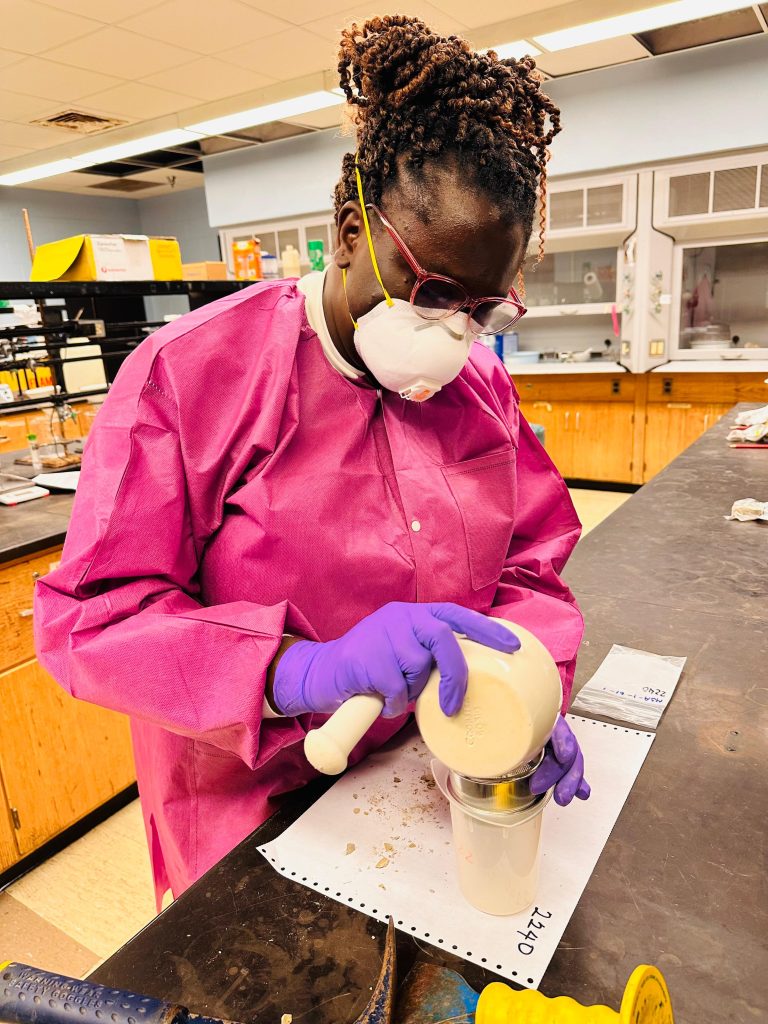
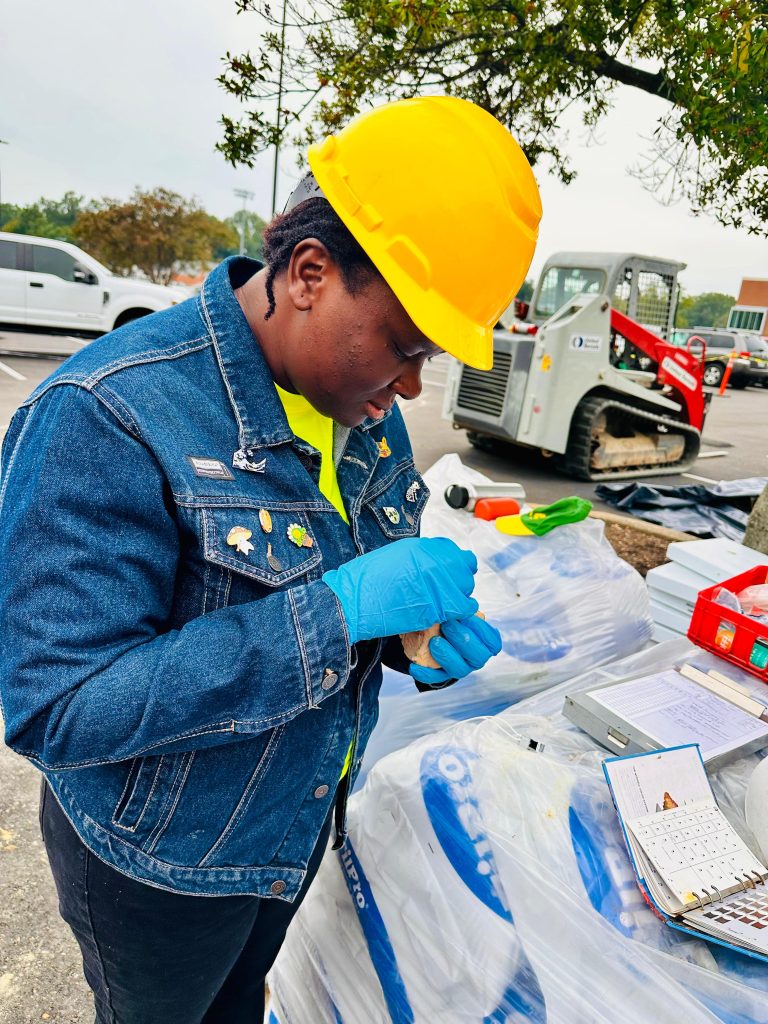
I am a second-year doctoral student in the Department of Civil Engineering, majoring in water resource engineering at the University of Memphis, TN. My typical day often involves conducting fieldwork for sedimentologic logging and data collection, performing laboratory analyses for geochemical characterization, and processing datasets using Excel, Python, R, and GIS software. Additionally, I engage in groundwater modeling to assess aquifer behavior and employ techniques for reservoir characterization to understand subsurface geological structures. Collaborating closely with my research team, I interpret findings, prepare academic publications, and deliver presentations. In my downtime, I actively explore advanced analytical methods, including machine learning applications, to enhance predictive modeling capabilities, particularly in geochemical facies analysis.

The Path to Water Science
I earned my bachelor’s degree in Geology/Mining (Science Laboratory Technology) and a master’s degree in Geology, which provided foundational knowledge in earth sciences, geochemistry, and sedimentology. As a trained sedimentologist transitioning into a PhD in civil engineering, I would say that my training in reservoir characterization and modeling equipped me with the necessary skills for my PhD research in Civil Engineering, particularly in understanding subsurface geology and groundwater contaminant transport. Leveraging my experience in the oil and gas industry, I am able to address real-time water management challenges and contribute solutions that directly impact the community’s well-being.
Growing up in a city where poor road conditions forced me to walk several kilometers to school daily presented significant challenges, especially in a society where girls are often marginalized and viewed as inferior to boys. These early experiences instilled in me a determination to make a meaningful difference, motivating me to leverage my strengths and address my weaknesses proactively. My daily journeys through dense vegetation and firsthand observations of the rich natural phenomena in sub-Saharan Africa sparked my innate curiosity about the environment, inspiring me to pursue a career in geoscience, a passion that continues to fuel my enthusiasm for scientific discovery today.
I keep a colorful array of sticky notes at my workspace, each with motivational reminders and mini checklists, to help me refocus when I hit a roadblock. I also treat scientific writing as a form of storytelling, crafting narratives that bring data to life and engage diverse audiences.
I set clear, achievable goals and break challenges into manageable milestones, celebrating each step forward. I seek mentorship to gain perspective and support, stay adaptable by embracing new methodologies, engage in regular self-reflection, and prioritize self-care to sustain my well-being.
Science with Impact
What is your proudest achievement in your career?
Being selected for the EducationUSA Opportunity Funds Program by the U.S. Department of State in 2021 stands out as my proudest achievement. This honor opened doors to advanced academic pursuits and led me to my recent position and contribution to scientific findings.
How has your work or research helped drive discovery, innovation, or impact?
My research integrates advanced techniques such as sedimentology, stratigraphy, petrography, numerical modeling, theoretical simulations, chemostratigraphy, and biostratigraphy to tackle critical groundwater contamination challenges. By characterizing the depositional environment of the Zilpha Clay across the Northern Mississippi Embayment, I will be able to evaluate its performance as a natural barrier against anthropogenic pollutants entering the Memphis aquifer. This work has revealed key vulnerabilities in the clay’s integrity, driving new insights into contaminant transport pathways.Ultimately, my contributions not only deepen our scientific understanding of aquitard behavior but also translate directly into more sustainable groundwater management practices, strengthening water security and safeguarding public health in impacted communities.
The Power of Science and Community
What does the power of science and community mean to you?
For me, science and community are inseparable forces. Growing up in Nigeria, I saw firsthand how shared knowledge transformed villages, whether through sustainable farming practices or community-led water projects. Today, my research on the Memphis aquifer is driven by that same spirit: collaborating with local stakeholders, policymakers, and fellow scientists to translate complex hydrogeological models into practical solutions that ensure safe drinking water. Science becomes truly powerful when it engages and uplifts the communities it serves.
How has science shaped your sense of community—and how has community supported your journey?
Science has connected me to a diverse network of peers and mentors who share similar passions. From collaborating with my colleagues at the Center for Applied Earth Science and Engineering Research (CAESER) on aquifer vulnerability assessments to presenting at Geological Society of America, American Geophysical Union, and National Society of Black Engineers conferences, I’ve found a supportive community that celebrates inquiry and innovation. In turn, that community has fueled my growth by mentorship during field campaigns and inviting me to join policy advocacy efforts in Washington, D.C. Together, we translate research into action, ensuring that scientific discovery benefits both local neighborhoods in Memphis and communities back home in Nigeria.
To a Future Scientist Just Starting Out
What advice would you give to someone just starting out in your field?
My advice to newcomers is to remain curious, seek diverse learning opportunities, and actively build a supportive network. Embrace interdisciplinary approaches, stay persistent through challenges, and always remember that your scientific work has the potential to create significant societal impacts.
What message would you share with future scientists about the power they hold to make a difference?
Future scientists hold immense power to influence positive change. Harness your creativity, curiosity, and commitment to solving real-world problems. Your work can transform lives, protect our environment, and shape a sustainable future for generations to come. Finally, when the going gets tough, always remember why and how you started; a novice today can be a professional tomorrow. Stay persistent and consistent.
What would you tell your younger self?
I would tell my younger self to trust the process, embrace challenges as opportunities for growth, and never hesitate to seek help. Keep your passion alive, remain patient, and understand that each step forward, no matter how small, contributes significantly to your larger goals. A novice today will be a professional tomorrow.