

The latest headline read “NOAA fires hundreds of climate workers after court clears way for dismissals.” A surge of anger, frustration, and panic rose through my chest. This was just one of countless headlines regarding cuts to federal agencies that were now fueling my own anxiety and worries about my job security. Combined with growing frustration over the abrupt halt to DEI programs, I started to feel helpless. I was tired of simply complaining without actually taking any action. Thankfully, through AWIS, I didn’t feel alone.
Being a part of the AWIS Advocacy Committee has given me an outlet to channel my frustrations into real action. Surrounded by like-minded, driven women made me less afraid to speak up. Before joining the group, even leaving a voicemail for my senator seemed like a social anxiety nightmare. Now, I care more about taking part in democracy than I do about whether or not I stutter through a voicemail.
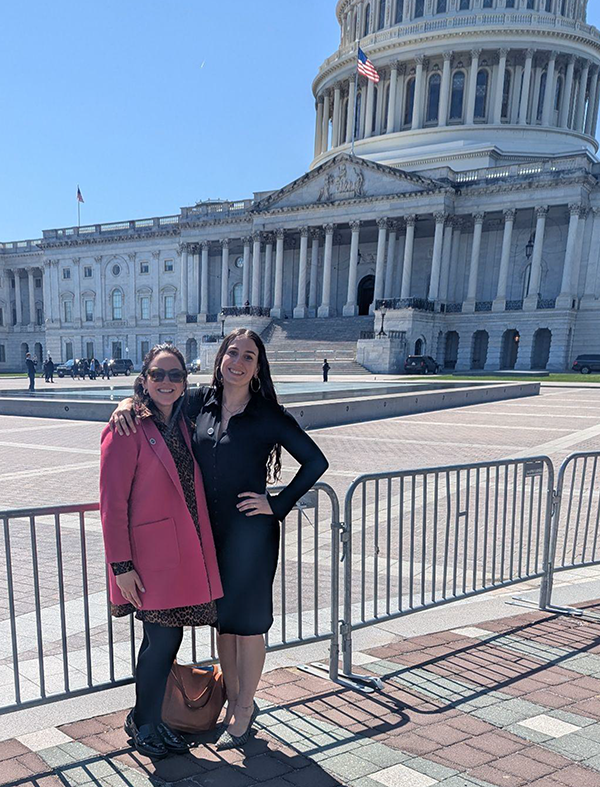
April 9th was AWIS Advocacy Day, a chance for us to make our voice heard in the nation’s capital. I knew I had to be there. It was a perfect opportunity to gain advocacy experience and witness democracy in action. Despite the nerves, I booked a flight from my home in Phoenix to Washington D.C., determined to speak up for myself and others. In the weeks leading up to the big day, we each scheduled constituent meetings with the offices of our respective senators and representatives to discuss the cuts to federal science programs. The morning of the 9th, I was incredibly nervous – but also excited to finally meet the women I’d only seen during our Advocacy Zoom meetings.
Our meetings were with staff rather than the members of Congress themselves, but that didn’t make them any less nerve-wrecking. As we gathered on Capitol Hill that morning, I felt empowered by the women around me. We exchanged advice on how to talk to the Congressional staff, then went to our respective Senate offices. I rehearsed my talking points in my head while we waited for the staffer to bring us into the meeting. The long wait was agonizing, but Abby Swett, AWIS Senior Membership and Components Manager, encouraged me and let me know that I was more than capable of having these conversations.
Walking through the halls of the Russell Senate Building, I felt electrified seeing others like myself fighting for what they believe in. Our first meeting came and went faster than I had expected, but that didn’t make it any less productive. I was relieved to see that the staffer was genuinely listening intently and addressing our concerns with the information she had about what the senator was planning to support.
After that first meeting, I felt like I could take on anything. In my next two meetings, I voiced my concerns about cuts to NASA, NIH, and NSF. The staffers took notes and asked thoughtful follow-up questions – showing me that what I said mattered and would be passed along to lawmakers.
By the end of the day, I felt a mix of relief and accomplishment. Even if the proposed cuts to federal science programs move forward, I will know I did everything I could. I advocated for myself and for others like me, who depend on federal funding to help keep our country at the forefront of STEM. I am deeply grateful to the AWIS Advocacy Committee for giving me the tools and support to make a difference.
To anyone feeling frustrated or stuck right now: you can make an impact – and you don’t need to fly to D.C. to do it. Calling or emailing your lawmakers can go a long way. We’re lucky to live in a democracy, so let’s use that privilege to speak up.
 Victoria DeFazio is a recent graduate of Arizona State University with a BS in Astrophysics. She is currently a Research Technician with Lunar Reconnaissance Orbiter Camera and Intuitive Machines in Phoenix, AZ. In her role there, she studies changes to the lunar surface and creates data products for lunar exploration. Victoria is a part of the Association for Women in Science Advocacy Committee and is the Vice President of Events for the AZ Chapter of the Space Force Association. Additionally, she is a part of multiple project groups in the Space Generation Advisory Council.