

I moved to Washington, DC from rural North Carolina nearly four years ago with a few dreams in mind. I wanted to finish my PhD in Neuroscience doing impactful stress neurobiology research, and find a career that translated what I learned into meaningful action. Making a major life and career transition as a scientist during the worst of the pandemic taught me how deeply science policy can impact the world, and how that impact varies from urban to rural communities. I was fortunate to have volunteered with Research!America during my time at George Washington University, which included meeting with Congress about the importance of robust funding for biomedical research. But the most impactful experience I’ve had on the Hill so far was participating in the Association for Women in Science Advocacy Day and the American Association for the Advancement of Science Catalyzing Advocacy in Science and Engineering (AAAS CASE) Workshop.
During the conference, we learned about the rich history of federal science policy making, the nitty-gritty details of federal authorization and appropriation, and how science advocates fit into the equation. I took pages of notes hoping to catch everything and a particular theme of the sessions stuck with me. Dr. Sudip Parikh (CEO of AAAS) and Dr. Holden Thorp (Editor in Chief of Science) both spoke about the importance of advocating local and staying engaged with your local community. Just like me, they were born and raised in rural North Carolina, and it was so impactful to hear them talk about building trust in scientists back home and being “agreeable disagreers” when talking about science. As Dr. Thorp put it, “Most people are just trying to get through the day and pay bills on time, they’re not thinking about science as much as we do.” It is our responsibility as scientists to practice humility and listen as much as we speak about science policy issues.
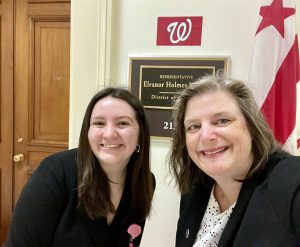
On the final day of our conference, I and other AWIS members shared with Congressional policy makers how they could best support women in STEM during challenging times. As a resident of the District, I was fortunate to meet with Congresswoman Eleanor Holmes-Norton’s legislative correspondent alongside AWIS CEO Meredith Gibson. I shared my story about how graduate students at George Washington University are facing financial hardship and career uncertainty, emphasizing how crucial legislation like the RESEARCHER Act is to ensure women and underrepresented groups have fair pay and financial stability to thrive in STEM. I also talked about my passion for neuroscience and my research into the impacts of childhood stress and adversity on the brain’s serotonin system., and how I hoped to see legislative action to reduce maternal stress post-birth. As our conference speakers echoed continuously, personal stories allow us to connect with legislators and staff, because we all benefit in some way.
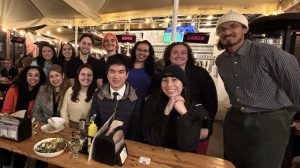
I am incredibly grateful to AWIS and to the AAAS CASE Workshop for equipping me with fundamental knowledge of the federal policies that impact my work. I was inspired by how many graduate and undergraduate scientists across the country feel as deeply as I do about protecting science. I connected with many other science policy advocates from across the DMV area, and I hope to keep fostering those connections as we look towards the future of science in America.
Sydney Woods is a fourth-year PhD candidate in Neuroscience at George Washington University, where she studies the impacts of early life adversity and resource scarcity on the brain’s developing serotonergic system. Prior to moving to DC, she received a Bachelor of Science in Human Biology from North Carolina State University and a Master of Science from Brody School of Medicine, East Carolina University. In addition to serving as an AWIS/AAAS Advocacy Scholar, she also currently serves as the President of her student body organization, the GW Student Organization for Biomedical Scientists. She is also currently an active member of the Society for Neuroscience DCMA chapter, where she hosts regular science policy-related events for neuroscientists across the DMV. Throughout her career, she has remained fiercely committed to inclusivity, fair treatment, and increased compensation for graduate workers, particularly women and underrepresented groups in STEM. When she defends her dissertation next year, she hopes to transition to a full-time career in science policy and translate scientific data into meaningful legislation and interventions.