

Unconventional CEO Carol Craig, a self-described “astropreneur,” knows something about leading the way. As the first woman to found a publicly held space company—Sidus Space—she has asserted her place in an industry historically dominated by men and in a field that has fostered only limited representation of women and minorities in leadership roles, engineering, and scientific positions. She views her role with relish and says, “Being one of the first in any field can feel isolating, but it’s also an incredible opportunity to pave the way for others.”
Craig’s career journey is truly one of a kind. Before starting her own business, she became one of the first women eligible to fly combat aircraft in the U.S. Navy and flew as the first woman aviator in her squadron, while serving as an active-duty P-3C Orion Naval Flight Officer. In this role, she managed all tactical communication and navigation systems aboard the combat aircraft.
Craig graduated from Knox College with a BA in computer science and obtained a BS in computer science engineering from the University of Illinois. She then earned an MS in electrical and computer engineering from the University of Massachusetts Amherst in 2006 and is currently pursuing both a PhD in systems engineering and an MBA with a concentration in Finance from the Florida Institute of Technology. She has served on over 30 educational, aerospace, defense industry, and nonprofit boards. Prior to founding Sidus Space, she established its predecessor, Craig Technologies, and transformed it into a prominent aerospace and defense contracting company widely recognized by the U.S. government.
I Interviewed Craig recently about her entrepreneurial journey, challenges, and goals, with the goal of providing inspiration and advice to other women who aspire to build a career in industries traditionally led by men.
Can you share a bit about your career? Have you always had an entrepreneurial mindset? How did your work experience shape your approach to starting your business?
I’ve always had a strong drive and a passion for tackling complex challenges, which means never taking no for an answer and often taking the road less traveled. It was my experience as a Naval flight officer and as a software engineer at the Naval Air Warfare Center that shaped my approach to starting my businesses. That approach was further shaped by NASA’s decision to begin shutting down the Space Shuttle Program. I saw an opportunity to collaborate and ensure the continuity of critical capabilities while leveraging those capabilities for commercial opportunities
An injury while serving in the military resulted in my inability to continue flying and I was subsequently discharged as a Service Disabled Veteran. A couple years later, I started my first company, Craig Technologies, which provided engineering, design, technology and manufacturing solutions to government and commercial customers nationwide. In 2012, Craig Technologies spun off a manufacturing division called Craig Technologies Aerospace Solutions which eventually became Sidus Space. This experience honed my ability to deliver high-quality, mission-critical solutions under tight constraints and reinforced the importance of adaptability and innovation! In addition to manufacturing hardware for space programs, Sidus Space has expanded and offers commercial space and satellite solutions.
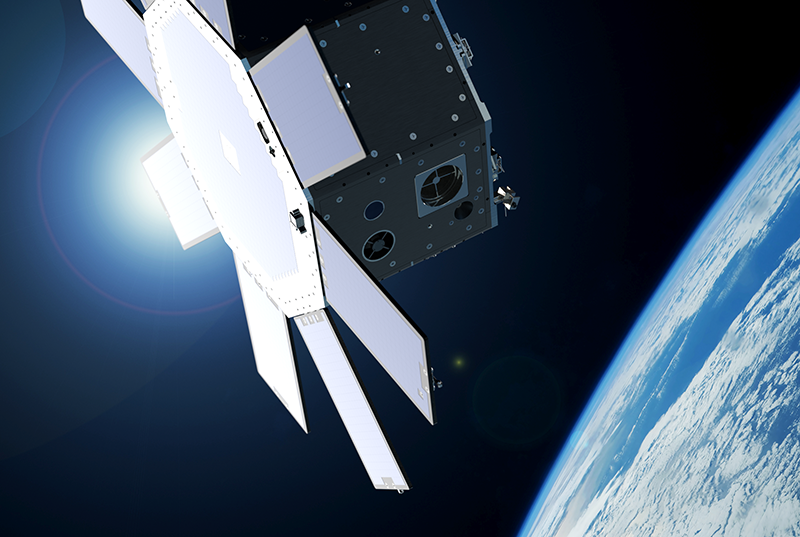
On March 4, 2024, your first 3D-printed satellite successfully launched into space. What distinguishes LizzieSat™ from other commercially available satellites?
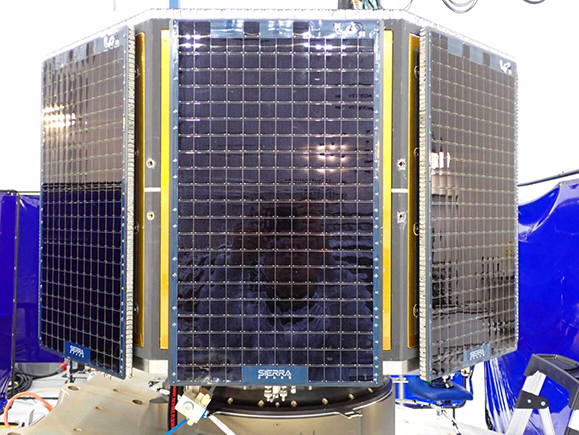
The process begins with meticulous design using advanced CAD software to ensure optimization of every component for space conditions. We use aerospace-grade materials, like high-strength aluminum alloys and carbon composites, for the 3D printing to ensure durability and weight efficiency. What sets LizzieSat™ apart are its modular design and customization capabilities, which enable us to tailor satellites for specific customer missions while maintaining cost efficiency. Sidus utilized MarkForged X7 printers and OnyxFR-A material to manufacture structural support components in its LizzieSat™ satellite which has the strength of aluminum while significantly reducing weight. Once printed, our satellites undergo rigorous testing, including thermal vacuum and vibration testing, to verify performance in extreme conditions.
How else does your work differ from that of other space industry companies?
Sidus Space stands out due to its vertically integrated, technologically flexible approach. We manage every aspect of satellite design, manufacturing, and mission operations under one roof, which allows us to be highly agile, cost-effective, and innovative. Unlike companies specializing in just one aspect of space services, we offer full space life-cycle solutions.

We also engineer the LizzieSat™ satellite platform for rapid integration of cutting-edge technologies and an expanding array of applications. This adaptability meets the evolving demands of the space ecosystem, as well as the demands of other industries that benefit from these advancements, and the adaptability addresses the problem of technological obsolescence. Our inherent flexibility enables us to serve diverse markets while contributing to the democratization of space.
Advances in the commercial space industry create new business opportunities and innovative ways to monitor the environment and human activities. On the other hand, the industry serves as a target for sustainability concerns because it increases global greenhouse gas emissions and creates orbital debris. How does your company approach sustainability?
Sustainability is central to our mission at Sidus Space. Our satellites support environmental monitoring, enabling real-time data collection on climate change, deforestation, and natural disasters. Additionally, we focus on sustainable manufacturing processes, including the use of 3D printing to reduce waste. In orbit, we explore technologies to minimize space debris and extend satellite lifespans with redundant and space-rated systems, reducing the need for frequent launches and the associated environmental impact. Furthermore, we equip our satellites with reaction wheels that enable us to deorbit them if desired.
The life of an entrepreneur is not easy, and overnight successes are rare. What challenges have you faced as an entrepreneur, and how did you overcome them?
One of the biggest challenges has been securing funding and resources particularly as a woman in an industry dominated by men. Early on, I learned to persist through rejection by building strong networks and aligning myself with mentors who believed in my vision and allowed me to learn from their experience. To date, I’ve successfully raised $79 million through fundraising, which has been instrumental in scaling my businesses. Another hurdle has been balancing innovation with the operational demands of growth in a very unpredictable industry. I overcame this by assembling a team of experts who share my commitment to excellence, and they allow me to focus on a long-term strategy while they manage execution.
According to a study by the National Bureau of Economic Research (2022), close to 80% of women struggle with low self-esteem and shy away from self-advocacy at work. Can you share strategies with our members for building self-confidence?
Building self-confidence starts with recognizing your own value. I encourage women to focus on their unique strengths and to celebrate their achievements, no matter how small. My mother, Thelma, instilled this belief in me early on. She adopted me and always made sure to say, “We chose you.” Her words served as a powerful reminder of my worth and fueled my determination to embrace opportunities and overcome challenges. Follow your intuition. Don’t let doubts—whether your own or others’—define you. Take pride in your skills and accomplishments.
Don’t be afraid to step outside your comfort zone. Growth happens in those uncomfortable moments, and each small success builds momentum for greater self-belief. Embrace being a trailblazer, knowing that very few women out there do the same things that you do. Approach challenges as opportunities to break barriers and inspire change — and to quote my daughter’s coach ‘Confidence is a Choice.’
What other advice do you offer women who aspire to build a career in industries traditionally dominated by men?
Surround yourself with supportive people who uplift and challenge you in equal measure. Don’t let yourself be bullied. Believe it or not, bullying happens quite a bit in [an environment dominated by men]. There will be times when you really will need to stand up for yourself, as uncomfortable as that may be, and not allow the [intimidation] to happen. Over the decades I had a lot of experiences like that where I basically had to say, “No.” It’s unacceptable to allow myself or any other woman to be treated that way. Surround yourself with mentors, peers, and advocates who not only believe in your vision but also believe in the strength of women. Build a strong support network, and don’t hesitate to lean on it.
Never give up. Rejection and setbacks are inevitable, but resilience is key. Learn from failures, adapt, and keep pushing forward. It’s hard but you have to move forward by taking risks—and those can be emotional risks too. One of my favorite quotes is from the author Ray Bradbury, “Sometimes you just have to jump and build your wings on the way down.” You have to go for it, because if we sit back and wait for the right time, we will never do it. Lastly, create opportunities for others. It’s not just about you. Lifting other women up is a good way to lift yourself up as well. Remember, every small step forward will not only advance your career, but it will also open doors for the women who follow in your footsteps.
The theme of this issue of AWIS Magazine is Diversity and Innovation. How do you approach innovation and the development of new products for the market? I assume that many controls and safeguards apply to managing these processes.
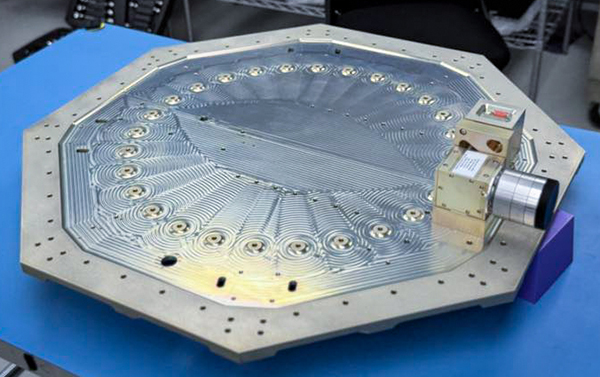
Innovation thrives in a culture of collaboration and inclusion. When developing new products, such as our LizzieSat™, we balance innovation with quality and stringent controls. Industry standards like AS9100, a widely adopted international aerospace certification, guide our processes, which ensures quality and safety at every stage. We also leverage rapid prototyping and iterative design to stay on the cutting edge, while meeting the highest reliability standards. We have simplified product designs and accelerated prototype development by transitioning from highly customized products to modular components adaptable to multiple designs.
What aspects of the space industry excite you the most today and why? What are your goals and expectations for the future?
The miniaturization of technology excites me. We see companies developing cutting-edge, smaller, more advanced technologies. I think that’s where we will see the evolution of our space ecosystem, and this miniaturization will result in more satellites being launched and will enable affordable access to a broader range of users, including start-ups and emerging nations. The miniaturization of technology will also result in the creation of new commercial applications and realworld solutions for current global challenges.
I plan to continue to grow and diversify the company. We look to develop additional innovative solutions and to expand into lunar opportunities. We recently received a contract from Lonestar Holdings, a commercial space company, to build six lunar satellites for data storage. I’m excited about the prospect of increased international collaboration. Space is global. Countries and companies recognize the benefits of collaboration because it advances technology. We also plan to establish an Innovation Center dedicated to fostering international partnerships in the future.
Overall, I want to help global communities recognize the ubiquitous nature of space, [the importance of] space data, and how space can benefit Earth. I would like to create a catalyst for this change, inspire others to recognize the incredible potential of space, and encourage people to join this industry. I think it’s really important to mentor and grow the next generation of astropreneurs because they will take over the company and grow it even beyond what I can imagine.
 Pamela Klecki is a Senior Research Technologist at Massachusetts General Hospital. She holds an MS in Tissue Engineering and Regenerative Medicine from the University of Applied Sciences Technikum Wien in Vienna and an MS in Experimental and Medical Biosciences from Linköping University, where she trained in several technical and theoretical aspects of cell and developmental biology. Apart from her engagement in the field of regenerative medicine, she feels passionate about developing and supporting the next generation of women in STEM. She has been serving as the MASS-AWIS EventsCommittee Co-Chair since 2023. In her free time, she enjoys reading a great biography, spending time with friends, dancing with salsa partners, and practicing yoga.
This article was originally published in AWIS Magazine. Join AWIS to access the full issue of AWIS Magazine and more member benefits.