
Human beings have looked at the stars for tens of thousands of years. Indigenous people have nurtured critical relationships with the stars, from keen observation and sustainable engineering to place-based ceremony, navigation, and celestial architecture. Our relationship with the sky is a deeply rooted part of who we are as a species. The Indigenous relationship and knowledge of the sky is exceptional in that it encompasses mind, body, heart, and spirit. Native Skywatchers
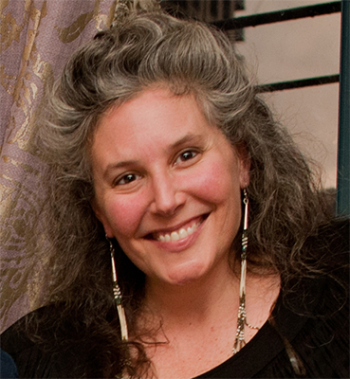
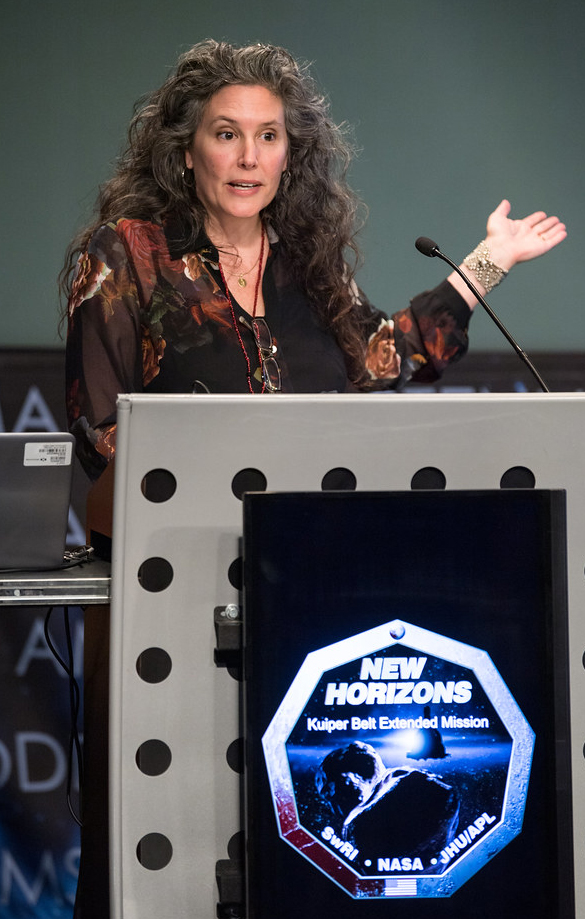
Daniella Scalice uses her background in science and the arts to “dance with the stars” via a NASA partnership she has cultivated with members of the Navajo Nation and other partnerships with Indigenous communities across the US and internationally. Her journey from her farming and factory hometown of Torrington, Connecticut, to NASA took many turns to land her as a practitioner of STEAM and an advocate for equity in Indigenous education, by bringing together Indigenous knowledge and astrobiology. As she acknowledges, Torrington is town that sits on land taken from the Mohicans.
Building up STEAM
Ms. Scalice’s father was the first in his family to go to college, and her mother, whose aunts worked in a ball bearing factory in Torrington, was the second in her family to do so. By the time Ms. Scalice and her sister came along, going to college was an assumption. She began her postsecondary education close to home at Boston University, but after hearing her friend’s description of college in California, thought the West Coast environment was better suited to her growing Bohemian spirit. She applied to transfer to the University of California and was accepted into UC Santa Cruz.
She initially majored in philosophy, but after her first science class she became intrigued by the subject, especially with its strikingly different epistemology and perspective. She switched her major to biology but continued to carry a humanities-oriented way of thinking to her new scientific approach. After earning her bachelor’s in molecular, cell, and developmental biology at Santa Cruz, she worked as a technician in a cardiovascular disease lab at Harvard School of Public Health and then in a neurobiology lab at Harvard Medical School. It was in the neuro lab that she fell in love with the visual side of science in the images she was producing. However, her taste for outdoor adventure caused her to fall out of love with a potential career as a bench scientist and she decided to move her experimental setting from the lab to the natural world.
Exploring While Keeping a Foothold in Science
She received two internships with the National Park Service. Her first was in managing and restoring the redwood population in the National Redwood Park under the tutelage of a Native American woman, whom she remembers as fearlessly competent and strong. Working with this woman and other wildlife biologists in the park, she began to see her future career take form. She reflects, “I can see now that was probably one of the first doorways that opened, and I could see into what my career would become about, which has been relationship, partnership, and service.” Her second internship involved caring for endangered turtles in Hawai’i Volcanoes National Park, where sharing food and playing volleyball with the local people was a daily routine.
“I can see now that was probably one of the first doorways that opened, and I could see into what my career would become about, which has been relationship, partnership, and service.”
Learning about Storytelling and Stars
These internships solidified both her passion for biology and her awe for nature’s visual splendor, but she was unsure how she might combine them into a career. Interested in becoming a wildlife photographer, she entered the master’s program in film production at Cal Poly Humboldt. While pursuing her degree, she received an internship to develop websites with accompanying video content for NASA’s Astrobiology Program. There she learned to translate astrobiology research into a storyline about the origin and evolution of life and realized the power of education through storytelling. She adds, “I began to understand the importance of narrative as the context for interpreting new information and influencing how we understand ourselves and the development of our universe.” When she was offered the position of Education and Communications Lead for NASA’s Astrobiology Program, she realized she had found her fit.
Becoming an Ally to the Navajo Nation and Other Indigenous Peoples

In 2005, Ms. Scalice began to cultivate relationships between NASA and members of the Navajo Nation to codevelop precollege cosmology programming that is interwoven with Indigenous knowledge. A meeting of NASA and Navajo educators took place in Window Rock, Arizona, the seat of the Navajo Nation, and Daniella was invited to participate. The group agreed to team up to create the NASA and the Navajo Nation project. The team’s first product was an educator guide that weaves together Indigenous and scientific knowledges aligned with the learning standards of Arizona and New Mexico, The Story of the Stars. It was released in 2006 and distributed to every school in the Navajo Nation, along with two accompanying YouTube videos. A subsequent educator guide was released in 2011, Navajo Moon, with an accompanying video. The guides are still in use and now supplemented with hands-on educator workshops and summer camps for Navajo middle schoolers. The team is working on a third educator guide on the origin of life. Daniella’s work has expanded over the years and she is now in partnership with numerous Indigenous communities across the US and internationally.

Asked about lessons she has learned in working with her Navajo Nation and other Indigenous colleagues, Ms. Scalice responds, “Time is a major factor when cultivating relationships of trust. Sharing culture and knowledge doesn’t and shouldn’t happen quickly because of the US history of land theft, genocide, and disrespect of Native American cultures and knowledges.” She has also learned that there are two facets to her job. One role is outward facing – building relationships, collaborating, and serving with her Native partners in their communities. The other is bringing messages and lessons learned from the community into NASA toward equity and access. As she reflects on her growth and that of the work, she is pleased to see that many more scientists are interested in building bridges between Western and Indigenous science. She is committed to being an ally to Indigenous Peoples such as Dr. Wendy Todd, a geoscientist of Native Alaskan heritage and to mentoring the next generation of Native American scientists via internships in the NASA Astrobiology Program. About the impact of her STEAM career on herself, Daniella says, “This work has changed me more than the impact I thought I might have on others. I no longer use science tools like beakers or microscopes. My tools now include my heart. And that makes my work so great and so hard.”
“This work has changed me more than the impact I thought I might have on others. I no longer use science tools like beakers or microscopes. My tools now include my heart. And that makes my work so great and so hard.”
Editor’s Note: The contents of this article are not affiliated with the Howard Hughes Medical Institute (HHMI).
 Patricia Soochan is a senior program strategist in Data Science, Research, and Analysis in the Center for the Advancement of Science Leadership & Culture at HHMI. In her role, she collaborates with the Center’s programs to capture, analyze, synthesize, and communicate program-level data to promote organizational effectiveness and evaluation. Previously she shared lead responsibility for the development and execution of the Inclusive Excellence (IE1&2) initiative and had lead responsibility for science education grants provided to primarily undergraduate institutions, a precursor of IE. She is a member of the Change Leaders Working Group in the Accelerating Systemic Change Network and is a contributing writer for AWIS Magazine and The Nucleus. Prior to joining HHMI, she was a science assistant at the National Science Foundation, a science writer for a consultant to the National Cancer Institute, and a research and development scientist at Life Technologies. She received her BS and MS degrees in biology from George Washington University.