

My hometown of Flint, Michigan, has produced many talented STEM professionals, including Dr. Joyvina Evans, who has made women’s health her key mission. Due to her own health challenges, Dr. Evans founded Advocating for My Uterus, a nonprofit devoted to supporting and inspiring women (and those who love them) and advocating for their reproductive health by providing resources, support, and educational tools. She has over thirteen years of clinical and academic research experience, and she has also published three books.
Dr. Evans earned a PhD in Public Health with a specialization in Community Health Promotion and Education from Walden University, and she currently serves as the Graduate Chair of the Master of Health Administration and as Assistant Professor in the College of Nursing and Allied Health Sciences at Howard University in Washington, DC.
It was my pleasure to interview Dr. Evans recently. Here are some insights that she shared with me.
Before and after having open myomectomy for removal of fibroids-performed by Dr. Shawn Davis-Wilensky. This is where Advocating for My Uterus was birthed.
How did growing up in Flint shape the woman you are today?
Growing up in Flint gave me a certain level of tenacity and perseverance. I am the youngest of five. My mother did what she could as a young, divorced parent to take care of us. She had not graduated from high school and faced economic struggles. She eventually went to Beecher Adult High School and earned her high school diploma.
I remember one day going to the dentist at Mott Children’s Health Center. On the way, I said that I hated school. My mom said to me, “Don’t you ever say that you hate school. Getting an education is how the dentist became who they are.” That stuck with me through my master’s, PhD, and postdoctoral training. I am a woman of faith, and I appreciate what my mother did to encourage me to keep moving forward. Flint taught me tenacity and perseverance; to never give up.
You authored three books: From Chaos to Confidence: How to Triumph After Traumatic Experiences, Secrets of a Confident Woman, and Secrets of a Confident Teen. What inspired you to write these books?
Confidence Academy was born out of a season of pain and loss. I found myself in a state of depression, confusion, and resentment. Through professional and spiritual counseling, I went through a process of healing and founded Confidence Academy to give women and girls an opportunity to discover who they are. I wrote my first book about moving from chaos to confidence, about how to triumph after traumatic experiences.
For a time, I was an independent business owner selling clothing, coffee mugs, homemade body butter, oils, and bags. Although it was not as successful as I had hoped, I am glad that I tried. Shortly after that effort, I authored the other two guidebooks: one to teach teens about how to deal with various relationships in their lives, such as with their parents and friends, and one to teach women about how to deal with relationships as they grow older. I was also transparent about how I dealt with anorexia and an eating disorder. The three books are still available online at Amazon, but I closed the Confidence Academy so that I can focus more on my health equity and women’s reproductive health work.
The name of your non-profit, Advocating for My Uterus, sends a powerful message about women’s health. What inspired you to start the organization?
I was initially diagnosed with uterine fibroids over ten years ago. I had a minimally invasive procedure to remove some of the fibroids (the others were too small). Ten years later, the small ones had grown larger. A male physician recommended that I get a hysterectomy. I sought a second opinion and searched through all the top physicians at Cleveland Clinic, Emory University Hospital, and at hospitals in the DC metro area.
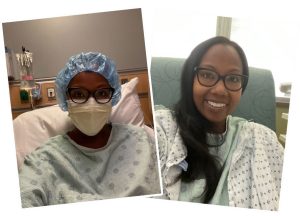
I eventually found a woman physician who did not believe that I needed a hysterectomy, only a minimally invasive treatment. When she went in, she discovered that I had close to 20 fibroids.I had not had any pain, and I only experienced minimal pain after the surgery. I was talking and fully coherent. She stated, “We got them all, and you still have your uterus!” I was thrilled. After some time had passed, I asked myself, “What if I had listened to that other physician who said that I needed a hysterectomy?”
I decided to write an article in Health Affairs called “Just Get a Hysterectomy,” a full story about what had happened. I realized that not everyone has the privileges that I did: education, insurance, income, access, and health literacy. I had the means to travel where I needed to, to get those second opinions. I had done my research, and I had realized that I had other options. I still had my uterus and now wanted to help other women who wanted to protect their bodies. I wanted to provide education, tips, and tools to women who have these diagnoses. So, I founded my company to provide this help.
Was there a pivotal moment in your life that influenced your path to professorship and advocacy?
I was a part of a program called Upward Bound in my youth [a federally funded program that helps high school students with certain disadvantages aim for college]. We were encouraged to write about what we wanted to do when we grew up. I wrote about wanting to be a K-12 teacher and a pediatrician. (My passion for health advocacy started at a young age!) I ultimately realized that I could combine the two as a faculty member and administrator in higher education.
Have you had any mentors who have significantly influenced your pathway in life? How have they impacted the way that you mentor others?
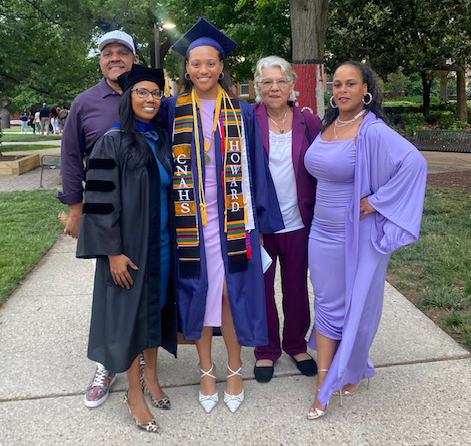
Three mentors have guided me through different aspects of my life. Dr. Traki Taylor was an advisor for an undergraduate chapter of Alpha Kappa Alpha Sorority of which I am a proud member. She became a provost and mentors me in higher education administration. Dr. Deborah Jewell-Sherman, Professor Emerita at Harvard University is a phenomenal mentor from the faculty perspective. We focus on teaching and relationship building. Dr. Dorothy Browne, Professor Emerita from UNC-Chapel Hill and currently a Research Scientist at Shaw University, guides me in the research and grant writing process. They are all helpful with work and life. They are not in a space of, “What can you do for me?” They have been supportive and encouraging and have had an impact on me and my work.
You are a trained public health practitioner as well; how do you see your contributions to the field impacting society?
From a public health standpoint, I primarily focus in two areas: women’s health, specifically uterine fibroids; and implicit and unconscious bias. I am investigating how implicit and unconscious bias has affected health disparities. My contributions will help to ensure that people are better educated so that they can make informed decisions. We must know how to properly educate patients, use appropriate language and consider their health literacy, so that they can fully understand what we are communicating to them. They need to see the entire picture and know their options.
What changes do you believe are necessary to promote and sustain diversity and inclusion in STEM fields?
We need to ensure that equity and inclusion are at the forefront of decision-making when hiring. There may be individuals who come from environments with inequitable preparation (such as under-resourced school districts), who may need an extra workshop or tutoring to help close those gaps instead of being written off. It does not mean that they are incapable. Be conscious of the organizational culture and presence of toxicity. We must collaborate instead of competing against one another so that people understand that your shining does not dim their light.
How can organizations better support underrepresented or under-resourced groups in science?
Organizations need to make sure that there is a budget put aside for assisting underrepresented and underresourced groups. They should help them to cultivate their craft, increase their knowledge and skills. Professional development dollars should be set aside so that these groups can grow and succeed.
To achieve equity, we must remove certain barriers for individuals. Consider providing financial support for employee’s training or bring it in house. Maybe there is a need for asynchronous programming if people are notvable to get off work because of demands from their team.
What strategies do you use to cope with stress and maintain your well-being, and what advice would you give other women scientists?
Self-care is not selfish: It is essential. Self-care refers to our mind, body, and spirit. We must ensure that we protect our peace. For example, I do not run errands or do chores after Thursday evening. I plan for that work to be done Monday through Thursday so that I am using the weekend to rest, reset, refuel, and have fun.
I love going on walks and reading fiction books for leisure. I also love the water. I enjoy going to Annapolis, Maryland, and sitting on the dock. I do things that I love and enjoy.
“No” is a complete sentence. Establishing boundaries is extremely important. The laptop or work is not allowed in my bedroom or the kitchen. The only time I have broken this rule was after surgery, when I was 100% remote.
Organization leaders should show empathy, care, and concern for people with unique needs. Make sure that people feel free to be transparent and that you create a safe space, so everyone feels they belong. Never engage in gaslighting or microaggressions. Provide resources, mentors, and sponsors, and ensure that they are available.
 Dr. Endia Crabtree, a Principal Scientist at Boston Scientific, specializes in global clinical risk evaluation of medical technologies. Passionate about diversity, equity, and inclusion (DEI), she is dedicated to enhancing human health and to promoting equity in STEM careers. Her values are deeply influenced by her upbringing in Flint, Michigan.
This article was originally published in AWIS Magazine. Join AWIS to access the full issue of AWIS Magazine and more member benefits.